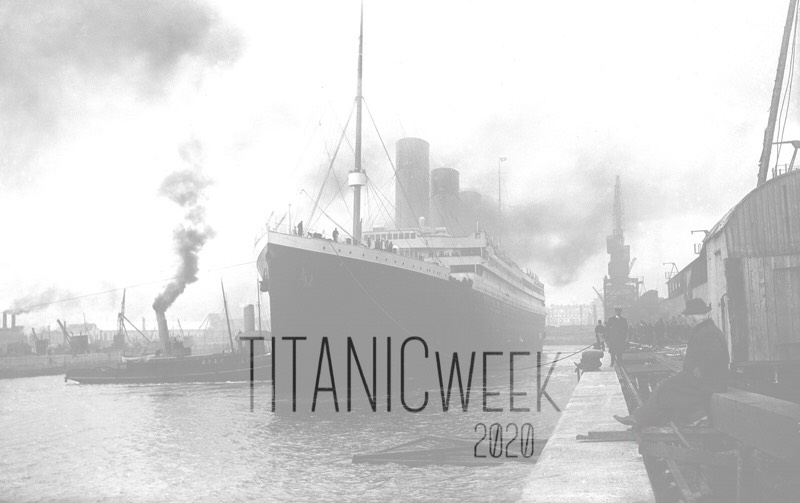
Open post

“Titanic Behaved Splendidly”: Titanic’s Sea Trials

"Titanic Behaved Splendidly": Titanic's Sea Trials

Titanic’s sea trials—when the ship’s many safety features were tested in real time—were scheduled to begin on Sunday, April 1, 1912, but poor weather conditions and a detrimental northwesterly wind caused the trials to be postponed to Monday morning.

Aboard were just over 40 crewmembers. They were compensated an extra five shillings for the delay.

Captain Edward J. Smith.

PUBLIC DOMAIN

The roster of officers reporting to Captain Smith for sea trials were as follows.

Chief Officer William McMaster Murdoch

First Officer Charles Herbert Lightoller

Second Officer David Blair

Third Officer Herbert John Pitman

Fourth Officer Joseph Groves Boxhall

Fifth Officer Harold Godfrey Lowe

Sixth Officer James Pell Moody

The four junior officers received telegrams from the White Star marine superintendent to report to the Liverpool offices at 9am on March 26th, to pick up their trains tickets for their trip to Belfast.

They arrived around noon the next day on March 27th and reported on board to Chief Officer Murdoch. Notably, in his deposition later, Fifth Officer Harold Lowe attested to a March 29th arrival.

Fifth Officer Lowe and Sixth Officer Moody were instructed to inspect the totality of starboard-side lifeboats, including the collapsibles. Together, they conducted an inventory of life-saving materials such as oars, sail riggings, and tarp; he also recalled that he noted one empty "bread tank" in each of the lifeboats but none in the collapsible boats, nor emergency lanterns in any of the boats at all.

Captain Edward J. Smith boarded on April 1st, and with him came an officer arrangement that upended the ship's commanding hierarchy. At the last minute, he announced his intention to bring on Henry Tingle Wilde as Chief Officer.

So William Murdoch and Charles Lightoller were both demoted to First and Second Officers, respectively.David Blair was dismissed from command altogether, which safeguarded the remaining junior officers from a reshuffle themselves.

Titanic Chief Officer Henry Tingle Wilde in Royal Naval dress.

PUBLIC DOMAIN

When Former-Second Officer Blair disembarked in Southampton, he disembarked with his keys... including the key to the locker for the Crow’s Nest. This secure cabinet is where implements were housed for the lookouts.

Including binoculars.

George Hogg, a surviving lookout on Titanic, testified to the Senate regarding David Blair's actions as he was set to depart at Southampton, having been dismissed from his duties.

Mr. Blair was in the crow's-nest and gave me his glasses, and told me to lock them up in his cabin and to return him the keys... I locked [the binoculars] up... There were none when we left Southampton.

It is sometimes implied that Blair did this nefariously as some Shakespearean act of revenge due to his dismissal, but in reality, it was industry practice to lock up the binoculars when a ship was docked.

Other accounts state that David Blair took the binoculars with him because they were his own personal pair.

Regardless, Now-Second Officer Lightoller could not provide the lookouts with binoculars. He didn’t think too much of it, as there were other glasses on board somewhere and the lookouts could spot without them, being at such a height as the lookouts were, so he promised to pick up a new pair in New York City.

And that was that.
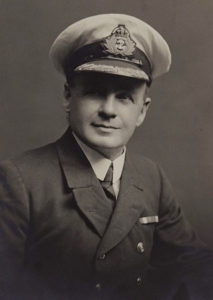
Charles H. Lightoller, who was demoted to Second Officer on Titanic.

PUBLIC DOMAIN

Titanic was the second sibling in a set of triplets; her elder sister, Olympic, underwent her sea trials beginning on May 29, 1911, and ran for two days. They were not without difficulties.

According to Tom McCluskie, a historian for Harland & Wolff, “The extensive sea trials found that there was a number of problems. Chief architect Thomas Andrews himself wrote in his design notebook that Olympic’s hull was observed to “pant.”

As McCluskie describes it, “[Panting] means the hull—instead of being rigidly straight—is going in and out. Now it’s not a vast movement, it’s not going out three, four feet and coming in; it’s a matter only of inches. But really, it shouldn’t do that on a calm sea.”

This discovery led architect Thomas Andrews to implement changes to his nearly identical work-in-progress, Titanic. Per McCluskie, Andrews “made reference to it on the shell drawing which he modified for Titanic to include extra stiffening.”

Sister ships Olympic (close to dock) and Titanic. Taken by Robert John Welch for Harland & Wolff.

PUBLIC DOMAIN

Despite these changes and the flaws in Olympic that incited them, Titanic only undertook a single day of sea trials.

J. Bruce Ismay, White Star’s chairman, could not attend, nor could Lord William Pirrie owing to a bout of pneumonia. So he sent his nephew, Thomas Andrews—conveniently the ship’s lead designer—in his stead.

Around 6 a.m., Harland & Wolff’s own tug boat, called Hercules because he was mighty strong, arrived and cast the first line aboard Titanic as it slept in its berth. The four tugs assisting Hercules, which were owned by the Alexandra Towing Co.—and named Huskisson, Horby, Herald, and Herculaneum—moved into their positions, and at Hercules’s whistle, the H-Team pulled Titanic to the center of the River Lagan.

Titanic on her way to sea trials accompanied by her fleet of tugs. Courtesy of U.S. N.A.R.A.

PUBLIC DOMAIN

The behemoth liner eased her way down the river toward Belfast Lough, escorted by the five tugs. Around noontime, and about two miles off Carrickfergus, the herd of vessels slowed to a stop, and the tugs all dropped their ropes and pulled away.

Boilers were lit one by one, and smoke began to bloom from Titanic’s three functional funnels (the fourth was false, for aesthetical purpose).

Captain Smith ordered the blue-and-white burgee, which is more commonly recognized as a triangular mariner’s flag. This type of burgee, known as Signal Flag A, announced that its ship was undergoing sea trials.

As the water churned at her stern and her dapper burgee clapped above her, Captain Smith ordered a three-blast sounding of Titanic’s horn and her trial-run officially began. As Titanic took its first metaphorical steps, the officials and officers on-board took lunch in the First Class Dining Room to compare notes.

Rear view of Titanic being pulled toward Belfast Lough. Taken by Robert John Welch for Harland & Wolff.

PUBLIC DOMAIN

Titanic was revved up to nearly 20 knots, then drifted to a stop. Isolated turn maneuvers, such as rudder-only and propeller-only, were performed. The ship’s wheel was ordered “hard over” while Titanic was traversing a straight path, creating a circular path with a diameter of approximately 3,850 yards.

More stopping tests followed, including running right toward a buoy at full speed.

She then traveled about 40 miles toward the Irish Sea, turned about to head back to Belfast Lough, and performed some twisty-turns to port and starboard along the way, and got back home in the evening time.

One more test was then advised by Francis Carruthers, the ship surveyor sent by the British Board of Trade: Anchor up, and anchor down.

Carruthers found Titanic’s performance satisfactory and issued the mandatory certificate to Thomas Andrew and his deputy, Edward Wilding. The ship was officially good for one year to the day.

With the sea trials done and dusted, the crew on board resumed their daily operations. Fifth Officer Harold Lowe set aside some time to write back to his wife, Nellie. He helped himself to a spare menu card from the day, April 2nd, and scrawled on its back along the bottom edge: "first meal ever served on board" and posted it to Nellie.

R.M.S. "Titanic."

April 2, 1912.

Hors D'Ouvre Varies


Consomme Mirrette

Cream of Chicken

Salmon

Sweetbreads

Roast Chicken

Spring Lamb, Mint Sauce

Braised Ham & Spinach

Green Peas                                Cauliflower

Bovin & Boiled Potatoes

Golden Plover on Toast

Salad

Pudding Sans Souci

Peaches Imperial

Pastry

Dessert                          Coffee

Later, sworn under oath before the American inquiry of Titanic's sinking, Harold Lowe testified that Titanic did not even reach her full potential for speed during the sea trials. He stated that he believed that she could "easily do 24 or 25 knots,” instead of the 20 knots achieved that day.

Furthermore, in his deposition sworn before the British Consulate General in May of 1912, Harold Lowe attested that "on the trials the Titanic behaved splendidly and manoeuvred very well."

Titanic being pulled toward Belfast Lough. Taken by Robert John Welch for Harland & Wolff.

PUBLIC DOMAIN

Titanic departed Belfast for Southampton at approximately 8:00pm that evening. She encountered fog in the wee hours of April 3rd, though it dissipated by noon.

And shortly after midnight, on April 4th, another tugboat gang of classical gods and guys—this time Hercules, Neptune, Ajax, Hector, and Vulcan of the Red Funnel line—drew Titanic into Berth 44 at Southampton, where she was "docked by moonlight," per Sixth Officer James Moody.

Titanic would spend the Easter weekend there, waiting for her maiden voyage to begin. James Moody wrote to his older sister Margaret that, at 8:00am on the morning of April 4th, Titanic's crew “hoisted a huge rainbow of flags right over the ship, 220 flags [altogether and] 9 feet apart” to salute the Southampton

There was less than a week to go.

Open post

Launch Day

Launch Day

No, not April 10, 1912.

May 31, 1911, when liner-in-progress SS401 took its first bath.

It seemed that all of Belfast came to witness Titanic's so-called baptism in the River Lagan; some estimate up to 100,000 in the crowd, elbowing for space wherever it could be found. Recall from last year's post about the Harland & Wolff shipyard that the building of any ship, but especially the White Star liners, required the masterwork of thousands of citizens over a period of years. It forged a deeply personal connection, and was an accomplishment for the entire community. It bound them in elation and, less than a year later, in unbridled grief.

It's a challenge to underestimate just much the Titanic meant to Belfast.

As the design and dimensions of the Titanic and the Olympic are practically identical it is not now necessary to say much on this point, seeing that a detailed description of the latter - which would apply equally to her sister ship - has already been published in our columns. The vessels mark a new epoch in naval architecture. In size, construction, and equipment they represent the last word in this science...

Every detail had to be judged with mathematical accuracy if accidents had to be averted, and the preparations had therefore to be made with great care and caution. Over the bows of the vessel the White Star Company's flag floated, and there was displayed a code signal which spelled the word "success". If the circumstances under which the launch took place can be accepted as an augury of the future, the Titanic should be a huge success.

The ceremony was lost on at least one unnamed shipyard worker, though, who was reported to have said of the launch, "We just builds 'em, then shove 'em in."

Admission was sold with a ticket--the proceeds were reportedly donated to two local children's local hospitals, so: right on, Harland & Wolff. Select tickets to the launch survive today. As evidenced by the creases, the tickets all spent some time in their owners' pockets.

Titanic was not complete by any means--just its hull. It had none of its iconic four funnels, and the opulence that we associate with the ship was not yet installed. This was the day that Belfast would see if its newest baby could float.

An inch-thick coat of soft soap, tallow (id est, animal fat), and train engine oil slicked the tracks to allow the Titanic to slide down Slipway 3 into the waters at Belfast Lough, amounting to 23 tons of what must have been truly putrid grease. A daunting 80 tons of cable and multiple anchors were used to moderate the speed.

White Star was not the break-a-champagne bottle-on-the-hull sort of company. But it still knew how to get its pomp on. At least 90 members of the press were in attendance. Shipyard workers were given holiday without pay--unless they were assisting the launch.

Lord Pirrie (left) and J. Bruce Ismay on May 31, 1911, prior to Titanic's launch. Taken by Robert John Welch for Harland & Wolff.

PUBLIC DOMAIN

By all accounts, the launch of Titanic could not have been scheduled for a more perfect day, though it was a bit hot for those who couldn't find shade.

Ladies formed a considerable proportion of the aggregate attendance, and even if their picturesque frocks appeared a trifle incongruous when contrasted with the surroundings of the shipyard itself they were unmistakably in harmony with the glow of the soft turquoise sky, from which the piercing rays of the sun descended, making the heat exceedingly trying for those who witnessed the launch.

Company dignitaries and those shipyard workers with ticketed admission took to stands that were built above the crowd. Lord William Pirrie, the Harland & Wolff chairman who was also celebrating a shared birthday with his wife that day, returned from inspecting the hydraulic rams shortly after noontime. At approximately 12:05 p.m., a pair of rockets were fired to warn other crafts in the vicinity. After ascending the stands with White Star chairman J. Bruce Ismay and financier J.P. Morgan, Lord Pirrie finally gave the signal at 12:13 p.m.

Another red rocket was set off.

And as little white flags bearing "Good Luck" shuddered en masse, an exclamation of "There she goes!" echoed in the crowd.

It took a total of 62 seconds for the bow to take the water as the crowd chased its descent, after which the empty hull floated serenely to the other side of the Lagan. From there, five tugboats dragged what would become Titanic to the deep water berth where it would be fitted for its maiden voyage next year.

Titanic launching from the dry dock. By Robert John Welch for Harland & Wolff.

PUBLIC DOMAIN

And in the chaos of all this, yes, someone did die.

James Dobbin was what was called an 'old hand'--an established and well-known shipwright about the Yard. On Launch Day, he was assigned to knocking out the wooden support beams as the ship groaned forward. He was cross-sawing one of these shoring timbers when it collapsed and crushed him.

Dobbin was extricated by his colleagues and sent to the Royal Victoria Hospital--and in the company car, no less--where after surgery, he died from his injuries on June 2, 1911, two days following the launch of Titanic. His cause of death was listed by the coroner as "Accidentally crushed under a piece of timber... Shock and haemorrhage following fracture of pelvis."

Jimmy Dobbin was 43, and married. It's reasonably speculated that his wife Rachel and their only child, 17-year-old James, were most likely there that day, witnessing the launch alongside all the rest of Belfast... with no concept of what was happening to Jimmy as Titanic slid away.

And hardly did anyone else. Not Lord Pirrie, who hosted Ismay and Morgan at a private lunch afterward. Not any of the jollymakers celebrating through the day and into the evening. And all the while Titanic bobbed and whispered in its berth, awaiting its engines, its fittings, its crew and its passengers.

From the George Grantham Bain Collection, Library of Congress.

PUBLIC DOMAIN

In 2014, a family photo album containing over 100 before-unknown photos of Titanic and Olympic were auctioned by the family of John Kempster, who was a director and senior engineer at Harland & Wolff; thirteen of those photographs were taken May 31, 1911. On that day, Kempster was acting as the master of ceremonies at one of the celebratory luncheons hosted by Harland & Wolff at Belfast's Grand Central Hotel.

A haunting handwritten caption of the newly discovered photos reads 'Going, going, gone.'

Open post

“It’s a CQD, Old Man”: Distress Signals

"It's a CQD, Old Man": Distress Signals

It's been my experience that those who aren't obsessed feel like Titanic sank passively, in spite of logically understanding that they were, of course, calling for help.

Titanic, like any vessel, was equipped with emergency gear. According to the report issued following the sinking, Titanic carried 36 distress rockets. Second-Class passenger Lawrence Beesley wrote of them in his account of the sinking.

"Up it went, higher and higher, with a sea of faces upturned to watch it, and then an explosion that seemed to split the silent night in two, and a shower of stars sank slowly down and went out one by one. And with a gasping sigh one word escaped the lips of the crowd: 'Rockets!'"

Except from "The Loss of the S.S. Titanic" by Lawrence Beesley.

Rockets meant disaster. As one man testified: "A ship isn't going to fire rockets at sea for nothing." The passengers waiting for lifeboats began to panic.

Although, just for fun, here's Lightoller correcting the British Inquiry (and us).

INQUIRY: Now, then, about signals from your boat. You have rockets on board, have you not? Were they fired?
LIGHTOLLER: You quite understand they are termed rockets, but they are actually distress signals; they do not leave a trail of fire.
INQUIRY: Distress signals?
LIGHTOLLER: Yes. I just mention that, not to confuse them with the old rockets, which leave a trail of fire.

Whatever, Lights.

The color of these DISTRESS SIGNALS is sometimes debated--most say white, some say multicolors. I think the latter is probably just a mis-perception from the falling starburst.

Fourth Officer Boxhall set off the distress signals, at intervals of a few minutes each, next to Lifeboat 1 on the starboard side. He said he didn't count how many--most historians accept eight to ten, maybe a dozen. Fifth Officer Lowe said he was "nearly deafened by them" and though he didn't know at the time who was watching alongside him, he was standing next to White Star Chairman Bruce Ismay.

Fourth Officer Joseph Boxhall, who fired Titanic's distress signals.

PUBLIC DOMAIN

No one answered the distress signals. But someone saw them.

James Gibson, apprentice on the Californian, testified to the following.

 I then got the binoculars and had just got them focused on the vessel when I observed a white flash apparently on her deck, followed by a faint streak towards the sky which then burst into white stars.

Yes. There was a ship within miles of Titanic--so close that Captain Smith ordered some lifeboats to row for its lights. And it did nothing.

The Californian should and one day might be its own post, but suffice it to say that everything from hypothetical cold-air mirages to the Californian's passive, overly cautious captain prevented it from rescuing Titanic.

The ships each used Morse lights to try to communicate with each other as the sinking progressed, but results on each end were unclear. The captain's reaction to the aforementioned distress signals was that they were probably frivolous "company signals," and to continue trying to reach the ship with the Morse lights. Because of the aforementioned conditions, each message flickered out by one, appeared un-replied to by the other.

But one rescue component is absent from the Californian's efforts to reach Titanic as she sank: the wireless.

And that was because a) the Californian's captain never ordered that it reach out to the mysterious "large liner" via wireless and b) the wireless operator, Cyril Evans, TURNED HIS FREAKING RADIO OFF and went to bed only minutes before Titanic struck the iceberg.

And yet, the Californian crew was aware Titanic was nearby, because earlier in the night (pre-iceberg), the captain had ordered Evans to send a warning to Titanic, once the Californian itself was stopped by ice for the night.

So Evans did send that warning, his second to Titanic over the course of the evening. But he sent it rather unprofessionally, using language that was reserved for casual chats between operators. Meanwhile, the Senior Marconi Operator on Titanic, Jack Phillips, was overtired and working through an enormous backlog of messages that all had to be sent now that the ship was in range of Newfoundland.

Because of this, Evans was "famously rebuked" by Phillips--a moment that I consider to be chronically misrepresented in a sensationalist attempt to assign blame. But I digress.

So after Jack told Cyril to stop interrupting his work, he just listened in on Titanic's transmissions until about 11:25pm. And then he went to sleep until approximately 3:30 a.m.

Titanic, meanwhile, had struck the iceberg at 11:40 p.m.

Junior Marconi Operator Harold Bride, circa 1912.

PUBLIC DOMAIN

Jack and Junior Marconi Operator Harold Bride were desperately calling to any ship in proverbial earshot, using the universal distress call "CQD", as well as "SOS". The latter, which was brand new and is so familiar to us today, was not first used by Titanic, despite many rumors. Harold Bride did, however, advised Jack Phillips to use it, joking that it might be their only opportunity to use the newfangled call.

The ships that received and replied to the distress signals included Titanic's sister, Olympic, the Mount Temple, the Frankfurt, the Baltic, the Asian, the Celtic, the Caronia, the Virginian, the Cincinnati, and, of course, the Carpathia.

Illustration of Titanic's wireless and the ships that responded. Originally published on April 17, 1912. Image courtesy of The Atlantic, from The Day Books of Chicago.

PUBLIC DOMAIN (published prior to 1923)

The following are a mere selection of the distress messages sent by Jack Phillips, assisted by Harold Bride. Even in clipped Morse, you can feel the mounting desperation and frustration. As one article recently put it, "It was like trying to organize a rescue by Twitter."

12:17 a.m. CQD CQD SOS Titanic Position 41.44 N 50.24 W. Require immediate assistance. Come at once. We struck an iceberg. Sinking

12:20 a.m. Come at once. We have struck a berg. It's a CQD, old man. Position 41.46 N 50.14 W

12:26 a.m. Yes, come quick!

12:40 a.m. SOS Titanic sinking by the head. We are about all down. Sinking. . .

1:10 a.m. We are in collision with berg. Sinking Head down. 41.46 N. 50.14 W. Come soon as possible

1:10 a.m. Captain says, “Get your boats ready. What is your position?”

1:27 a.m., when Olympic asked, "Are you steering southerly to meet us?" We are putting the women off in the boats

1:30 a.m. We are putting passengers off in small boats

1:30 a.m. Women and children in boats, can not last much longer

1:35 a.m Engine room getting flooded

1:45 a.m. Come as quickly as possible old man: our engine-room is filling up to the boilers

1:50 a.m., when Frankfurt asked, "What is the matter with u?" You are a fool, stdbi - stdbi - stdbi and keep out

Sometime between 2:15 a.m. and 2:20 a.m., this last message is caught SOS SOS CQD CQD Titanic. We are sinking fast. Passengers are being put into boats. Titanic

© Caption.

Calls from Titanic were crackled and broken as power was diminished and inevitably lost, but Phillips kept at it. Phillips and Bride remained at their posts until water was flooding the wheelhouse nearby--yes, the last possible second, and well after Captain Smith had ordered them to abandon their posts.

Distress signal to S.S. Birma.

PUBLIC DOMAIN

Even when the two Marconi operators knew--better than anyone else--that there was NO hope of a ship reaching Titanic in time, it was reported by a station officer that there was "never a tremor" in Phillips' Morse transmissions as Titanic went down.

Harold Bride survived the sinking. Jack Phillips did not.

Jack Phillips, Senior Marconi Operator on Titanic.

PUBLIC DOMAIN

It was the sudden silence of Titanic's wireless radio that clued in New York Times editor Carr Van Anda that something was gravely wrong. While other papers hedged, the New York Times headline on April 15, 1912, announced what no one wanted to: Titanic was gone.

New York Times dated April 15, 1912.

PUBLIC DOMAIN

Open post

First-Class Athletic Facilities

FOR THE ATHLETICALLY INCLINED: First-Class Gym Facilities

Titanic's gymnasium was accessible from the boat desk, adjacent to the second funnel. It was outfitted with elaborate equipment, especially during an era in which exercise was more of a hobby, or a quaint way to pass some time.

It would seem that prior to sail, it was open for exploration by both genders and other classes of passengers. But once Titanic departed Queenstown, it was a first-class exclusive, and was used separately by ladies and gentlemen.

The gym was the domain of Thomas McCawley, a spry moustache master always seen at his post, and always wearing his white flannels and plimsolls (canvas athletic shoes), the primmest and dapperest Edwardian fitness instructor you could ever imagine.

Colorized version of photo of Titanic's gymnasium, taken by Robert John Welch for Harland & Wolff.

PUBLIC DOMAIN

The gym was available for a shilling a ticket, which would be paid, of course, to Chief Purser Hugh McElroy prior to use, and would be good for one session.

The gym was exclusive to the ladies from 9am to noon, children 1pm to 3pm, and the men 2pm to 6pm. Tom McCawley was said to be precise to the minute in opening the gym for these scheduled shifts.

The gymnasium was equipped with punching bags, Indian clubs, stationary bicycles with giant red meters for monitoring one's progress, a rowing machine, and mechanical horses. It was also installed with an "electric camel", which mimicked the back-and-forth motion of a camel ride when sat upon, and which was lauded as "good for the liver."

Lawrence Beesley, a second-class passenger, on the stationary bicycles with an unnamed friend. originally published in London Illustrated News, April 20, 1912.

PUBLIC DOMAIN

There was a racquetball court presided over by instructor Frederick Wright on G Deck with an entrance on D Deck, and an observation gallery on F Deck. That would set you back two shillings for one half-hour of play.

Titanic also boasted Turkish baths, which offered massages, shampoos, and electric baths. The central feature was the Cool Room, and it was decorated in a lavish Arabic style--all teak wood, green and blue tiles, a marble fountain, and a scarlet ceiling with guilded beams and hanging lanterns. It was littered with lounges, folding chairs, and Damascus tables.

In 2005, they rediscovered the Cool Room in a remarkably preserved state. Because it had flooded early on, and its location was deeper inside the ship, it was largely protected from damage when the bow crashed into the seabed. And because it's so far within the ship, hungry microorganisms can't really get at it, so the woodwork, stained glass windows, and even the recliners are still recognizable.

Illustration of the Cool Room of the Turkish Baths on R.M.S. Olympic, which was Titanic's elder sister.

PUBLIC DOMAIN

To most people, the most delightfully ironic of Titanic's fitness features was a heated saltwater swimming pool, (or "bath," as they referred to it).

It was 30x14ish feet and was tiled in blue and white. It also had a marble staircase descending into the water; this was because the water was 3 feet below the lip of the pool, to try to prevent water from sloshing out with the motion of the ship. There were shower stalls and changing cubicles along its side.

Swimming pool of the R.M.S. Olympic, which can be discerned from Titanic's due to the presence of a diving board.

PUBLIC DOMAIN

The swimming bath was open only to First Class, of course; the use of a swimming suit was included in the fee of a shilling.

It was the second of its kind ever put to sea; the first was that of RMS Olympic, and the only notable difference between it and Titanic's was that Olympic's swimming bath had a diving board, while Titanic's was absent of the same. This was decided upon because the sloshy water made the diving end shallower than it appeared, and it caused a hazard to passengers.

First-Class survivor Colonel Archibald Gracie used the swimming bath to his great enjoyment. He took a refreshing swim on the morning of April 14, 1912--and later mused upon the irony of the same, stating he probably wouldn't have enjoyed it so much if he had known the next swim he was about to take.

Archibald Gracie IV, Titanic survivor who used the swimming bath on April 14, 1912.

PUBLIC DOMAIN

The swimming bath was across the hall from the Turkish baths, but within the wreck, it is blocked by a watertight door. Given the relatively immaculate state of the Turkish baths, it is assumed the pool is in similarly excellent shape.
The gymnasium was a central location during the sinking; many people who rushed to the boat deck found themselves too cold while waiting for lifeboats, and crowded into the gymnasium for warmth.

It was here that John Jacob Astor was witnessed slitting open a life-vest with his penknife, to reassure his young wife about the buoyancy of cork. A few passengers peddled on the stationary bikes to keep warm.

And the entire time, Mr. McCawley manned his post. When asked about a life-vest, he declined to wear one; he insisted it would inhibit his swimming once the ship went down.

Thomas McCawley died in the sinking. He was 36 years old.

SOURCE MATERIAL

[ital]

Open post

Coal Strike & Engineering Crew

The Coal Strike & Titanic's Engineering Crew

Titanic is often taken as a singular event. It was so unusually and profoundly tragic that in some ways, it's become more myth than fact.

But its now-iconic status does not negate historical context. It had many influences and witnessed unique circumstances that led it from the docks at Southampton to the iceberg.

One of these circumstances was the National Coal Strike.

British coal miners, circa 1910. From the George Grantham Bain collection, courtesy of the Library of Congress.

PUBLIC DOMAIN

The Coal Strike & Titanic's Engineering Crew

From February 22 to April 6, 1912, coal miners in Britain went on strike to protest for a living minimum wage, which was unprecedented at the time.

In a steam-powered society, coal became scarce, fast.

Boiler being lifted into R.M.S. Olympic (Titanic's elder sister.) Taken November 9, 1910.

PUBLIC DOMAIN

In response, the White Star Line announced that Titanic's speed would drop from 23 knots to 20.

In the wake of the strike, cabins on Titanic’s older sister, Olympic, reportedly housed all the coal that the White Star Line could manage to hoard.

By early April, the coal strikers at last received their demands and the strike was past.

Yet the coal shortage remained.

White Star, adamant to keep Titanic's scheduled maiden voyage of April 10, culled coal from every ship in the vicinity. The Oceanic, Adriatic, Philadelphia were all ported as a result.

By April 10, 1912, a representative of the British Board of Trade had declared that “the coal on board [the RMS Titanic] is certified to amount to 5,892 tons, which is sufficient to take the ship to her next coaling port.”

Passengers of ported vessels were forced to find a new ship to travel on.

Most elected to travel on Titanic.

Unfortunately, workers from these docked ships faced a dilemma of their own.

In particular, the so-called "black gangs"—ship firemen and stokers, so named because they were always caked in soot—were desperate for work, because so many having been recently laid off due to the strike.

To snare a job on Titanic as a fireman was, therefore, some fine luck.

All in all, there were approximately 250 firemen on board when Titanic set sail.

They worked in unbroken rotating shifts: 8-12, 12-4, and 4-8. Rotating meant that block was worked by the same men, A.M. and P.M.

Completely removed from the passengers and most of the crew, the firemen took their breaks to sleep, eat, smoke, and spend lots of time with their "52 friends"--otherwise known as a deck of cards.

R.M.S. Olympic's boilers, which were identical to Titanic's. Taken by Robert John Welch for Harland & Wolff.

PUBLIC DOMAIN

Titanic made impact with the iceberg during the fireman’s 8-12 watch.

In general, despite their location in the depths of the ship, the firemen had advanced notice of the damage and made their way to the deck with haste, many carrying their kits with them.

Being able-bodied men, some were assigned to lifeboats to row. Others tried to save themselves regardless, and were ejected from the boats—except for a fair few who escaped when the last boats were launched less discriminately.

Lead Stoker Frederick Barrett was one of these.

Fred jumped into Lifeboat 13.

Then Lifeboat 13 drifted directly underneath Lifeboat 15, which was being lowered simultaneously.

Horrified screams from 13 to stop lowering 15 were unheard in the melee, and 15 pressed down, nearly crushing 13 and everyone in it.

Fred rushed forward through the other passengers with a knife in his teeth, to cut the falls and push Lifeboat 13 away.

He saved dozens of lives in a matter of moments.

"Leaving the Sinking Liner" by Charles Dixon for The Graphic, published April 27, 1912, depicting lifeboats 13 & 15's near-calamity.

PUBLIC DOMAIN

Along with other firemen, Fred Barrett also experienced hypothermia, because he was only wearing a paper-thin shirt. This attire was typical for the boiler room, but not conducive to the mid-Atlantic ocean.

Fred, who had immediately set to rowing, eventually had to relinquish the tiller. A female passenger then draped a shawl over him, and he fell asleep.

Unlike Fred, most of the firemen were left to fend for themselves in the open sea, such as stoker Arthur John Priest, who was miraculously rescued from the water in what is most commonly identified as Lifeboat 15.

Of the 163 firemen on Titanic, 45 were reported to have survived. Three of the 13 Lead Stokers survived.

Titanic’s firemen worked tirelessly for hours without reprieve, shoveling heavy coal into the mouths of furnaces blazing with fire, consumed by bitter billows of smoke.

Because of this, they usually worked shirtless, or wearing only a vest or suspenders. Being submerged in frigid ocean water, mere degrees above freezing, with little or no clothes from the waist up, was a particularly loud death knell for many firemen.

Frederick Barrett, who was Lead Stoker in Boiler Room 6.

PUBLIC DOMAIN

Additionally, there were 73 coal trimmers on board who handled the coal, from loading to maintenance to delivery. Twenty survived.

When Titanic sank, it is estimated that 2,500 tons of coal accompanied it.

To date, coal is found throughout the 15 square miles of ocean floor that constitutes the wreck site.

As it turned out, the initial wound and subsequent splitting of the ship scattered coal like a trail of breadcrumbs as Titanic slowed to a stop following impact with the iceberg.

More recent forensic studies suggest that its bow planed forward, and its stern spiraled like a helicopter blade as it descended.

And the coal trail certainly suggests as much.

On September 1, 1985, mastering an ROV-robot team named Argo and Jason, respectively, Robert Ballard discovered the Titanic.

Where previous expeditions to locate the shipwreck had used sonar, Ballard used his previous experiences and elected to search for, and follow, the debris field.

The first identifier during that expedition was a Titanic boiler, distinguished by its 3 doors—a type of boiler that only the White Star Olympic Class had.

It was this distinctive boiler and the aforementioned trail of coal that led the Ballard expedition to discover Titanic’s bow.

In 1994, coal from the wreck was curated and brought to the surface for sale, in order to fund further and more extensive expeditions to Titanic.

This was condoned by RMS Titanic, Inc., which was granted Salvor-in-Possession rights of the wreck site in that same year.

Open post

Shipyard Casualties

SS401 & Shipyard Casualties

Titanic, along with her sister vessels the Olympic and Britannic, were constructed in Belfast, Ireland. Belfast was an industrial city, and jobs were labor-intensive. And thanks to Belfast's ship-building company, Harland & Wolff, the construction of the behemoth liners was a city-wide operation that everyone talked about morning, noon, and night.

Belfast women primarily worked in the local linen industry, and their men were localized to the Harland & Wolff shipyards. These ladies were nicknamed "Millies," and the 15,000 men employed by Harland & Wolff worked in "The Yard."

Workers "knock off" at the Harland & Wolff shipyard, with Titanic in the background, circa May 1911.

PUBLIC DOMAIN

Belfast women primarily worked in the local linen industry, and their men were localized to the Harland & Wolff shipyards. These ladies were nicknamed "Millies," and the 15,000 men employed by Harland & Wolff worked in "The Yard."

Workshop at Harland & Wolff shipyard at Queen's Island, Belfast. Taken by Robert John Welch for Harland & Wolff, circa 1910.

PUBLIC DOMAIN

Shipyard workers had 6am-5:30pm hours, Monday through Saturday. After work on Saturday, many often headed off to rally for the Glens--their shipyard football team--at The Oval, a local stadium, in a game against their local rivals, the Linfields. Then they would go on to exalt or lament in local pubs through East Belfast later in the evening. Rinse, repeat.

Sunday, of course, was for church. But for some, God could wait. According to Francis John Parkinson, Jr., who was less than five years old at the time and whose father was a woodworker for Titanic.

"I can well remember one Sunday afternoon, my father said... 'You tell your Sunday School teacher you'll not be in Sunday School next Sunday, for your dad's going to take you down to see the Titanic at Harland & Wolff.'"

"I remember looking up at this big steel hulk... and he described to me how someday they'll take away all the timber props that held up the ship, and they would release it into the water. And I remember quite well saying, 'But Dad, how can that big ship stay up in the water?' 'Oh,' he said, 'that ship will always stay up in the water. It will always stay up.'"

From "Titanic: The Complete Story" (formerly "Titanic: Death of a Dream) © A&E Television Networks, 1994.

Parkinson's warm confidence speaks to the comeraderie felt throughout Belfast.

Building these ships was an extremely personal and sentimental effort for the thousands of people employed and bearing witness to their construction. Thomas Andrews, the ship's designer, was regularly found walking through The Yard with plans in his pockets, to talk with and best appreciate his workforce.

Contrary to popular imagination, White Star did not declare Titanic unsinkable. But a periodical called "The Shipbuilder" did. Therein, the RMS Titanic was pronounced "practically unsinkable" due to its novel fittings--such as the three-propeller system and fancy boilers--and its safety features, such as its watertight compartments and double hull, which would theoretically allow it to float even in spite of a crash.

Cross-section of Titanic, illustrating double hull plating. Published by Harland & Wolff, circa 1912. Courtesy of Internet Archive Book Images.

PUBLIC DOMAIN

One of the reasons safety regulations are so stringent today is because up until recent history, they didn't exist at all. If you crushed a finger, lost an arm, burnt your face on duty? That was the hazard of the job; wish your livelihood farewell. And a number of men, often referred to as Titanic's First Victims, were subject to that reality.

A total of eight shipyard men died during the construction of the world's finest ocean liner, although some could hardly be called that. Samuel Scott was the youngest at only 15 years old; John Kelly, 19. Many workers in the shipyard were as young as 13.

Riveters on the deck of a ship in Harland & Wolff's shipyard in Glasgow, Scotland, during the First World War. Courtesy of Imperial War Museum Photograph Archive Collection.

PUBLIC DOMAIN

Samuel lived on his own down the street from his mum, who was listed in contemporary census as having six of her children living with her; in addition, the Scotts shared the house with another couple, who had three children themselves. Having the elders clear out to make space was common practice at the time, despite how objectively young Sam was.

On April 20, 1910, Sam was working on SS 401. As everyone did, Sam lined up to get his "bourd," the bit of wood with his assigned ship's number written on it. Sam was what they called a "catch boy" at The Yard, working as part of a riveting crew.

Essentially, the rivets were stoked in a coal bucket to white-heat by the "bellows boy;" the rivets were then removed with tongs and immediately tossed high in the air up to Sam, who caught them with his tongs and placed them in the hull so another boy, the "holder on," could keep it in place while it was driven in with a sledge hammer, and then a bevy of boys with hammers would alternatively work away at the still-cooling rivet to mold it into shape.

The boys were paid per rivet, so the smoother the teamwork, the hIgher the profit. But, if stories up from the ground and just a little clumsy, a catch boy could lose his job. Or his life.

Titanic and her elder sister, Oylmpic (foreground) under construction. Taken by Robert John Welch for Harland & Wolff, circa 1910. From the George Grantham Bain Collection, courtesy of the Library of Congress

PUBLIC DOMAIN

High up alongside SS 401 on April 20, 1910, Sam slipped from a ladder on staging stories above the ground, and fell to his death; according to the inquiry performed as a result, no one witnessed his actual fall. His death was attributed to shock from fracture to the skull.

Sam was buried in an unmarked grave, but in 2011, Belfast historical organizations endeavored to get Sam a headstone.

Samuel Scott was one of eight to die building SS 401--the ship that a year following his death would be launched and christened the Titanic--but he's only one of five whose names we know. Three men are still unidentified. In spite of this, the Harland & Wolff Football and Social Club commissioned a commemorative plaque, which was dedicated in 2012.

SOURCE MATERIAL

[ital]

Open post

Dogs on Titanic

Dogs on Titanic

Animals weren't scarce on Titanic.

Aside from Jenny the Ship Cat, whose premonitory departure at Southampton with her litter has already been outlined, there were also a number of fancy-breed French roosters and hens, a canary that is oft-misreported as going down with the ship, and countless rats, as on every ship in the history of humanity.

And of course, there were about a dozen dogs.

Dogs were only permitted if they belonged to first-class passengers, but there were no size restrictions. They included two Pomeranians, a Pekinese named Sun-Yat-Sen owned by the Harper family (as in, Harper Collins Publishers), and a toy dog named Freu Freu that was "too pretty [to stay in the kennels]" and belonged to Helen Bishop.

Larger dogs included Ann Isham's Great Dane or St. Bernard (my research leads me to believe the latter), John Jacob Astor's Airedale, Kitty.

The Carter family brought two dogs on board: their unnamed King Charles Spaniel, and their own Airedale Terrier. The latter belonged to their young son Billy.

And the most valuable canine passenger was an all-black French Bulldog named Gamin de Pycombe, who was a recent purchase of Robert Daniel's that cost the obscene equivalent of almost $14,000 today.

First-Class passenger Robert W. Daniel. courtesy of N.A.R.A.

PUBLIC DOMAIN

As fun as Gamin's name is, best-named Titanic dogs go to Harry Anderson's chow-chow, named Chow-Chow, and a Fox Terrier aptly named Dog. Captain Smith's Russian Foxhound, Ben, spent only one night on board, then was taken back home by Smith's daughter before Titanic set sail.

Captain E.J. Smith and his wolfhound Ben. Published in contemporary accounts.

PUBLIC DOMAIN (taken & published prior to 1923)

The dogs were kenneled on F Deck and looked after by the ship's carpenter. They were exercised and taken out for bathroom breaks daily. There were even enough purebreds on board that Titanic's schedule for Monday, April 15, 1912, actually called for a mini-dog show in the morning.

We all know what happened instead.

Of the 12 dogs confirmed to have been on board, 3 survived: the two Pomeranians and Sun-Yat-Sen the Pekinese, who were all smuggled or otherwise permitted on the lifeboats because they were so small

A Pomeranian circa 1915. Of the three dogs saved from Titanic, two were Pomeranians.

PUBLIC DOMAIN

Little Freu Freu, clearly sensing dismay, pulled desperately on Helen Bishop's dress as she left for the boat deck. Helen reluctantly left Freu Freu behind in her room, feeling that to insist on saving her dog when people could die was indecent. She said it broke her heart.

The larger dogs clearly could not be secreted to safety, but that was only one reason for their demise. Recall that the dogs were locked in their kennels below deck.

This changed, however, when a still-unknown Samaritan made their way down to F Deck despite the rising water and freed the dogs, undoubtedly trying to give them a fair shot at survival, or at least a less inhumane end.

Rumors still circulate that their savior was John Jacob Astor himself; this is unverifiable, though one can guess at its origins.

Jack Astor and his wife were both extremely protective of Kitty, especially since she had been lost as they traveled the Nile on their honeymoon in Egypt. Luckily, Kitty was discovered on another American family's passing boat and returned to the Astors, who offered a sizeable reward.

Kitty apparently was most often found in sleeping in the Astors' suites instead of in the Titanic's kennels, and Astor walked her on deck every day. When Astor lifted his pregnant wife through a window and into a lifeboat, it's reported that she begged him to go find Kitty.

Some witnesses say it's the last they saw of John Jacob Astor.

The Astors with their Airedale Terrier, Kitty. Jack Astor and Kitty would both die in the sinking.

PUBLIC DOMAIN

Astor is also associated with the Carter family's unnamed Airedale, who belonged to their 11-year-old son, Billy.

Billy absolutely adored his dog. He had him on a leash while waiting for a lifeboat, but the dog was refused a spot on the lifeboat. Billy, in tears, was reassured by Astor that his dog would be well taken care of, no matter what.

Billy declined to speak much of the sinking even as an adult, being so traumatized with guilt over leaving his dog behind. The most he did say was that he last saw him sitting, still leashed, beside the preternaturally calm John Jacob Astor.

The Carters filed a $100 claim for their Spaniel, $200 for their Airedale, and $5,000 for their Renault car in Titanic's cargo hold... Yes, that's the Sexy Time Handprint Car in the 1997 movie.

As the ship sank, all the dogs left on board were seen running in a frantic herd up and down the sloping deck. Mrs. Astor said this is when she last saw Kitty, pacing back and forth. Frou Frou died locked in Bishop's room; no one knows how long Chow-Chow and Dog survived.

But this was not the last sighting of Titanic's dogs.

First-Class passenger and world-famous tennis player Richard Norris Williams was struggling to keep his head above the freezing water in the moments after Titanic submerged.

Breaking the surface, he came face to face with the last thing he would have expected in the middle of the nighttime ocean: Gamin de Pycombe the Extraordinarily Expensive French Bulldog, paddling for his own life in the swarm.

French Bulldog (not Gamin) circa 1915.

PUBLIC DOMAIN

Gamin, was said to having been heard crying when the chaos began by Edith Russell, whose cabin neighbored Daniels'.

Edith went inside and pet the dog and put him to bed. He was fed a treat and "was very obedient and sat there and looked at me sweetly as I closed the door. I did not know then that we were in any great danger or else I would have taken him with me."

Gamin was presumably let loose from the room shortly thereafter, given Williams' encounter.

The last sighting of any of Titanic's doomed dogs was of that reportedly belonging to First-Class passenger Ann Isham.

Ms. Isham's dog is most commonly reported to have been a Great Dane, but I'm still looking for the primary source of this information; I believe that it comes from a widely circulated photo of three dogs on a ship deck (including a Dane) that is meant to represent the Titanic dogs. But don't be fooled; this photo does not portray any of Titanic's dogs. In fact, it was not taken on Titanic at all.

Photo erroneously cited as being of dogs on board Titanic.

PUBLIC DOMAIN

What is rumored is that Ann Isham, a First-Class woman, supposedly refused to take her seat in a lifeboat if she could not take her dearest dog with her.

Days later, the German ship SS Bremen sailed past Titanic's wreck site. Bremen passenger Johanna Stunke wrote that as the ship passed, everyone observed in horrified silence.

Looking down over the rail we distinctly saw a number of bodies so clearly that we could make out what they were wearing, and whether they were men or women.

We saw one woman in her nightdress, with a baby clasped closely to her breast. Several of the women passengers screamed, and left the rail in a fainting condition.

There was another woman, fully dressed, with her arms tight around the body of a shaggy dog that looked like a St. Bernard. The bodies of three men in a group, all clinging to one steamer chair floated close by, and just beyond them were a dozen bodies of men, all in life-preservers, clinging together, as though in the last desperate struggle for life.

© Excerpt from "Lost Voices of the Titanic: The Definitive Oral History" by Nick Barratt, St. Martin's Press. 2010.

It makes sense if the dead woman was, in fact, Ann Isham. There is, however, is no way to verify it, or to find out to whom the shaggy dog belonged. Ann Isham, for note, was one of only four First-Class women to die in the sinking.

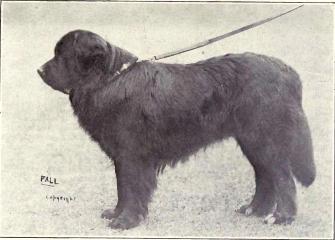
The final Titanic dog never existed to begin with, even though many people still think he did. This made-up hero dog was a black Newfoundland named Rigel belonging to First Officer William Murdoch.

Newfoundland, circa 1915.

PUBLIC DOMAIN

Rigel supposedly rescued and aided victims throughout the night, and even barked to prevent the Carpathia from running exhausted survivors over.

This story, while heartwarming and novel--a Newfie in the ice-cold Atlantic rescuing people as Newfies are bred to do, how convenient--was first published as told by a Carpathia crewman named Jonas Briggs. But a) there is no record of a Newfie on Titanic, b) Murdoch's widow insisted he never owned a dog, and c) there is no record of a Jonas Briggs on Carpathia.

Moreover, Fourth Officer Joseph Boxhall, who was in the first lifeboat to be picked up Carpathia, made no mention of Rigel, which one would think he would had something so extraordinary occurred.

So, as awesome as Rigel was, he was only that awesome because he was imagined that way. But this has not stopped the story from circulating, even today.

Open post

Dining Facilities

Dining On Board

Behold, what First-Class passengers were eating for lunch on April 12, 1912.

There is a noticeable disparity in quality to the modern eye between this fare and the menu options for Second and Third Class, but in 1912, First-Class passengers had never felt more adored, and Second- and Third-Class passengers had never felt more privileged.

The White Star Line commissioned work with various companies for proprietary silverware, china, dishes, pots, and state-of-the-art electric equipment for the kitchens. All menu items were coordinated by 2nd Steward Andrew Latimer, whose recipe book was left behind in Southampton.

First-Class passengers had a dining saloon. They also had exclusive access to the Verandah Cafe, which was more often called 'the Palm Court' because of its trellis walls cloaked in ivy and its potted plants on pretty tile floors. It was also replete with wicker chairs and oversized windows to make full use of the soft light.

The Palm Court on R.M.S. Olympic.

PUBLIC DOMAIN

They were also privy to "The Restaurant," which was available exclusively to their class of ticket.

Tables in The Restaurant had to be reserved in advance; lucky passengers could even get a seat with Captain Smith, or White Star Chairman J. Bruce Ismay. An Italian restauranteur was in charge of The Restaurant; he in turn brought in his head chef from Olympic, a Frenchman by the name of Rousseau.

Adjacent to The Restaurant was Cafe Parisien, which the White Star Line hyped as a "charming sun-lit veranda, tastefully decorated in French trellis-work with ivy and other creeping plants." It was, naturally, exclusive to First Class.

Moreover, Cafe Parisien was also exclusive to Titanic herself, as it had been installed to replace what was an oft-untrod promenade deck on her older sister ship Olympic.

Cafe Parisien on Titanic. Taken by Robert John Welch for Harland & Wolff.

PUBLIC DOMAIN

First-Class passengers could also get room service. Given how gargantuan Titanic was, a hot water jacket was used to keep the meals warm on the commute from kitchen to suite, which had a separate dining area.

Second-Class options were expectedly less highfalutin.

The Second-Class dining area hosted crewmembers as well as passengers, and its kitchen was shared with First Class, but the diners did not enjoy all the same luxuries.

For instance, silverware, although likewise silver-plated, was more utilitarian. Whereas First-Class passengers were given the extremely vital grape scissors at their tables, for example, Second-Class passengers were expected to pull the wanted grape from its bunch by hand.

In addition to Second Class, Titanic had a dining area for the maids and servants of first-class passengers on C Deck, which was accessed just off the Grand Staircase. Their silver napkin rings were engraved with the word "SERVANTS," lest they forgot themselves.

Third Class had plainer fare but no want for enthusiasm.

The Second-Class Dining Saloon on Titanic's elder sister, R.M.S. Olympic, circa 1911.

PUBLIC DOMAIN

In addition to Second Class, Titanic had a dining area for the maids and servants of first-class passengers on C Deck, which was accessed just off the Grand Staircase. Their silver napkin rings were engraved with the word "SERVANTS," lest they forgot themselves.

Third Class had plainer fare but no want for enthusiasm.

Many Third-Class passengers had never eaten better--or received better treatment--than they had on board. Not only were the chairs unbolted to the floor as was customary for Third Class, but the tables had linens, and they were given tissue napkins printed with the White Star logo.

In a marketing bid, Third-Class passengers were encouraged to keep their menus, which doubled as a postcard that White Star hoped they would send back home, thereby enticing their family and friends to buy a steerage ticket and experience the luxury. Despite the opulence that so often springs to mind at the mention of the RMS Titanic, First-Class tickets were not White Star's bread and butter: steerage, thanks to immigration to America, paid the bills.

Third-Class Dining Saloon on R.M.S. Olympic. Courtesy of Bedford Lemere & Co.

PUBLIC DOMAIN

A single Third-Class menu card, dated April 14, 1912, survives. It was safeguarded in the purse of steerage passenger Sara Roth, who was in Collapsible Lifeboat C.

SOURCE MATERIAL

Babler, Gunter. "Guide to the Crew of Titanic: The Structure of Working Aboard the Legendary Liner." The History Press, Gloucestershire, England. 2017.

https://www.encyclopedia-titanica.org/titanic-survivor/sarah-roth.html

https://titanicexhibition.com/nyc/

Posts navigation

1 2 3
Scroll to top