Open post

“The Noise Was Terrific”: Sensory Titanic

"The Noise Was Terrific": Sensory Titanic

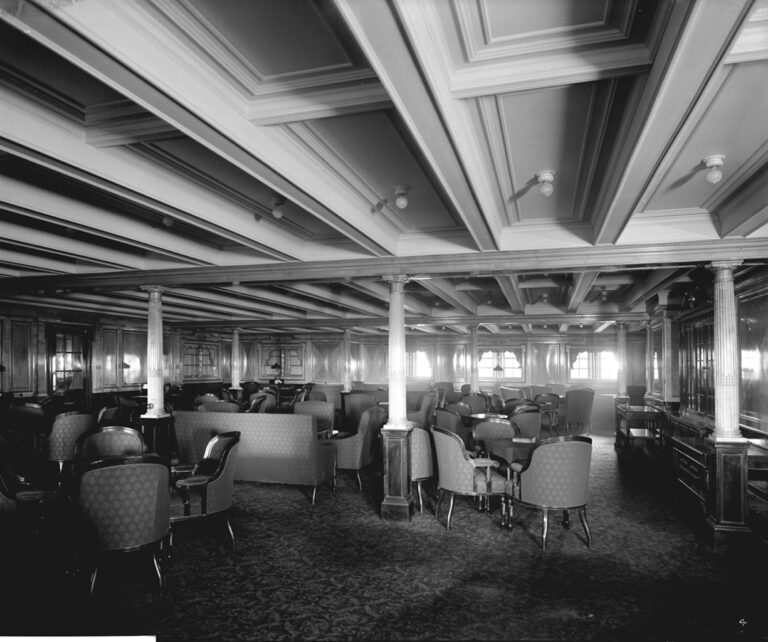
Monochrome photos and scuffed film footage of the RMS Titanic—captivating though they are—often belie the obvious: she was not, in fact, a mute ship.

Her walls were not greyscale set-pieces; her passengers were not quaintly clad rooks on a chessboard.

Titanic was a lively, living vessel that was full of lively, living people. And as such, she sailed in a constant eddy of sound.

It was noisy on board.

There were the usual ambient noises, naturally, such as the wind and rush of Atlantic waves. And Lawrence Beesley, the bookish and astute Second-class passenger, recalled in detail the maritime soundtrack of seagulls as Titanic followed the coast.

In our wake soared and screamed hundreds of gulls, which had quarreled and fought over the remnants of lunch pouring out of the waist pipes as we lay-to in the harbor entrance… The gulls were still behind us when night fell, and still, they screamed and dipped down into the broad wake of foam which we left behind; but in the morning they were gone…

Excerpt from "The Loss of the S.S. Titanic" by Lawrence Beesley, published in 1912.

But the most notable noise on board was most certainly the thrumming. The ever-turning engines and propulsion of the ship caused a low-frequency vibration throughout the ship.

It was, in essence, Titanic's very heartbeat.

Jack Thayer, a 17-year-old traveling with his parents, recalled the effect.

 There was the steady rhythmic pulsation of the engines and screws, the feel and hearing of which becomes second nature to one, after a few hours at sea.

Excerpt from "The Sinking of the S.S. Titanic" by Jack Thayer.

Most passengers grew accustomed to it rather quickly, although some wrote that they found it troubling at the start of the voyage—especially when trying to get to sleep. And depending on the particular whereabouts of one’s cabin, the omnipresent vibration often caused a collateral racket.

This was the unfortunate case for Second-class passenger Samuel Hocking.

You can hardly realise you are on board except for the jolting of the engines that is why it is such bad writing… I turned in at 10 o’clock last night, but could get no sleep owing to the rattle of water bottles, glasses and other things too numerous to mention so I was glad to get up at six o’clock...

Citation courtesy of "On Board RMS Titanic," by George Behe. 2012.

Samuel, like other perturbed passengers, mused that he would “soon get used to it.”

Above the persistent mechanical hum would have been the simple commotion of everyday life that played out in Titanic’s common areas.

With her multiple long promenades, Titanic was made for moseying about. And in spite of the April briskness, her passengers took full advantage. Conversations in this setting were probably private enough, likely intelligible from afar due to the sea winds. 

But not everyone received the memo regarding on-deck decorum.

Multiple passengers in Second-class noted a loud jollity amongst the younger men on board. 

Henry Hodges, who was on his way to Boston to visit with family, made mention of some notably raucous lads in a letter to a Mr. Hector Young. He posted the missive during Titanic’s stopover in Queenstown, Ireland, on 11 April.

 On the top deck, there are about 20 boys, from 20 upwards, marching round and singing, others are playing dominoes and cards in the saloons. Some are reading, some writing. 

Citation courtesy of "On Board RMS Titanic," by George Behe. 2012.

Fellow Second-class passenger Kate Buss seems to have heard these guys, too. 

She was not a fan. 

“Such a noise by the many youths aboard,” Kate wrote. “The second class is very mixed. Some very ordinary, and some very nice. One can really walk miles a day going around the decks.”

Kate didn’t always seem the tolerant sort when it came to noise, and seems to have been specifically irked by noisy children on board.

Promised to go on deck before breakfast, but I hear so many men about outside. I’m afraid to go on the deck below and fetch Miss W. Shall wait until I hear the dressing gong.… I hear a baby screaming now, two or three are on board... some seem to turn up only at meal times. 

Citation courtesy of "On Board RMS Titanic," by George Behe. 2012.

Kate did, however, look fondly on two of the children nearby. The LaRoche daughters—3-year-old Simone and 1-year-old Louise—were “dolls running about.”

In steerage, the nearly 100 children under age 14 were also underfoot and surely making themselves heard as they played. Eliza Johnston, for example, wrote in a postcard to her father that “we are all feeling A1. The kids are skipping about like skylarks.”

Lawrence Beesley observed Third-class goings-on from afar, and he described a vibrant soundscape of music and play among the passengers on deck.

Looking down astern from the boat deck or from B deck to the storage quarters, I often noticed how the third-class passengers were enjoying every minute of the time: a most uproarious skipping game of the mixed-double type was the great favorite, while “in and out and roundabout” went a Scotchman with his bagpipes playing something that Gilbert says “faintly resembled an air."

Excerpt from "The Loss of the S.S. Titanic" by Lawrence Beesley, published in 1912.

Other populous areas on board were, without doubt, an ongoing orchestra of the mundane.

In the dining rooms, for instance: the shrill clatter of White Star Line china, the pushing and pulling of chairs on carpet, the pouring of teas, and the murmur of the waitstaff.

Of course, summoning the passengers to prepare for these mealtimes was a soundtrack unto itself. In First-class, Arthur Gee described it with a sense of humor.

Just finished dinner. They call us up to dress by bugle. It reminded me of some Russian villages where they call the cattle home from the fields by horn made from the bark of a tree. 

Citation courtesy of "On Board RMS Titanic," by George Behe. 2012.

In Second-class, Juliette LaRoche, the mother of the aforementioned “dolls” Simone and Louise, described a similar experience in a letter to her father back in France. “The chime of the bell announcing breakfast woke them up. Louise laughed a lot at it…”

Juliette went on to describe yet another element of the auditory experience on Titanic: that of near-ubiquitous music.

“I am writing from the reading room,” she wrote. “There is a concert in here, near me, one violin, two cellos, one piano.”

The Titanic was equipped with a reported six Steinway pianos of varying models; three were located in First-class, two were located in Second-class, and the last was for the use of steerage passengers.

While the First-class pianos were reserved for Titanic's musicians, record exists of passengers playing the pianos in both the Second- and Third-Classes.

One of the two Second-class Steinways was played upon by 27-year-old Robert Douglas Norman during an impromptu hymn service held by Reverend Ernest Carter, a fellow passenger, on the same evening as the iceberg strike.

The Third-class piano, located in the general room on C-Deck, existed solely for passengers—and it was certainly used, particularly during the party held on the night of the iceberg strike.

Gershon Cohen wrote that, even in the immediate aftermath of the collision, "people were singing and playing the piano, and the band [of passenger musicians] was still playing."

Eugene Daly corroborated Gershon's recollection. "I played the pipes and there was a great deal of dancing and singing. This was kept up even after we had struck."

When Titanic collided with the iceberg, the sound experience varied drastically per passenger.

Some reported that they heard nothing at all.

Third-class passenger Elin Hakkarainen wrote that she and her husband Pekka were in their cabin when they "heard a scraping sound... a few moments later the throb of the engines stopped."

In First-class, Jack Thayer had just come back from a jaunt up on deck.

I went onto the boat deck – it was deserted and lonely. The wind whistled through the stays, and blackish smoke poured out of the three forward funnels… It was the kind of a night that made one feel glad to be alive.

Excerpt from "The Sinking of the S.S. Titanic" by Jack Thayer.

Jack returned to his quarters soon thereafter and prepared for bed as he listened again to the wheezing wind. "I had half opened the port [window], and the breeze was coming through with a quiet humming whistle," he wrote.

Then Titanic struck the iceberg.

Jack's account of what unfolded is a testament to chaos and cacophony.

The noise was terrific. The deep vibrating roar of the exhaust steam blowing off through the safety valves was deafening, in addition to which they had commenced to send up rockets… After standing there for some minutes talking above the din, trying to determine what we should do next, we finally decided to go back into the crowded hallway where it was warm.

Excerpt from "The Sinking of the S.S. Titanic" by Jack Thayer.

Jack jumped overboard, finding refuge on the overturned Collapsible B.

Still, he could hear it all.

The roaring of the exhaust steam suddenly stopped, making a great quietness, in spite of many mixed noises of hurrying human effort and anguish. As I recall it, the lights were still on, even then. There seemed to be quite a ruddy glare, but it was a murky light, with distant people and objects vaguely outlined. The stars were brilliant and the water oily…

Occasionally there had been a muffled thud or deadened explosion within the ship. Now, without warning she seemed to start forward, moving forward and into the water at an angle of about fifteen degrees. This movement, with the water rushing up toward us was accompanied by a rumbling roar, mixed with more muffled explosions. It was like standing under a steel railway bridge while an express train passes overhead, mingled with the noise of a pressed steel factory and wholesale breakage of china...

Excerpt from "The Sinking of the S.S. Titanic" by Jack Thayer.

According to Jack, Titanic's stern soundlessly slipped beneath the surface of the water.

And the wails began.

Titanic went under the water with very little apparent suction or noise… Praying and cursing and cries of entreaty and words of command came from those of us packed like sardines on the hull of [overturned Collapsible B].

Probably a minute passed with almost dead silence and quiet. Then an individual call for help, from here, from there; gradually swelling into a composite volume of one long continuous wailing chant, from the fifteen hundred in the water all around us. It sounded like locusts on a mid-summer night, in the woods in Pennsylvania.

This terrible continuing cry lasted for twenty or thirty minutes, gradually dying away, as one after another could no longer withstand the cold...

Excerpt from "The Sinking of the S.S. Titanic" by Jack Thayer.

Even today, Titanic still has a voice.

According to some who have visited the Titanic's wreck site, the ship groans against the deepwater currents. It sounds, supposedly, like a creaky old house in the wind.

SOURCE MATERIAL

Hyslop, Donald, Alastair Forsyth, and Sheila Jemima. "Titanic Voices: Memories from the Fateful Voyage." Sutton Publishing Limited, 1997.

Behe, George. "On Board RMS Titanic: Memories of the Maiden Voyage." The History Press, 2012.

Beesley, Lawrence. "The Loss of the S.S. Titanic." Houghton Mifflin Company, 1912. Rpt. by Mariner Books, 2000.

Bile, Serge. "Black Man on the Titanic: The Story of Joseph Laroche." Mango Publishing, 2019.

https://titanicarchive.org/collections/documents/john-jack-borland-thayer/the-sinking-of-the-ss-titanic

https://newengland.com/yankee/history/titanic-survivor/

https://www.encyclopedia-titanica.org/community/threads/the-pianos.53155/

Open post

“Attached to Each Other”: Denis Lennon & Mary Mullin

“Attached to Each Other”: Denis Lennon & Mary Mullin

Joe Mullin chased after his sister, all the way to the Queenstown dock—wielding a loaded revolver.

But by the time he got there, the tender ship had already pulled away. 

The tender SS America shrunk down as it bobbed toward the RMS Titanic, ferrying over 120 passengers toward their fate. And amongst those passengers was his little sister, Mary, along with her lover Denis Lennon.

They were eloping.

Mary's family evidently did not approve.

Joe Mullin, a runner for Guinness and reportedly a mercurial, impulsive drinker, was witnessed pounding his fists on the dock rail in ire. 

The police at Queenstown later affirmed to Joe that yes, they had indeed seen a young couple who appeared to be “runaways.” But they did not react, as they had not been informed of any runaways.

Mary was just 18 years old; Denis, 20.

It all unfurled after the Easter holiday.

Mary had been at home in Co. Galway with her mother and siblings. She was then due to return to her boarding school, called Loreto Abbey. 

The Mullin family was a prosperous one. Mary’s widowed mother, Delia, owned a thriving pub and general store in Clarinbridge, Co. Galway. Joe worked as the bookkeeper, while his younger brother Owen was shopkeeper.

And according to the 1911 census, the shop assistant was Denis Lennon.

Denis, born in Co. Longford, was the third of six children in an impoverished family. Mary’s hometown of Clarinbridge was well over 100 miles away.

And yet somehow, for reasons still unknown, Denis had made his way there.

Mary was not present at home at the time of the 1911 census; she instead is found listed as a pupil at Loreto Abbey, located in Rathfarnham.

Despite this, at some point, Denis and Mary fell in love. Afraid that their desire to marry would be denied by her family, they made a plan.

It had been arranged that, following the Easter holiday with her family, Mary would take the train into Dublin, to be collected by her brother Bartholomew. He would thereafter deliver Mary back to school.

She reportedly left on time for the rail station on departure day.

But Mary Mullin never met with Bartholomew in Dublin.

Mary’s sister Bridget suspected something and made her way to the railway. There, Bridget had spotted Denis “the barman” watching her from a train.

At the station I saw a lad on the train, his name was Lennon, looking at me. Then later we got a wire from the school saying she had not arrived.

Citation courtesy of "The Irish Aboard Titanic" by Senan Molony.

As it turned out, once Mary arrived at the station, she had clandestinely taken a train to Cork with Denis.

According to family rumor, Denis had been stealing bit by bit from the till at the pub, in preparation for the elopement. 

The runaway lovers had originally booked their passage on the SS Cymric, one of the White Star Line’s older passenger liners.

Plans were nearly scuttled, however, when the ongoing coal strike disabled the Cymric.

Mary and Denis were presumably gleeful, then, to find out that their passage was transferred to the maiden voyage of Titanic, scheduled to depart only four days later.

Their ticket bore falsehoods.

The pair reported that they were siblings: a 21-year-old laborer and a 20-year-old spinster. Perhaps in a cheeky nod to their intention to marry, they registered solely under Denis’s last name.

And so, having eluded Joe Mullin’s handgun, they boarded Titanic as “Denis and Mary Lennon.”

Little exists in the way of information regarding Mary and Denis while on board Titanic, although contemporary reporting asserts that they “were spoken to while aboard the ill-fated vessel.”

Neither survived.

At first, it was speculated that maybe "the bride" Mary had survived, but it was a futile hope.

A young couple who were attached to each other from early youth and who came to Queenstown by appointment and secured tickets in the name of brother and sister, intending to marry in America, are both apparently gone.

As reported by the Cork Examiner, April 19, 1912. Citation courtesy of "The Irish Aboard Titanic" by Senan Molony.

In her bereavement, Delia Mullin engaged local solicitors, Blake & Kenny, to investigate the fate of her stolen daughter. 

After interviewing survivors, the solicitors discovered that a couple resembling Denis and Mary that either had a single lifeboat seat—or alternately, a single lifebelt—between them, meant for the girl. She refused, stating that ‘if he couldn’t have one’ then neither would she.

For decades thereafter, Denis and Mary were a persistent mystery: thanks to the error of the White Star Line, it was, for a long time erroneously recorded, as “Lemon.”

The true nature of their relationship was, and still is, uncertain.

And, of course, “Mary Lennon” was elusive in found records, since, technically, she did not exist.

The legacy of Mary and Denis endures even today. 

After the disaster, local folklore memorialized the tragedy of the lovesick girl who eloped on Titanic with her family's shop-hand.

An alumna of Loreto Abbey stated during an interview that as late as 1949, the school continued to invoke dedicated prayers each April for Mary Mullin. Hers was their chosen cautionary tale against romantic impulse.

And then, more than seven decades later, Mary and Denis inspired the creation of a fictional, forbidden liaison on the RMS Titanic.

It was a movie about a rich girl, a poor boy, and an angry chase involving a handgun. 

Open post

“Declaration of Intention”: Franz Pulbaum

"Declaration of Intention": Franz Pulbaum

Franz Pulbaum wanted to be an American.

And on the 17th of February, 1912, he averred as much, signing a Declaration of Intention to pursue US citizenship and permanent residency.

Franz, who had been born in Munich in 1884, was 27 years old in April of 1912. 

He had emigrated to the United States from the German city of Bremen. According to his Declaration of Intention, he arrived at an unknown port on Valentine’s Day of 1907.

Franz was a machinist, valued as a supremely skilled trade craftsman who worked in metal. 

Franz found—or perhaps already had—employment with a machining firm, called the Witching Waves Company, that manufactured a pioneering amusement-park thrill ride.

Witching Waves Co. was founded by Theophilus Van Kannel, who had also invented the revolving door in 1888. 

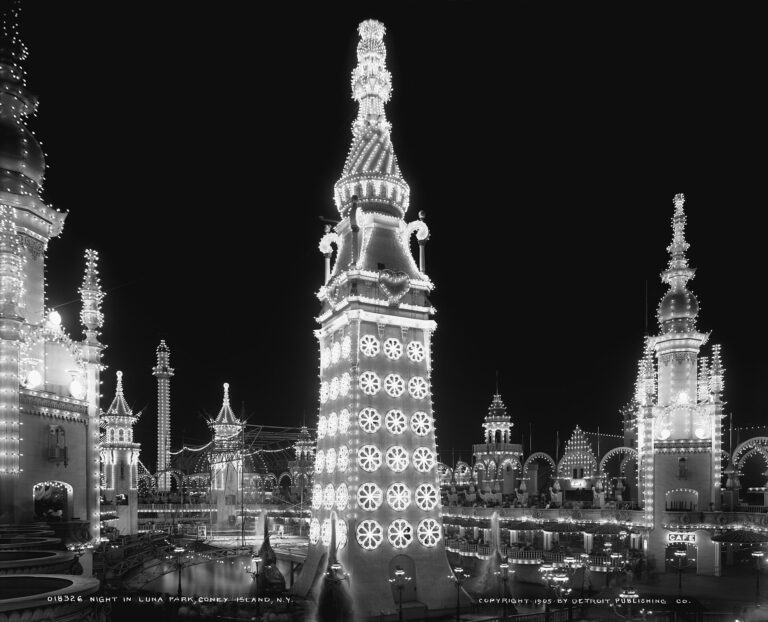
Van Kannel’s Witching Waves ride debuted in Luna Park, Coney Island, in 1907. It was the same year that Franz arrived in the United States, although there is no evidence at present that the two occasions were related.

The Witching Waves swiftly became the most popular ride at Luna Park, which itself had only opened four years prior in 1903. Soon after its installation, the ride was regarded as a flagship attraction.

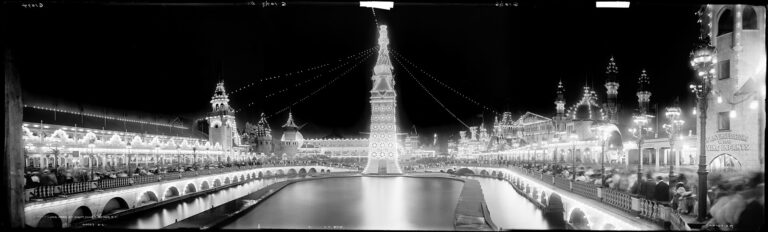
Under Luna Park’s hundreds of thousands of dazzling lights, the Witching Waves recreated a so-called “stormy sea experience” in Coney Island’s “Electric Eden.”

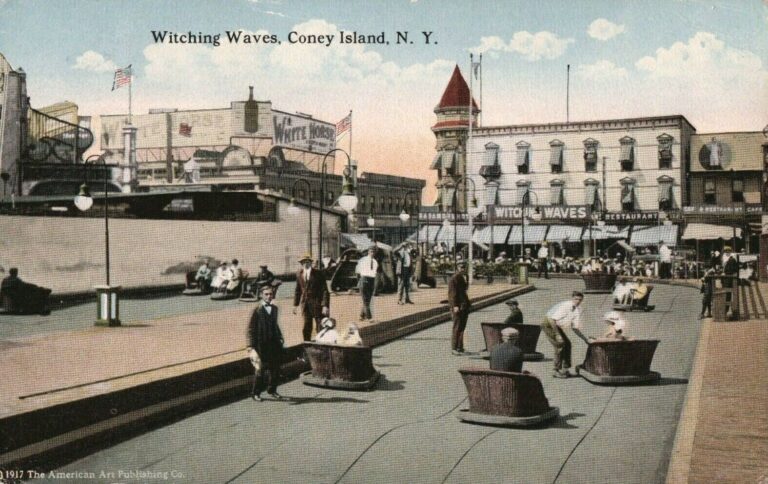
A sort of prototype to the modern bumper car,he Witching Waves moved two-seater scooter cars around a large oval racetrack that measures almost 200 feet long. 

The floor of the course was made of iron sheets that flexed in a forward fashion, undulating like ocean waves. 

The mechanized swells traveled down the sheet iron, propelling the precariously balanced riders—dozens all at once—down and around the course; certain larger “waves” forced the cars in the desired direction.

The cars, though steerable in the most basic sense, had no starting mechanism, so they had to be manually pushed out of the loading area by a ride attendant. 

The cars likewise were not equipped with restraints, resulting in not a few mishaps as riders were bounced about. Riders were sometimes flung head-over-feet from their cars. 

Inevitably, more grievous injuries sometimes resulted. In 1919, for example, firemen at Rockaway Beach had to destroy the ride to save a child, ripping it into pieces to rescue a boy who had gotten caught in the floor’s mechanism.

Unfortunately, the Witching Waves suffered a short expiry date; its longevity was often truncated by metal fatigue and an array of mechanical failures.

Despite these operational quirks, another was installed in Manhattan 1910. More Witching Waves rides followed in various amusement parks in both the United States and Europe.

Franz Pulbaum, reportedly a chief mechanic for Witching Waves Co., would have been critical to these subsequent installations.

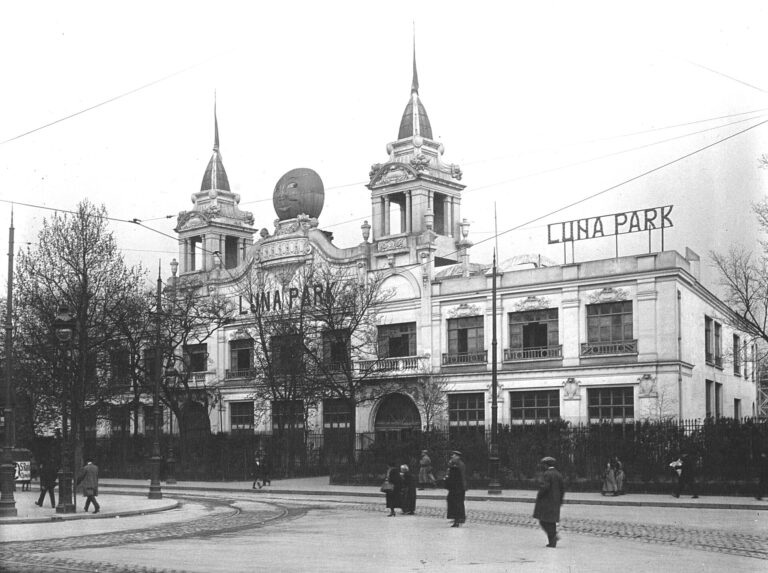
In 1912, one such installation had recently been completed at Luna Park—a franchise location of Coney Island’s original—in Paris, France.

Franz Pulbaum was sent to inspect it.

By all impressions, Franz seemed to be doing rather well for himself. He used a pocket-sized, leatherbound date book, its binding branded with Maryland Club Rye, which was a popular and elite whiskey made by Cahn, Belt & Co. out of Baltimore. Back home in New York, he had purchased a striped, grey-silk necktie, as well as silk socks, for himself.

Most notably, Franz had just recently received a certificate of “Capital Stock” in the amount of $50,000.00 from Witching Waves Co.: proof enough that he excelled at his work. 

All of this while still refining his mastery of the American-English language, as evidenced by the German-to-English dictionary he carried.

During his business trip to Paris, Franz appeared to have enjoyed his leisure time as a tourist. 

He collected postcards—29 in all—of various Paris attractions, picturesque scenes of the Seine and Tuileries Garden. Notably, he also carried a postcard of a rollercoaster called Le Scenic Railway, an attraction at the Parisian Luna Park where he carried out his work.

Friends wrote him while he was abroad, sly in their envy as they asked after him and declared he must be enjoying limitless fine wine, being as he was in France.

Franz also made time a visit to his native Germany.

So Franz’s time was well-spent, and his work well-done. 

Because his boss, the aforementioned inventor Theophilus Van Kannel, was reportedly so pleased with Franz that, when time came for him to return to the United States, Mr. Van Kannel offered to upgrade his passage.

Franz had reportedly been booked on the SS La Provence.

Now, he would board as a Second-class passenger on Titanic. He boarded on the evening of 10 April, at the port of Cherbourg.

Franz’s time spent on Titanic is undocumented, and therefore unknown.

Franz Pulbaum died in the sinking. His remains, if evere recovered, were unidentified.

In 1993, RMS Titanic Inc., proceeded with a recovery expedition of the wreck site.

Amongst the salvaged items from that expedition was unopened luggage.

It had belonged to Franz Pulbaum.

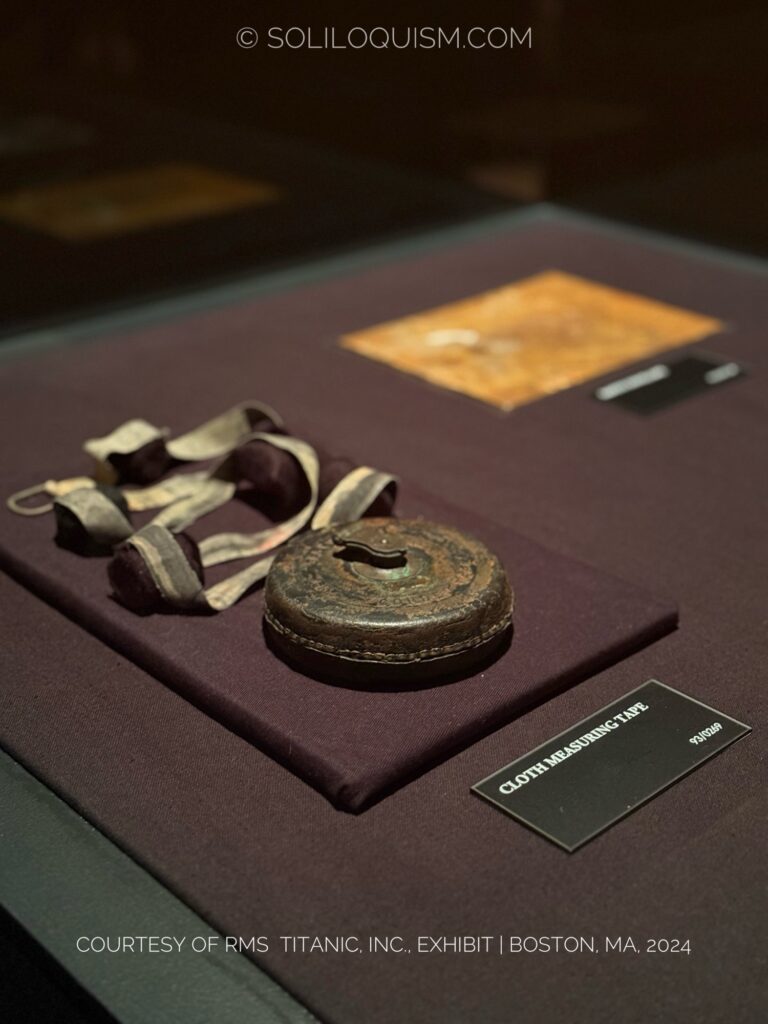
Within were the intimate artifacts of his blossoming life: His German-English dictionary. His small leather notebook, containing snippets of advice for the successful modern businessman. His professional tools, rusted but intact, including his fabric tape measurer. A bottle of hair tonic. His collection of Parisian postcards, bundled with string. His brand-new silk socks, still pinned at the toe.

Franz Pulbaum's tape measurer, recovered in 1993 by RMS Titanic, Inc. Photograph courtesy of RMS Titanic, Inc., exhibit in Boston, MA, December 2024.

© SOLILOQUISM.COM

There were documents, too: Letters. The stock certificate from the Witching Waves Co.

And an official “Declaration of Intention” to become an American, signed by Franz not two months before he died aboard Titanic.

Open post

“That Doesn’t Seem a Very Commendable Proceeding”: The Fate of Titanic’s Lifeboats

“That Doesn’t Seem a Very Commendable Proceeding”: The Fate of Titanic’s Lifeboats

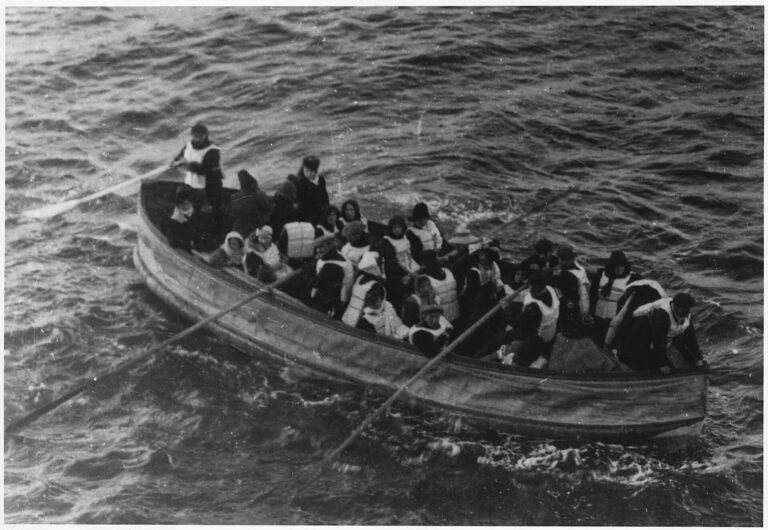
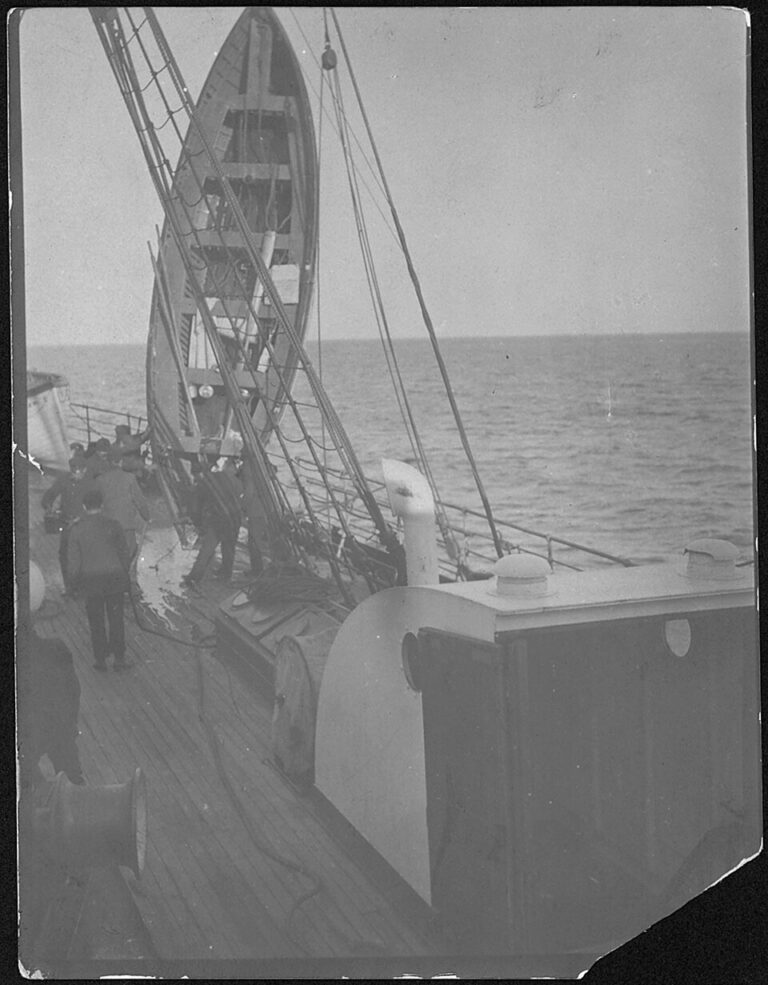
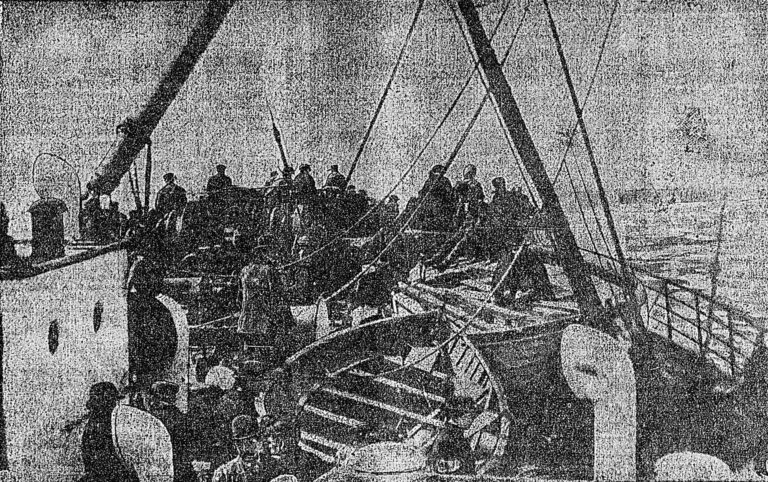
In the blue morning hours of 15 April 1912, having already brought aboard Titanic’s survivors, the Carpathia set about to salvage any of the now-vacant lifeboats thought to be in good condition. 

But, with precious little room to store them all on an already-full vessel, it was decided that not all the lifeboats could be saved. 

And so, some of the Titanic’s lifeboats were set adrift, or otherwise abandoned to the open ocean.

Thirteen of Titanic’s twenty lifeboats arrived on the Carpathia when she swung into New York City on the night of 18 April.

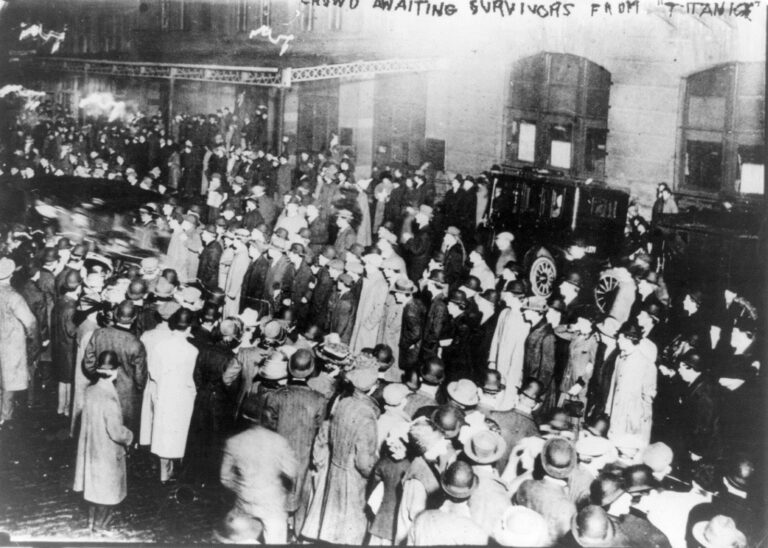
They were, as it turned out, the very first of Titanic’s survivors to disembark the rescue ship—much to the wonder and dismay of the throng that awaited the Carpathia at Pier 54.

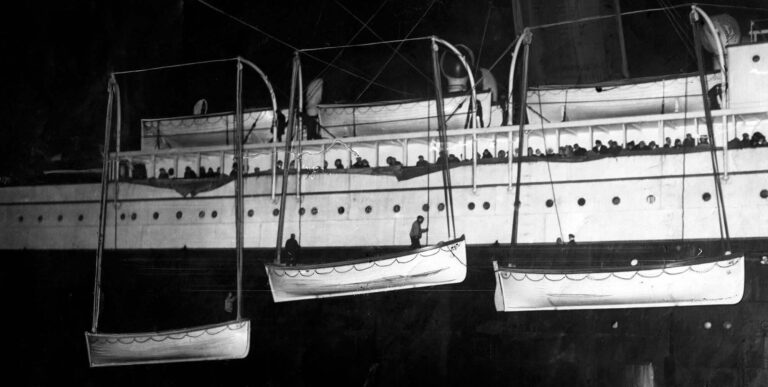
The waiting hundred, almost frantic with anxiety over what the Carpathia might reveal, watched her, as with nerve-destroying leisure she swung about in the river, dropping overboard, Titanic’s lifeboats. It was dark in the river, the lowering of the boats could be seen from the Carpathia’s pier, and a deep sigh arose from the multitude there as they caught this first glimpse of something associated with the Titanic.

The Carpathia’s captain Arthur Rostron later described the scene himself.

There were dozens of tug[boats] dodging about the ship, and the lowering away of Titanic’s boats (we could not get into dock until all of the Titanic boats were away from the ship, as seven of them were suspended in our davits and six were in the forecastle head, and so in the way of working the mooring ropes) and these boats, leaving the ship in the blackness of the night with two of the rescued crew in each boat and some of Titanic’s officers in charge of them, it brought back to one’s mind the manner in which these same boats were last lowered from that great and magnificent ship never to reach New York.

According to various reports, some of the wrecked lifeboats were laid upon a derrick vessel called Champion, while some others were towed away to berth by tugboats.

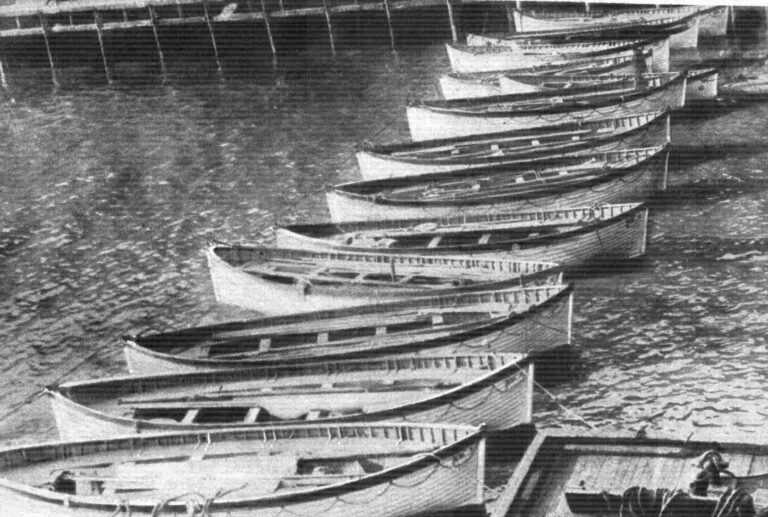
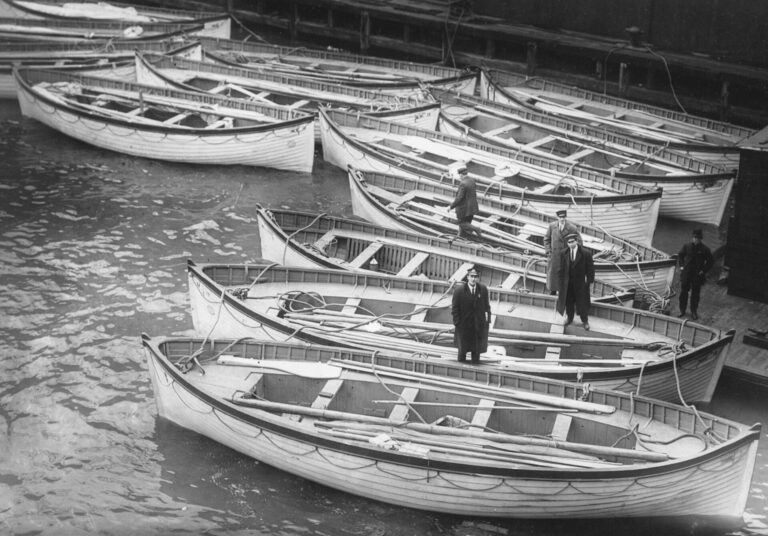
Once reunited and off-board the Carpathia, Titanic's thirteen lifeboats weathered that rainy night in the water, bobbing and clattering in the White Star Line’s Pier 59.

Meanwhile, Senator William Alden Smith had conducted a hasty interview with White Star chairman J. Bruce Ismay while he was still on board the Carpathia. Afterward, Senator Smith had informed the press that the surviving lifeboats would be of use in the upcoming Senate inquiry into the loss of the Titanic.

But it would not happen.

After their sleepover in the water, the huddled lifeboats were pulled from the water the next day. The task was undertaken by men working for the firm Merritt & Chapman, whose derrick had assisted the night prior.

Under supervision, the lifeboats were hauled aloft onto the docks between Piers 58 and 59.

Each of the thirteen lifeboats were then inspected and their contents were plainly inventoried by a dockside supervisor named Osborne Thompson. 

Mr. Thompson also made note of every lifeboat’s present condition, particularly whether insignia such as Titanic name plates, number plates, or White Star Line flags were absent.

Many were.

Perhaps the surviving lifeboats had been scavenged overnight by relic hunters, stripped of their brass nameplates for souvenirs.

First-class survivor Abraham Salomon, however, offered another explanation, claiming outright that the lifeboats were robbed of their fittings during their recovery at sea.

Within an hour after the Titanic's lifeboats had been stowed aboard the Carpathia every name plate had been taken off them. There were offered for sale at $5 each, and every one of them was sold. That doesn't seem… a very commendable proceeding from either side, but I may be wrong.

Mr. Salomon’s assertions have been proven accurate over the course of time, as various fittings from the thirteen lifeboats have appeared in both private and museum collections.

Just as likely, of course, is that some of the affected lifeboats might have simply incurred damage during their handling in the aftermath of the sinking.

Once inventoried by Mr. Thompson, the lifeboats were stored away.

This decision immediately incited media suspicions; the press readily suggested that the White Star Line had something to hide.

It was even reported that a photographer, while attempting to take photos of the mysterious lifeboats, had a gun fired on him by a pier watchman on duty.

The White Star Line presumably stored the lifeboats in New York due to Senator Smith’s proclamation that the vessels would be pertinent to his investigation. 

But the United States Senate Inquiry concluded in May 1912.

And as of September of 1912, the lifeboats were still in situ at the pier. 

But they had not been forgotten.

On the 28th of September, a pair of gentlemen named Henry Masters and Frank Martin carried out a valuation of the thirteen lifeboats at the behest of the White Star Line.

According to Martin and Masters, they came upon the boats at Pier 58. They had been placed on the second story of the dock, and were arranged in no particular order. The men started at the end of the dock with Lifeboat 11.

One by one and with the help of two dockyard employees, the men pulled each boat’s canvas back, measured it, and conducted a detailed assessment. Mr. Martin scribbled the corresponding notes in his ledger.

The lifeboats were all damaged in some way, he recalled—some missing their wooden gunwales, others with broken planks—but in spite of some scuffs, none of them “appeared to be very old.”

The valuation took around 4 or 5 hours.

Just before the new year, the White Star Line hired someone else to assess the lifeboats yet again; this time, the intent was to assess their value in the American marketplace. 

The assessor, named Axel Sawman, found them in “the upper part of the shed” at Pier 58, just as his predecessors had. He thereafter conducted an itemization of the separate items and effects of each lifeboat.

Sawman's appraisal is the last known record of Titanic’s thirteen surviving lifeboats. Whether they were recycled, scrapped, or abandoned to rot in that shed, the last relics of the Titanic were never seen again.

Over a century later, evidence of their fate has yet to be found.

Open post

“A Few Seconds Later, He Was Gone!”: John Coffey

"A Few Seconds Later, He Was Gone!": John Coffey

John Coffey just wanted to get home.

Luckily, he found an opportunity when the Titanic dropped anchor in Queenstown. 

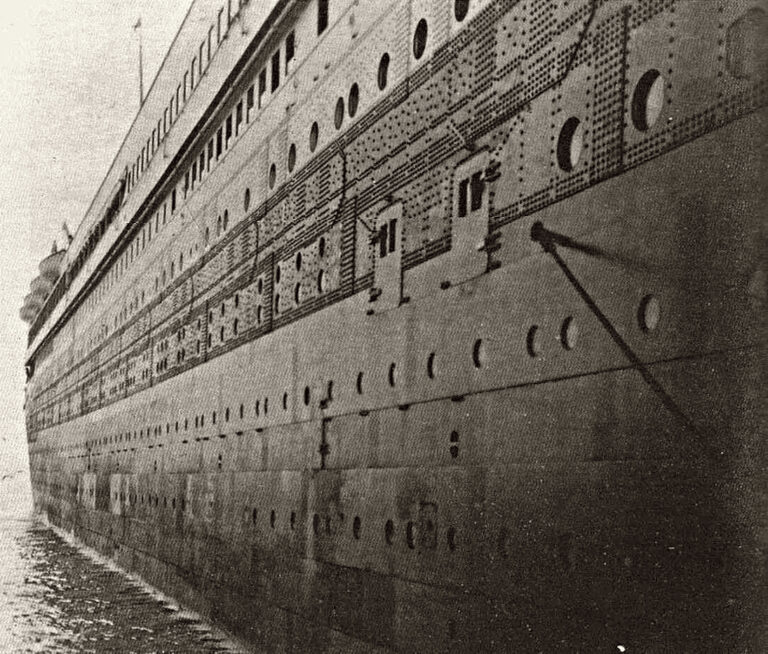
The Titanic arrived in Queenstown, Ireland, in the morning on 11 April. It was overcast and cool; against the grey clouds, Titanic’s black hull appeared painted onto the horizon.

[Titanic] dropped anchor at 11.55 a.m. about a mile outside Roche’s Point and as one saw her steaming slowly into view, a majestic monster, floating it seemed, irresistibly into the harbour, a strange sense of might and power pervaded the scene. She embodies the latest triumphs in the world of mercantile marine...

As reported in the Cork Examiner, April 12, 1912. Citation courtesy of the Cork Libraries.

Titanic’s stopover in Queenstown, which reclaimed its Irish name of Cobh in 1922, was hardly novel. Queenstown had been a major embarkation point for immigrants seeking passage from Ireland for decades. So common was the scene of families parting, that the dock at Queenstown had been nicknamed “Heartbreak Pier.”

Outside the shipping agency of James Scott & Company, over 100 Titanic passengers awaited. The majority held steerage tickets; less than 10 were Second-class passengers.

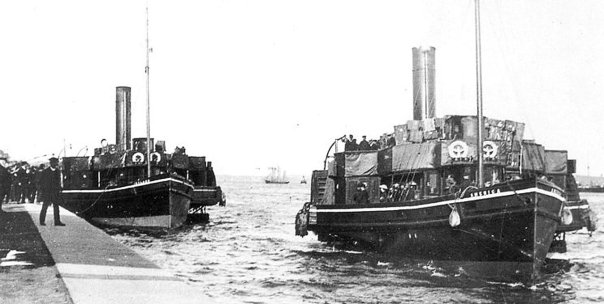
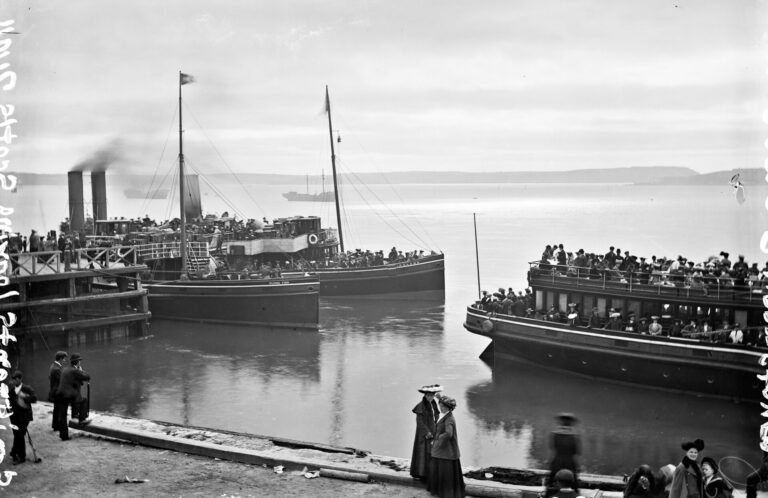
Two smaller ships, called tenders, met them at Heartbreak Pier that day. They were named the PS America and PS Ireland.

The Ireland ushered on board some local journalists, who were there to document the brand-new Titanic at her final port of call before undertaking her maiden voyage. About ten Titanic ticketholders followed the press on board.

Then the Ireland surprised its few passengers by slipping away from the PS America, which was still loading up.

But the Ireland cruised to a stop nearby in the Deepwater Quay alongside the railway station. It turned out she needed to pick up over 1300 bags of mail that Titanic was to deliver stateside.

A passenger reshuffle between the Ireland and the America occurred shortly thereafter, when tardy ticketholders arrived at the dock last-minute. They had been held up by a late train.

A photographer named Thomas Barker, sent by the Cork Examiner, decided at this moment to hop from the Ireland over to the adjacent America, to snap a picture of the heaps of the Ireland’s mailbags.

In the foreground, some of Titanic’s steerage passengers can be seen, caught in media res. The photo is an involuntary candid in monochrome: a scene in motion, comprised of blurred arms, side profiles, and ladies’ hats.

Titanic was anchored about two miles offshore, near the Roche’s Point Lighthouse.

As the America and the Ireland scurried to meet her, a 29-year-old mill weaver named Eugene Daly “played many native airs” on his pipes to the delight and wistfulness of his peers on board.

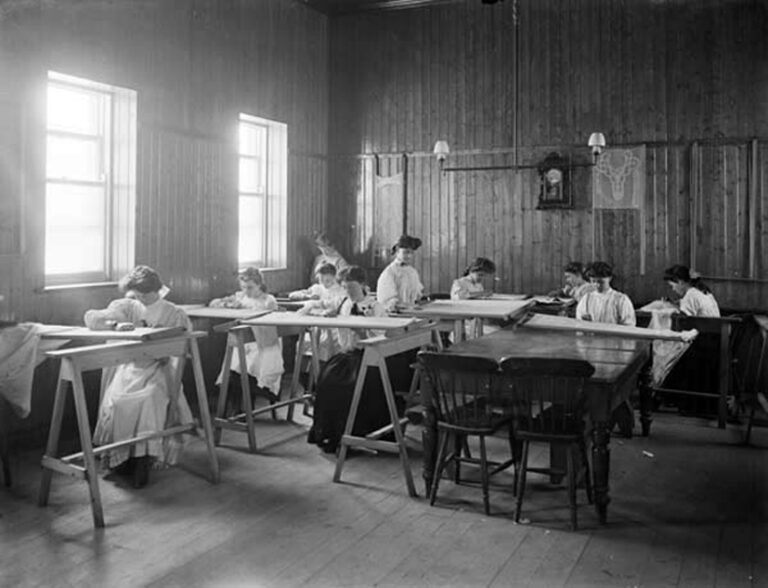
It is commonly reported that, along with mail and passengers, local vendors also boarded the Titanic during her stopover in Queenstown. Typical wares would have included local specialties, such as Irish lace. It was a go-to commodity made and sold to wealthy passengers on liners that called upon Queenstown.

After some time, whistles blew to alert the tenders and guests that Titanic was soon to depart.

The tenders Ireland and America would have been at her towering side, being loaded up once again with mailbags from Titanic, to be delivered on-shore. These sacks contained, of course, the precious last letters written by Titanic’s passengers and crew.

And when the tender ships pulled away from Titanic, they unwittingly did so with a stowaway. 

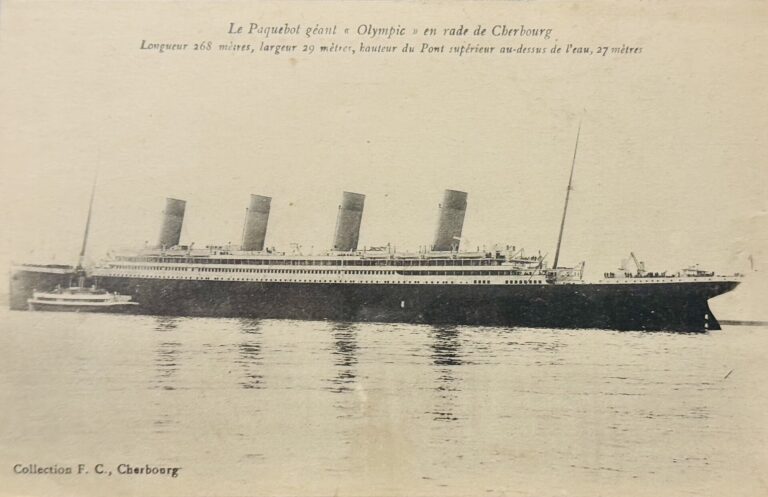
The aforementioned John Coffey was a 23-year-old stoker on Titanic. He had already been under the employ for the White Star Line, most recently serving on Titanic’s elder sister Olympic. 

But when his tenure on Olympic was done, John found himself deposited back on the docks in Southampton, England.

John had a registered address there in Southampton for when he was in between jobs, but his hometown was Queenstown, Ireland. And having quit the Olympic, he was left a fair distance from home, and with presumably little money to get back there.

The Olympic, having successfully arrived in Southampton, turned westward again toward New York City on 3 April 1912. It was her usual transatlantic run.

For whatever reason, John Coffey stayed behind. 

Work was scarce in Southampton in the ongoing turmoil of the coal strike, but it would become available shortly. The Titanic would get to town just one day later, on 4 April 1912, in preparation for her maiden voyage to New York. 

And she was scheduled to go ahead, regardless of the strike.

Once Titanic was settled in Southampton, John would have been well aware that she would seek crew for that voyage.

And he likewise would have known that, before Titanic would chase her sister’s shadow across the Atlantic, she would make two stops: one in Cherbourg, France, on 10 April, and the other—most conveniently for John Coffey—in Queenstown on the 11th.

And so, on 6 April, John Coffey signed onto Titanic as a fireman.

But he didn’t intend to stick around.

The Southampton Evening Echo reported the following from John’s fellow fireman John Podesta.

All the White Star boats and Cunard liners outward bound here to pick up mails and passengers by tender and it was custom for we firemen and trimmers to go up on deck and carry the mail from the tender to the mail room.

A fireman whom I knew very well, John Coffee [sic]… said to me, ‘Jack, I’m going down to this tender to see my mother.’

He asked me if anyone was looking and I said ‘No’ and bid him good luck. A few seconds later he was gone!

As reported in the Southampton Evening Echo. As cited in "The Irish Aboard Titanic" by Senan Maloney.

John successfully hid himself underneath or amid the many departing mailbags.

And from the docks, he made his way to his widowed mother’s home on Thomas Street. 

John Coffey disembarked both Titanic—and then the tender—undetected, and without apparent consequence. 

Because three days later, on 14 April, John Coffey successfully signed onto the crew of the Mauretania. And he did so without the necessary stamp in his professional Book of Continuous Discharge.

John was reportedly still present in Queenstown the next day, when the news broke that Titanic had foundered.

Immediately dubbed “The Lucky Stoker,” John’s abscondence was transformed from desertion into fateful escape. 

In the aftermath of the sinking, John’s near-miss with tragedy became a widespread and popular tale. In each retelling, however, his motive varied. 

The Cork Examiner reported that John Coffey “did not relish his job.”

Alternately, Jack Podesta had reported outright that John deserted Titanic that day in order to visit his mother. 

And then, of course, John himself reportedly gave interviews in which he stated he was compelled by unshakeable foreboding, or ill omen. 

As soon as two days after the sinking, on 17 April, it was reported that “one fireman, who felt that something was sure to happen, deserted at Queenstown.”

Regardless of the reason, John Coffey spared himself that day. 

And Titanic, steaming steadily away from her final port of call, would never be seen again.

John Coffey continued in his maritime service, although the full extent of his career movements are uncertain. 

In 1941, John Coffey reappeared in the press, having been saved from drowning in the treacherous winter waters of the River Hull the previous November. He had been rescued his friend and shipmate, James Bielby.

John Coffey reportedly died in 1957. 

Open post

“He Was Not Likeable”: Alfred Nourney

"he Was Not Likeable": Alfred Nourney

Alfred Nourney was not a baron.

But he played one on the Titanic.

Alfred Nourney was from Cologne, Germany. He was 20 years old when he embarked on Titanic at Cherbourg, France, in the evening of April 10, 1912.

Research published in recent years has suggested that Alfred was banished by to the United States by his mother, after he had gotten a local woman pregnant. Alfred, on the other hand, insisted that he had been in Paris with his mother and had annoyed her into purchasing a ticket on his behalf.

Whichever might be true, Alfred intended to launch a career "demonstrating motorcars" once he arrived stateside.

Alfred boarded the Titanic as a Second-class passenger. He called himself Baron von Drachstedt.

But he quickly determined that Second-class accommodations simply could not do for such a baron as himself.

Alfred therefore sought out the Purser's office, and requested an upgrade to a First-class ticket for a nominal fee.

And it worked, possibly due to his insistence on his supposed aristocratic status.

Exactly why Alfred rebranded himself as a baron is unknown.

He may have been trying to evade the scandal that might have followed him due to his liaison. Or, perhaps he called himself a baron to accomplish exactly what he accomplished: better accommodations on the ship's illustrious maiden voyage.

Or maybe it was simply to appear more impressive to the elites he was so eager to meet.

If that latter-most was true, it was a failed attempt: Alfred was hardly popular amongst his "peers" in First-class.

And with justifiable reason. Although Alfred was by all accounts delighted by his surroundings and social opportunities.

"I'm so happy being first class!" he wrote to his mother. "I already know some nice people! A Diamondking! Mister Astor, one of the wealthiest Americans, is on board! Thousand Kisses Alfred"

And yet, Helen Churchill Candee wrote thusly of her first interaction with him.

At my table in the dining room were six persons. ‘ Good morning,’ I greeted them with an inclusive bow. Four of them looked shy and scarcely acknowledged my effort at traveler’s courtesy. Poor things, I didn’t mean to hurt them. One only arose and made me a standing bow. It was my turn to be shy and I did not like it. The man was evidently of the world, his tall figure wore English tweeds, yet I could swear be was born and bred on the Continent. He had a certain sleekness that lessened the value of his good looks. He managed to slip his card to me after part of our fellows had left the table. The card held a German name and gave him the title of Baron. He spoke to me in perfect English with none of the accents that so often offend the ear. But he was not likeable, thereafter I avoided him. 

While on board, Alfred entertained himself by sending out two Marconigrams, both on April 13th, and both at 12:20 p.m. The contents were similar, and hardly of substance.

On the evening of April 14th, Alfred had been playing bridge in the First-Class Smoking Lounge with Henry Blank and William Greenfield. They reportedly barely felt a shudder, but only saw the liquor sway in their glasses.

Alfred, supposedly by way of the captain's private staircase which he had discovered during a clandestine exploration of the vessel, eventually made his way to Lifeboat 7 on the starboard side. He boarded with neither difficulty nor resistance.

It was the first lifeboat to launch from Titanic.

Also in Lifeboat 7 were actress Dorothy Gibson, newlyweds Helen and Dickinson Bishop, and French aviator Pierre Marechal.

They did not much care for Alfred either.

And again, they were not without reason. Helen Bishop later described the distasteful and disruptive actions of "the baron" in an interview published less than a week later, on April 20, 1912.

For instance, there was a German baron aboard who smoked an obnoxious pipe incessantly and refused to pull an oar. The men were worn out with the work, and I rowed for considerable time myself. 

Helen Bishop was pregnant at the time.

When he was not smoking or dozing off in the lifeboat, Alfred occupied himself by emptying his pistol of all its cartridges, firing it up into the night. It no doubt compounded the tension in Lifeboat 7.

Alfred's choice to brandish his firearm appeared to have been rather intentional.

Helen Churchill Candee made reference to him once again, in her recollections of the rescue ship Carpathia.

Woolner and Bjornstrom came in, arm in arm, trailed by the German Baron.

Strongly insolent, Woolner said distinctly, ‘Well, Baron, How did you happen to get in the boat with the women?’ ‘I’d like to see anyone stop me,” said the vain and explicit baron, drawing out a pistol, with an ugly look.

But Alfred did not stop there.

In perhaps his most egregious action of all, Alfred endeavored to take a nap on board Carpathia.

He went to the Smoking Room, and lay down on top of a pile of blankets, monopolizing them for himself to be used as a bed. The blankets were intended for survivors as they were brought aboard, and Nourney refused to move when a woman asked for them.

The lady, disgusted, nearly spat out the words: 'To think of it: the like of you saved and women left to drown; shame on you.' She could scarcely restrain the urge to grab Nourney by the collar and toss him into the sea. She yanked away the top blanket underneath Nourney, causing him to roll on to the floor. People jeered him and, thoroughly shamed, he beat a hasty retreat from the room.

Excerpt from "Sea of Glass: The Life & Loss of the RMS Titanic," by Tad Fitch, J. Kent Layton, & Bill Wormstedt, Third Ed., Amberley Publishing, 2015.

This incident was reported upon by two separate and contemporary periodicals.

Another similar moment was reported upon almost a year later, in an interview with Titanic survivor Margaret Hays.

The details vary slightly between recountings. To date, it is unclear whether one story was embellished for the sake of the other--or if Alfred was plainly this callous twice in the span of mere days.

During the trip the crew of the Carpathia placed at the disposal of the extra passengers a large quantity of emigrant blankets… It was bitterly cold one night and there seemed to be an unusual dearth of blankets. My friend and I approached the count, whose name I never learned, and I asked him for some of the huge stack of blankets that he had appropriated.

"'You wouldn't have me give up my nice warm bed, would you?' pleaded the count. 'Yes, I would,' I answered. I couldn't get them until I called him a brute and demanded them. He then got up grumbling and under him were ten of the heavy blankets, while others were shivering about the deck. We took two of the blankets and as he settled down on the others I leaned over him and said. 'You were saved and women and children went down with the ship.' Some wanted to throw him overboard. 

Alfred also endeavored to send a telegram from Carpathia, but it was never processed owing to the enormous backlog befalling the operators. It read, "Titanic sunk! Saved on board Cunard Line Carpathia. Completely destitute, no clothes. Alfred"

Alfred's devastating loss was savaged by the press--especially so in a particular article published by The Tennessean on May 5, 1912.

One of the real sufferers by the Titanic disaster is Baron Alfred von Drachstedt, 20 years of age, who hails from the sweet-scented city of Cologne. Escaping with his life, Alfred is mourning with a grief that refuses to be assuaged the loss of his entire wardrobe, and is of two minds as to suing for the value thereof, because he doubts the ability of American tailors and haberdashers to replace in proper style the things made in Germany which may now be in the midst of some predatory shark or whale cavorting around the banks of Newfoundland. 

In order that the reader may fully appreciate the gloom which surrounds the youthful baron, wo append a list of the vanished glories with which he had equipped himself for an invasion of the United States. He puts their value at $2,320, but for ourselves we are fain to confess that this seems a beggarly price.  However, here is the tally sheet, and those who are more conversant with glad rags than ourselves can figure the thing out for themselves: Ten suits of clothes, two tuxedoes, four overcoats, twenty white shirts, and twenty colored ones, twenty negligee shirts, fifteen night shirts, forty collars, fourteen suits of underwear, forty, pairs of hose, sixteen pairs of assorted shoes, one hundred and twenty scarfs, fifty handkerchiefs, six pairs of knickerbockers, two hunting suits, an aviation coat, ten pairs of gloves, two top hats, nine other headpieces, eight tennis trousers and coats, ten silk tennis shirts, with rings, cigarette cases, watches, match boxes, scarfpins, diamond studs, a sweet gold bracelet and ever so much more.

Alfred Nourney continued to travel, and went on to race motorcars and fly aeroplanes. He reportedly returned to Germany after the conclusion of the First World War.

By 1933, he was a member of the Nazi party.

By 1950, he was working in car sales.

Alfred Nourney died in 1972.


Open post

“I Did Not Think I Was Going to Live”: Thomas McCormack

"I Did Not Think I Was Going to Live": Thomas McCormack

Thomas McCormack was 19 years old when he boarded the Titanic at Queenstown on April 11, 1912.

Thomas had been a resident of Bayonne, New Jersey, since 1910. He had traveled home to Ireland some months before, on a visit to his relatives.

Thomas traveled with his cousins, brothers John and Phillip Kiernan. John was returning to his home in the United States, and had persuaded his younger brother Phillip to come along to the new world.

Unexpectedly along with Thomas and the Kiernan boys were the Murphy sisters, Kate and Margaret. The girls were running away from home, defying their aging and widowed mother.

None in the party were more than 25 years old.

Thomas, John, and Phillip boarded the train to Queenstown on the morning on April 11, 1912.

Once seated, they were met with many other steerage passengers bound from their home of Co. Longford. Amongst these newfound compatriots were three siblings: Barney, Agnes, and Alice McCoy.

According to secondhand memories of the McCoy family, the new friends conversed amiably and even sang throughout the ride down to Queenstown.

And once the party disembarked the train, they boarded the tender ship America.

The America was one of a pair of tenders (the other being her sister Ireland) tasked with ferrying Queenstown passengers from the dock over to the Titanic. The passage took approximately thirty minutes.

On board the America, piper Eugene Daly played Erin's Lament as the tender gained distance from the shore.

The Titanic turned toward the open sea at about 2:30 p.m.

Thomas most likely stuck with Co. Longford group as they sought out their cabins in the seemingly endless corridors deep below. A hearty dinner would follow.

As is the case for many steerage passengers on Titanic, there is scant official documentation of how Thomas McCormack spent time on board.

But thanks to the aforementioned recollections of descendants of the McCoys, some casual memories persist: most of their evenings were apparently whiled away in the general room, or otherwise in the Third-Class Smoking Room.

Thomas was presumably a part of these gatherings, as one of the McCoy sisters reportedly came down with a bit of a crush on young Tom, and was frequently in his company.

Meanwhile, Kate Murphy had brought her violin on board. She thusly played with other musicians in the Third-class party that occurred in the evening hours of April 14th, the night of the iceberg strike. 

Whether Thomas attended this party is not documented. But since Kate had played her violin that night and Katie Gilnagh, who had also befriended Thomas's group on the train, was also in attendance, it is reasonable to assume that Thomas may have at least made an appearance.

By the time the collision occurred at 11:40 p.m., Thomas was asleep. He was awoken with a start by John and Phillip. “I jumped out of bed and ran into the hall with my two cousins when we hit,” Thomas said. “Everyone was crazy and running, screaming.”

Barely dressed, Thomas bolted for the boat deck. In the bedlam below decks, he lost sight of his cousins.

It was brotherly love that cost 'Phil' his life. As he was hurrying toward the deck his brother John called to him to go on, that he would be there in a minute. As we reached the stairs Philip looked around, and not seeing his brother, started to return to look for him. I kept on and did not see either of them again.

Tom's sister Catherine later claimed that her brother had to fight his way past crewmembers to make it up to the boat deck. Tom himself said, "When I was running up to the deck in the confusion that night, I did not think I was going to live."

Once up top, Thomas found himself navigating through "many excited persons" who were "crying and yelling." Then Thomas ran into Barney McCoy, one of the Co. Longford group he had made friends with while on the train to Queenstown.

Tom and Barney "were not long in finding out that the ship was sure to sink." The boys proceeded to secure and fasten their lifebelts. Tom may have assisted in seeing Barney's two sisters off in a lifeboat.

The boys had realized that the Titanic "was settling badly."

So they jumped overboard.

"I panicked and ran to the rail. I never stopped to look how far from the water I was. I just jumped over," Tom recounted. "It felt like a mile down to the ocean, and it was freezing water. All I had was my lifejacket."

Thomas surfaced and swam for a nearby lifeboat.

But he was attacked.

In a contemporary article published by the Tasmanian periodical Examiner, "He got his hands on the gunwale of a lifeboat, but members of the crew struck him on the head and tore his hands loose."

His experience was also officially documented during the British Inquiry into the Titanic disaster.

The Commissioner:
Now what are the issues which have been mentioned as being issues between those two gentlemen and the crew?

Mr. J. P. Farrell, M. P:
They are of the very gravest kind. Thomas McCormack alleges that when swimming in the sea he endeavoured to board two boats and was struck on the head and the hands and shoved back into the sea, and endeavoured to be drowned.

After being driven away from the first lifeboat he had approached, Thomas somehow found his way to another, despite the injuries to his head and hands. He again clung to its sides and attempted to board.

And thanks to the Kate and Margaret Murphy, he succeeded.

After being beaten severely by sailors with oars I managed to get into one of the life and boats [sic]... [Kate and Margaret Murphy] sat on me and tried to cover me up.

After a while one of the sailors saw my legs protruding, and seizing them asked me ' what in _____' I was doing in the boat. He dragged me out and tried to throw me into the water. I grabbed him by the throat and said if I went overboard I would take him with me. When he saw that he could not thro [sic] me over he finally desisted and I was allowed to remain.

Upon the arrival of the rescue ship Carpathia in New York City, Thomas McCormack disembarked to be picked up by his brother-in-law, Bernard Evers, who had traveled there to bring Thomas home.

But amidst the confusion on the dock, in the dark cold and under the rain, the men missed each other entirely.

Bernard hunted all night and the following morning for Thomas. As fear mounted that perhaps Thomas's survival had been falsely reported, Bernard learned that Thomas had been transferred to Ellis Island so "his credentials could be inspected," since no one had claimed him.

Thomas McCormack was hospitalized for the bruises and lacerations to his head and hands that he had suffered in the lifeboat.

He thereafter returned to Bayonne, New Jersey.

The sinking of the Titanic haunted Thomas throughout his life.

The Easter season is never a completely happy time for Tom McCormack of Elizabeth, N.J. It always brings memories of his escape from the sinking Titanic...

The sinking of the Titanic has always had some effect on his life. Afterward he was afraid of sailing, and the only ship he ever boarded was the troopship that carried him to the shores of France to fight in World War I. McCormack had nightmares for years, and almost all of his conversations somehow get around to the Titanic.

Thomas naturalized as an American citizen in 1916. He became the owner of a pub, worked as a security guard, and married twice.

Interviewed in 1974 for the anniversary of the sinking, Thomas said, "I owe my life to God's kindness, nothing else."

He died the next year, at the age of 83.

Open post

“Enormous Icebergs Surrounding Us, White as Swans”: Mary Conover Lines

"Enormous Icebergs Surrounding Us, White as Swans": Mary Conover Lines

As an expatriate family, Mary Conover Lines and her mother Elizabeth were already familiar with transatlantic travel, although they did not do so very often.

But in April 1912, they were intent to travel to Dartmouth College in New Hampshire, to attend the graduation of Mary’s older brother Howard.

American by birth, Mary had lived abroad with her parents for several years while her father, Ernest, represented his employer, New York Life Insurance Company, as its medical director in Europe. The family resided in Paris, which is where Mary received her education.

Mary and her mother traveled on their own, ahead of Mr. Lines who was kept back by work. "My mother and I came on ahead," she said, "as my father could not take too long a time away from his work. Just for fun and excitement, my father got a state room for my mother and myself on the new Titanic."

So Mrs. Lines and Mary boarded Titanic on April 10, 1912, as First-class passengers in Southampton. Their accommodations were located on D-Deck.

Mary was 16 years old at the time; Elizabeth, 50.

Titanic was, as Mary described it, "a delightful ship... in its furnishings [and] decorations."

On the evening of the iceberg strike, Mary and Elizabeth had retired early because it was so cold. Mary said they took great solace in the electric heater installed in the room.

Then they heard "a big blow on the ship" followed by "the escaping steam" from a funnel making what Mary called "a fiendish noise."

Shortly thereafter, Mary stated that their unnamed steward stopped by and instructed them to remain in their cabin, insisting there was no danger. Mary said, "I always thought that he should have come back and told us the truth, rather than say that we should stay in our cabin, but I think, probably, by that time he was too busy doing something else."

Mary and her mother only left their cabin once they overheard their neighbor, Percival White, "shout[ing] to his son to run for the lifeboats."

Mary elaborated on this moment in her own retelling.

Our next-door neighbor came running down to his cabin--he and his son were very delightful people from Hawaii and belonged to one of the families who had settled there as early missionaries and then become [sic] interested in many different things in Ireland. This father, I think, was talking to his son--they were rushing around finding their lifebelts. I opened the door to ask what was going on and he said, "My goodness, are you still here? Get up on deck as fast as you can. The ship is sinking."

After this exchange with Mr. White, Mary and her mother struggled to find and grab their lifevests because, according to Mary, they were out of reach on top of a cabinet.

The ladies then made their way up to the boat deck without getting properly dressed.

Mary and Elizabeth joined the other First-class passengers who were "congregating on the boat deck." The crew were distributing blankets from "two big barrels" as they stood, not moving much.

Eventually, Mary had the idea to go back down into their cabin and retrieve proper clothing for herself and her mother. She said that it was only on her way back down-deck, she said, that she realized there were quite so many flights of stairs.

On her descent, she encountered Second-class passengers on the stairs who were being directed "to the First-class boats" by an unidentified officer. "There was a slight moment of panic," she stated about the Second-class passengers, "wondering whether they were going to make it, but there was no real panic."

By the time Mary arrived on D Deck, she saw that most people had already fled the area. So she gave up the task of grabbing the clothing and headed back whence she had come.

Mary recalled that on the return journey, she found herself walking in line up the stairs behind John Jacob Astor and his young bride Madeleine.

Upon Mary's return to her mother in line on boat deck, the ladies were handed the afore-mentioned blankets and were "pushed into a boat."

Elizabeth later testified that an unnamed officer assisted her and her daughter in securing their lifebelts, and told them, "We're sending you out as a matter of precaution; we hope you will be back for breakfast."

Elizabeth and Mary Lines thereafter boarded Lifeboat 9, which was launched from the starboard side of Titanic by First Officer William McMaster Murdoch and Chief Purser Hugh McElroy.

On board with the Mary and Elizabeth were approximately 31 other passengers, including Leontine Aubart, the known mistress of Benjamin Guggenheim.

Mary later recounted that "it was a very dark night... I mean, there were stars, but you couldn't see anything." Furthermore, she insisted that there was no light in the lifeboat.

Fortunately, Mary had kept a penlight in her pocket. "it was the only thing that we had on the boat to find the oars and find the oar locks and get ourselves organized to try and row." Mary insisted that the sailors in the lifeboat refused to return to Titanic in any attempt to save others.

"The men who were manning the ship... were very unwilling to approach any nearer," she said, "because they said there would be terrific suction."

We had no idea where we were. We saw the ship go down, of course, and there was a terrific roar which occurred when it did so. And after that... we just shouted around... several people in the boat were, naturally, quite hysterical

Dawn eventually broke.

I’ll never forget this sunrise; the sky clear as a glass of water, the sea calm as a mirror, and the enormous icebergs surrounding us, white as swans.

In an interview recorded in 1970, Mary revisited the spectacular site.

About 4 o’clock in was really a very wonderful sight. That was when we saw the iceberg and, if you’ve ever been in the far north, you get a very white light just inside dawn, it’s sort of a very pearly white effect. And right around us there were five enormous white icebergs and the whole sea was cover with floe [sic] ice.

When Lifeboat 9 was rescued by the Carpathia that morning, Mary had to climb a rickety rope ladder--a frightening and near-impossible task, having been only half-dressed for hours in the severe cold.

On board Carpathia, she slept on the floor.

But their survival story is not typically what draws attention to Mary and Elizabeth Lines.

Instead, it is a conversation that the ladies happened to overhear, which was thereafter treated as one of catastrophic consequence.

In the afternoon hours of April 13th, Mary sat down with her mother for coffee in the First-class Reception Room, as they had made a habit of doing after luncheon.

After the ladies were seated, J. Bruce Ismay, chairman of the White Star Line, entered the room with Captain Smith.

The men were then seated at their usual corner table, mere feet from where Mrs. And Miss Lines were already situated.

Captain Smith and Mr. Ismay commenced a two-hour-long, apparently one-sided conversation.

And Mary and her mother bore witness to it.

In a sworn deposition taken in 1913, Mary’s mother asserted that she had witnessed Mr. Ismay pressuring Captain Smith to accelerate the Titanic by lighting the last boilers, so the ship could have a glorious earlier arrival in New York City.

41. Are you able to state from your recollection the words that you heard spoken between Mr. Ismay and Captain Smith on that occasion?


- We had had a very good run. At first I did not pay any attention to what they were saying, they were simply talking and I was occupied, and then my attention was arrested by hearing the day's run discussed, which I already knew had been a very good one in the preceeding (sic) twenty-four hours, and I heard Mr. Ismay - it was Mr. Ismay who did the talking - I heard him give the length of the run, and I heard him say "Well, we did better to-day than we did yesterday, we made a better run to-day than we did yesterday, we will make a better run to-morrow. Things are working smoothly, the machinery is bearing the test, the boilers are working well". They went on discussing it, and then I heard him make the statement: "We will beat the Olympic and get in to New York on Tuesday." 

42. In your last statement, Mrs. Lines, were you giving the substance of the conversation or the exact words which were used?


- I heard "We will beat the Olympic and get in to New York on Tuesday" in those words. 

43. If there were any particular words spoken that you can remember, I should be glad to hear them.


- Those words fixed themselves in my mind: "We will beat the Olympic and get in to New York on Tuesday." 

44. Do I understand you to say that the other things that you stated were the general substance of what you heard and not the exact things or words used?


- No, I heard those statements.

Mrs. Lines continued by stating that she did not hear Captain Smith’s voice in this exchange, but only “saw him nod his head a few times.”

Mr. Ismay, however, was “very positive” and assertive tone. “One might almost say dictatorial,” Elizabeth testified. “He asked no questions… there was a great deal of repetition.... his voice sounded very emphatic."

Mrs. Lines went on to testify that the conversation ended unceremoniously.

"Come on, Captain," Ismay reportedly said as he rose from the table, "we will get somebody and go down to the squash courts."

Open post

“That Is Where They Die”: Paul Maugé

"That Is Where They Die": Paul Maugé

The Titanic was Paul Maugé's first-ever ship.

Having joined up on April 6, 1912, he was to act as the so-called "Secretary to the Chef" in the First-class restaurant a la carte. 

He had just turned 25 years old.

Paul, whose full name was Paul Achille Maurice Germain Maugé, was Parisian by birth, and an illegitimate child by contemporary mores.

As a member of the restaurant staff on Titanic, Paul would have been bunked on E-Deck; the only exception to this standard appears to have been Luigi Gatti, who was the restaurant's manager and overseer.

The a la carte restaurant, otherwise referred to as the Ritz, was an independent dining establishment available exclusively to First-class clientele.

The Ritz catered to those who felt compelled to further distinguish, or perhaps remove themselves, from their perceived lessers.

Mr. Gatti, the owner of two popular restaurants in London, also ran the a la carte restaurant on Titanic's elder sister, Olympic.

And with that success, Mr. Gatti unveiled its counterpart on Titanic; the latter, however, could seat more patrons--and therefore, mandated additional staff.

Paul Maugé's position as the Secretary to the Chef was a novel addition to the structuring of the Ritz. It is rumored, though not confirmed to date, that his pay exceeded that of even Second Officer Lightoller.

Essentially a kitchen clerk, Paul may have acted as a  bookkeeper, dealing in fiscal matters; it has also been suggested that Paul functioned as the maitre d'hotel, a front-facing representative, or even heir apparent, to Luigi Gatti.

Paul himself, however, consistently described himself as a Secretary to the Chef, and he attested to being in said chef's company for the duration of the sinking.

The chef was named Pierre Rousseau.

Paul Maugé's movements throughout the voyage are undocumented, but it reasonable to assume he was simply carrying out his duties.

On the night of April 14, 1912, Paul stated that he was roused from sleep by his cabin-mate, an unnamed pastry chef, getting up from bed in response to the iceberg strike.

He claimed to have then heard an "alarm signal"--a ringing bell--that is believed to have been sounded in the watertight compartments. Paul, however, testified that the alarm existed to alert Third-class passengers.

Paul then went to "the front of the ship" on the "First-class passenger deck" to ascertain what was happening, where he insisted he saw the first lifeboat being lowered. On the way back down toward his cabin, he claimed to have witnessed Captain Smith on his return from the boiler rooms.

Paul, with his accommodations situated on E-Deck, also encountered flummoxed steerage passengers. "A lot of persons came from the front and went to the back," he said. "Some of them with luggage, some with children. Some showed us a piece of ice."

Sufficiently alert to danger now, Paul thusly determined to make his way to Chef Rousseau.

20125. What became of all the other persons who were employed in the restaurant; did they remain on the deck or did they go up with you?
- Well, I go down again, and I said to the chef, "There is some danger happening; we must get up." He lost his temper - he lost himself.

20126. He lost his presence of mind?
- Yes.

20127. Do you mean that he was agitated at what you told him?
- Yes.

20128. And lost his head - is that what you mean?
- Yes. I said to the other cooks to wait for us. After that we had been by the third class deck just at the back, and we have been trying to go on the second class passenger deck. Two or three stewards were there, and would not let us go. I was dressed and the chef was too. He was not in his working dress; he was just like me. I asked the stewards to pass. I said I was the secretary to the chef, and the stewards said, "Pass along, get away." So the other cooks were obliged to stay on the deck there; they could not go up. That is where they die.

Paul suspected that he and Chef Rousseau were permitted to pass by the stewards because they were not uniformed, but dressed in plainclothes.

"[The stewards] let me pass, Me and the chef, because I was dressed like a passenger," Paul said. "I think that was why they let me pass."

Once the pair of men reached the upper decks, they waited and watched for the other restaurant staff to appear up top.

But they never did.

Paul insisted that a small number of unidentified stewards kept them back. "I cannot say after that how they managed to try to pass," he said. "Anyway they could not pass because I stood on the second class passenger deck for half-an-hour."

After this half-hour has passed, Paul and Chef Rousseau ascended the boat deck.

Finding themselves on the starboard side, Paul and Pierre Rousseau looked on as some of the last boats were lowered, though the order of said boats is uncertain.

It was then that Paul realized an opportunity for salvation. "About six or ten persons were jumping in" a lifeboat from the top deck, and Paul spontaneously made his move to do the same.

"The second or third lifeboat was between two decks and I jumped directly from the top deck to this lifeboat," he explained. "It was going to the water, but it was between two decks when I jumped."

But Chef Rousseau would not follow.

20165. (The Commissioner.) How big a jump did you take? Just show us along this curtain?
- About half this, perhaps. (Pointing.)

20166. Down to where you are standing?
- Yes, to the lifeboat.

20167. (The Attorney-General.) He said about 10 feet. (To the witness.) You got into the boat, and eventually were saved?
- Yes, but before that I did ask the chef to jump many times, but the chef was too fat I must say - too big, you know. He could not jump.

20168. He was too stout, and, at any rate, he would not jump?
- No.

20169. You jumped. I suppose you saw it was very serious?
- Yes, and when I was in the lifeboat I shouted to him again in French. "Sautez."

20170. To jump down to you?
- Yes; he said something, but I could not hear because at the same moment a man said to me, "Shut up," or something like that.

Paul later claimed that, at that exact moment, a man on Titanic tried to remove him from his seat by catching him by the back of his coat as the lifeboat was lowered past--or perhaps was level with--a lower deck.

He did not see the chef again.

Pierre Rousseau perished in the sinking. His remains, if ever recovered, went unidentified.

Paul, having rescued himself in what is now presumed to have been Lifeboat 13, went on to testify at the British Inquiry on Day 19--although his testimony was apparently a bit befuddling due to a language barrier.

Of 69 restaurant employees on Titanic, Paul Maugé was one of only three who survived the disaster.

He went on to marry twice. He eventually moved with his second wife to Montreal, Canada, where he died in 1971 at the age of 83.

Open post

“For Presentation to Passengers, Executed on the Shortest Notice”: Food Storage on Titanic

"For Presentation to Passengers, Executed on the Shortest Notice": Food Storage on Titanic

Down on E-Deck, alongside a 3rd-Class corridor, there was a Potato Room.

It was larger than some First-Class suites. Next door, across a slim hallway which was blocked off by a Bostwick gate, was the Wash Room assigned exclusively to the care of potatoes.

A plain necessity, seeing as the Potato Room housed an approximate 40 tons of potatoes for Titanic’s maiden voyage. It was the most plentiful foodstuff on board.

Food storage on Titanic was vast, and necessary.

Foodstuffs were supplied to Titanic in veritable tonnage.

In regard to produce: an established fruiterer of Southampton, called Oakley & Watling, was a regular supplier for the White Star Line. A contemporary advertisement boasts: "Every Description of Decorative Floral Work for Ships. --- Fancy Baskets & Bouquets of Choicest Flowers --- Also --- Ornamental Baskets of Assorted Fruit For Presentation to Passengers, Executed on the Shortest Notice."

Another supplier was Grey's, a Liverpudlian firm who had more recently opened a local branch.

These stocks were brought on board in logical but no less staggering numbers.

Potatoes                              40 tons

Onions                                3,500 lbs.

Tomatoes                           3,500 lbs.

Fresh asparagus               800 bundles

Fresh green peas              2,500 lbs.

Lettuce                               7,000 heads

Apples                                36,000

Orange is                           36,000

Lemons                              16,000

Grapes                                1,000 lbs.

Grapefruit                          13,000

As cited in "Titanic Voices: Memories from the Fateful Voyage" by Donald Hyslop, Alastair Forsyth, & Sheila Jemima, 1997.

The varietals of a portion of this produce, such as the apples, is subject to speculation.

For instance, a preserved menu card from First-Class breakfast on April 11, 1912, offers a baked-apple dish. Baked apples were commonly made with russett apples; this may very well have been the case on Titanic.

Otherwise, it is reasonable to assume that, in the absence of global fruit trade and year-long cultivation methods of today, that the varietals on board would have been subject to the season in the United Kingdom. That produce, in turn, might have been swapped out for what was readily available in America for the return trip.

The extensive refrigeration network that housed this gargantuan horde of produce occupied lower decks, as well as orlop. It boasted individuated cold chambers for all varieties of the foodstuffs onboard.

Separate cold chambers, whose temperatures could be independently regulated, maintained the likes of mineral water; dairy products such as butter, milk, and cheese; beef; poultry, fish,  game, and bacon; champagne stores; and assorted vegetables and fruit. Cold chambers were also assigned exclusively to fresh-cut flowers.

Additionally, cold larders were installed throughout Titanic in various bars and pantries, to permit for ice-making.

The engineering of this refrigeration system--while a complex matter, the mechanics of which are better left to a more capable writer--essentially made use of a brine circulation system to keep contents evenly cool.

Along with the afore-stated produce, Titanic also brought with it 2,200 lbs. of coffee.

So there was, naturally, also a "Coffee Man": a 35-year-old named Johannes Vogelin-Dubach, who worked as waitstaff in the Ritz, which was the a la carte restaurant available exclusively to First-Class passengers.

The Assistant Coffee Man was a 24-year-old friend of Johannes's named Gerald Grosclaude, with whom he shared a home address in Southampton.

There is little evidence as to how coffee was served on board, though it was presumably drip-style. Fancier options may have been available to the First-Class.

In the Ritz Restaurant, it would not have been atypical for coffee to have been served in tandem with liqueurs. This practice was common enough that coffee was often served only three-quarters full, in order to accommodate the so-called "cordials" that would be poured directly into the cup.

Then there was the Ice Cream Room. This insulated and refrigerated space contained 1,750 quarts of fine ice cream, possibly contained in metal canisters.

The Ice Cream Room, found down on G Deck, would have been visited primarily by the Titanic's sole "Ice Man," who oversaw frozen confections for the clientele of the Ritz Restaurant.

This singular role belonged Adolf Mattmann, a 20-year-old from Switzerland who had previously apprenticed as a pastry chef and worked in confection at an illustrious hotel in Lucerne. He had only moved to England in the autumn of 1911, when he worked as a patissier on Titanic's elder sister, the R.M.S. Olympic.

When Adolf signed onto Titanic, he did so with marked intention.

Adolf wrote to his parents, "I want to make at least two crossings working in pastry aboard the Titanic because after that I will be able to get almost any pastry chef job in any of the best hotels in London."

Neither Adolf, nor the Coffee Men Johannes and Gerard, survived the sinking.

Because the refrigerated holds were aft and deep within the vessel, the whole of the complex is assumed to have been obliterated by the stern's implosion as Titanic sank.

Posts navigation

1 2 3 4 10 11 12
Scroll to top