
"Declaration of Intention": Franz Pulbaum
Franz Pulbaum wanted to be an American.
And on the 17th of February, 1912, he averred as much, signing a Declaration of Intention to pursue US citizenship and permanent residency.
Franz, who had been born in Munich in 1884, was 27 years old in April of 1912.
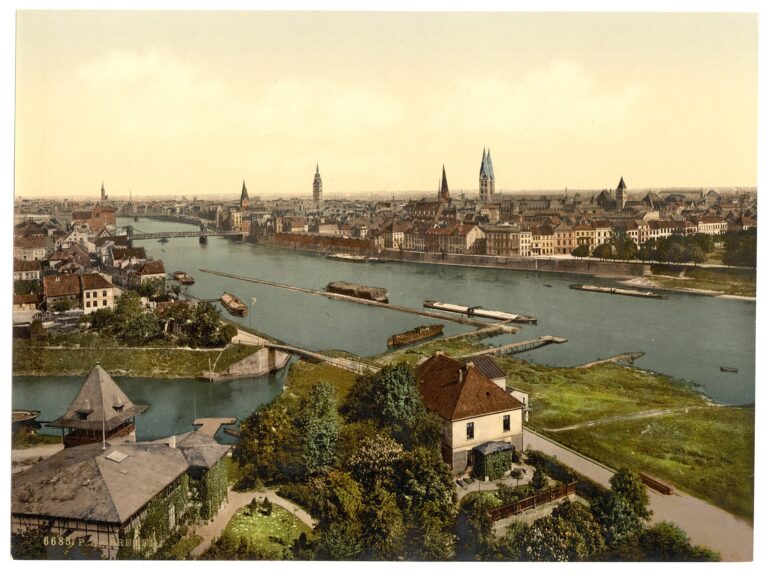
He had emigrated to the United States from the German city of Bremen. According to his Declaration of Intention, he arrived at an unknown port on Valentine’s Day of 1907.
Franz was a machinist, valued as a supremely skilled trade craftsman who worked in metal.
Franz found—or perhaps already had—employment with a machining firm, called the Witching Waves Company, that manufactured a pioneering amusement-park thrill ride.
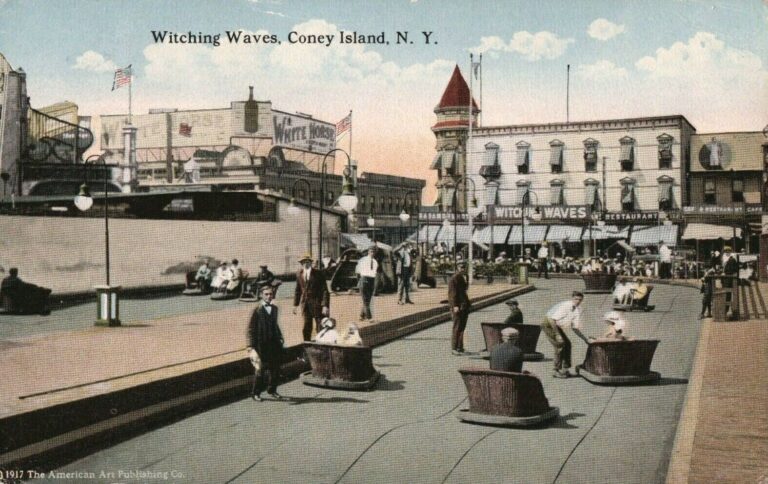
Witching Waves Co. was founded by Theophilus Van Kannel, who had also invented the revolving door in 1888.
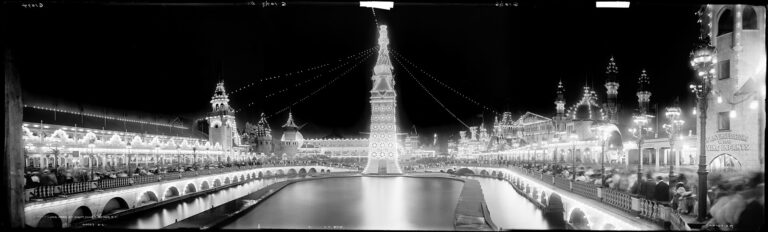
Van Kannel’s Witching Waves ride debuted in Luna Park, Coney Island, in 1907. It was the same year that Franz arrived in the United States, although there is no evidence at present that the two occasions were related.
The Witching Waves swiftly became the most popular ride at Luna Park, which itself had only opened four years prior in 1903. Soon after its installation, the ride was regarded as a flagship attraction.
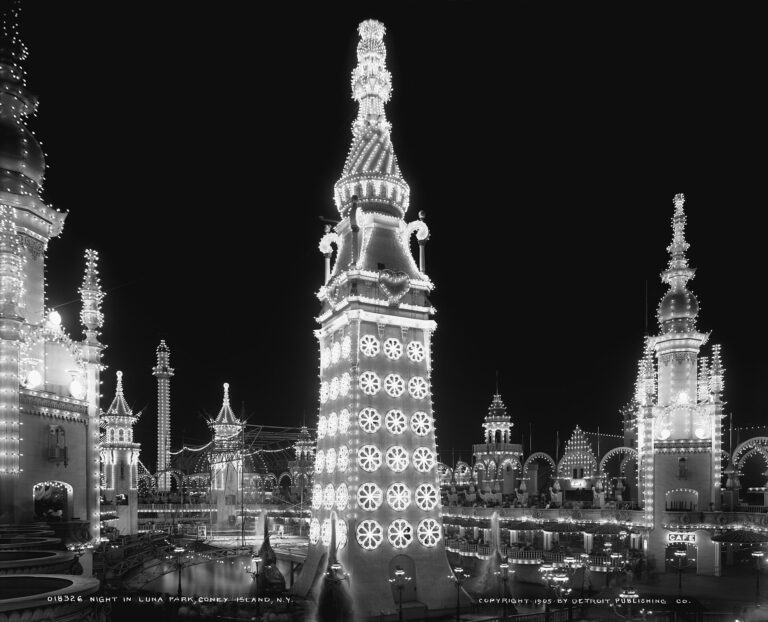
Under Luna Park’s hundreds of thousands of dazzling lights, the Witching Waves recreated a so-called “stormy sea experience” in Coney Island’s “Electric Eden.”
A sort of prototype to the modern bumper car, the Witching Waves moved two-seater scooter cars around a large oval racetrack that measured almost 200 feet long.
The floor of the course was made of iron sheets that flexed in a forward fashion, undulating like ocean waves.
The mechanized swells traveled down the sheet iron, propelling the precariously balanced riders—dozens all at once—down and around the course; certain larger “waves” forced the cars in the desired direction.
The cars, though steerable in the most basic sense, had no starting mechanism, so they had to be manually pushed out of the loading area by a ride attendant.
The cars likewise were not equipped with restraints, resulting in not a few mishaps as riders were bounced about. Riders were sometimes flung head-over-feet from their cars.
Inevitably, more grievous injuries sometimes resulted. In 1919, for example, firemen at Rockaway Beach had to destroy the ride to save a child, ripping it into pieces to rescue a boy who had gotten caught in the floor’s mechanism.
Unfortunately, the Witching Waves suffered a short expiry date; its longevity was often truncated by metal fatigue and an array of mechanical failures.
Despite these operational quirks, another was installed in Manhattan 1910. More Witching Waves rides followed in various amusement parks in both the United States and Europe.
Franz Pulbaum, reportedly a chief mechanic for Witching Waves Co., would have been critical to these subsequent installations.
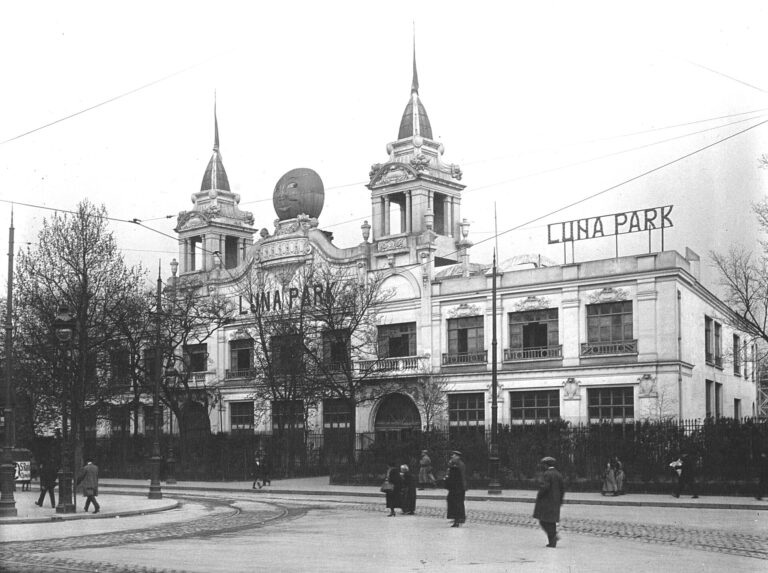
In 1912, one such installation had recently been completed at Luna Park—a franchise location of Coney Island’s original—in Paris, France.
Franz Pulbaum was sent to inspect it.
By all impressions, Franz seemed to be doing rather well for himself. He used a pocket-sized, leatherbound date book, its binding branded with Maryland Club Rye, which was a popular and elite whiskey made by Cahn, Belt & Co. out of Baltimore. Back home in New York, he had purchased a striped, grey-silk necktie, as well as silk socks, for himself.
Most notably, Franz had just recently received a certificate of “Capital Stock” in the amount of $50,000.00 from Witching Waves Co.: proof enough that he excelled at his work.
All of this while still refining his mastery of the American-English language, as evidenced by the German-to-English dictionary he carried.
PUBLIC DOMAIN
During his business trip to Paris, Franz appeared to have enjoyed his leisure time as a tourist.
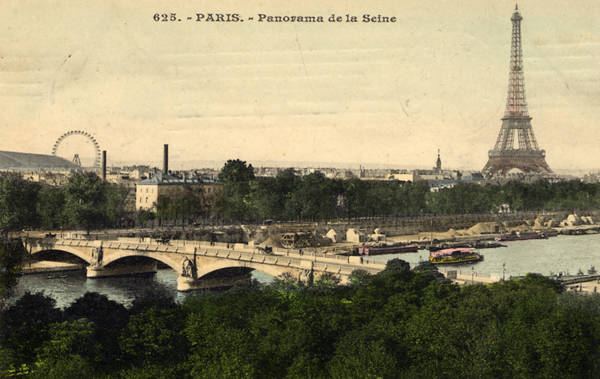
He collected postcards—29 in all—of various Paris attractions, picturesque scenes of the Seine and Tuileries Garden. Notably, he also carried a postcard of a rollercoaster called Le Scenic Railway, an attraction at the Parisian Luna Park where he carried out his work.
Friends wrote him while he was abroad, sly in their envy as they asked after him and declared he must be enjoying limitless fine wine, being as he was in France.
Franz also made time a visit to his native Germany.
So Franz’s time was well-spent, and his work well-done.
Because his boss, the aforementioned inventor Theophilus Van Kannel, was reportedly so pleased with Franz that, when time came for him to return to the United States, Mr. Van Kannel offered to upgrade his passage.
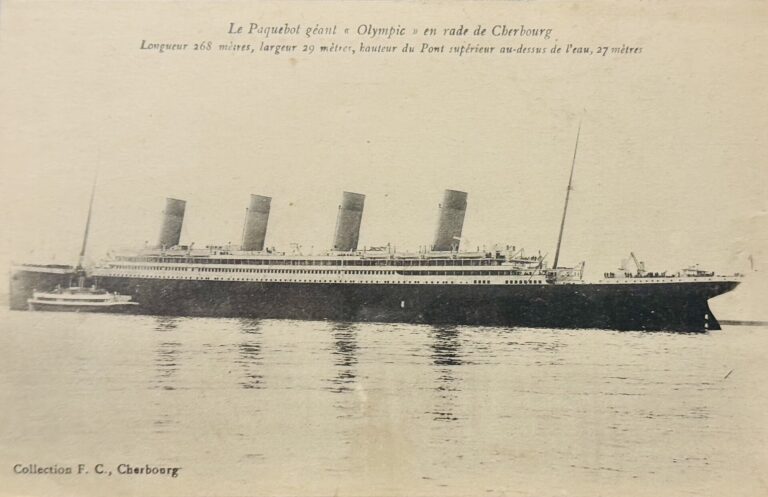
Franz had reportedly been booked on the SS La Provence.
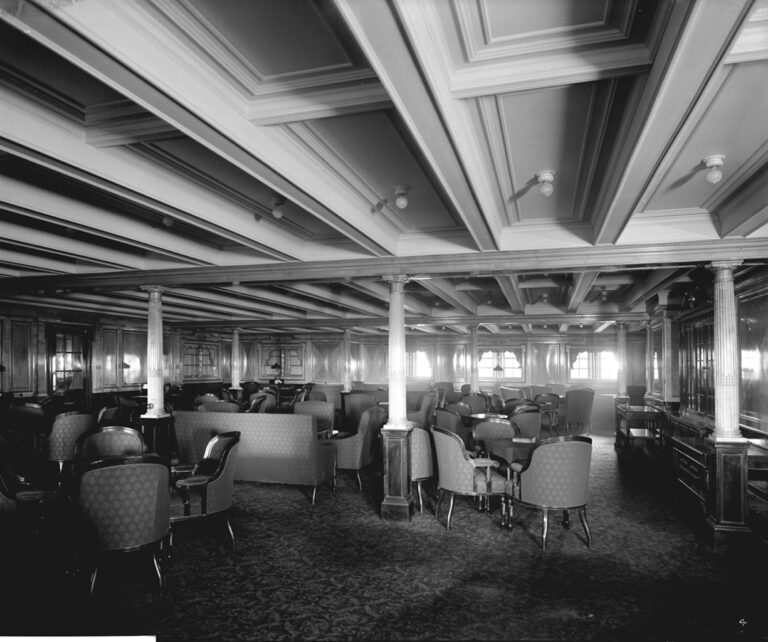
Now, he would board as a Second-class passenger on Titanic. He boarded on the evening of 10 April, at the port of Cherbourg.
Franz’s time spent on Titanic is undocumented, and therefore unknown.
Franz Pulbaum died in the sinking. His remains, if ever recovered, were unidentified.
.jpg)
In 1993, RMS Titanic Inc., proceeded with a recovery expedition of the wreck site.
Amongst the salvaged items from that expedition was unopened luggage.
It belonged to Franz Pulbaum.
Within were the intimate artifacts of his blossoming life: His German-English dictionary. His small leather notebook, containing snippets of advice for the successful modern businessman. His professional tools, rusted but intact, including his fabric tape measurer. A bottle of hair tonic. His collection of Parisian postcards, bundled with string. His brand-new silk socks, still pinned at the toe.
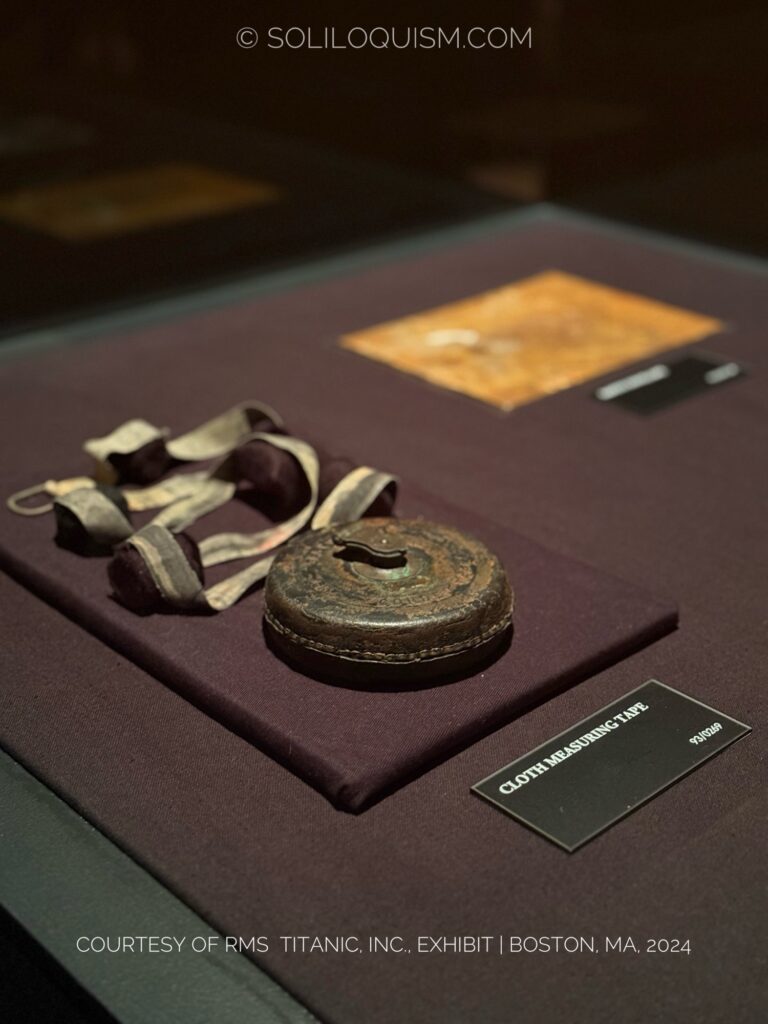
Franz Pulbaum's tape measurer, recovered in 1993 by RMS Titanic, Inc. Photograph courtesy of RMS Titanic, Inc., exhibit in Boston, MA, December 2024.
© SOLILOQUISM.COM
There were documents, too: Letters. The stock certificate from the Witching Waves Co.
And an official “Declaration of Intention” to become an American, signed by Franz not two months before he died aboard Titanic.
SOURCE MATERIAL
History Channel. “Titanic at 100: Mystery Solved.” Directed by Tony Bacon & Rushmore DeNooyer. 2012.
https://kevinbrownhistorian.wordpress.com/2013/04/15/an-emigrant-lost-on-the-titanic/
https://titanicuniverse.com/passengers/franz-pulbaum/
https://www.westland.net/coneyisland/articles/independentrides.htm
https://www.baltimoresun.com/2001/04/16/a-relic-of-local-history-rises/