"A Few Seconds Later, He Was Gone!": John Coffey
John Coffey just wanted to get home.
Luckily, he found an opportunity when the Titanic dropped anchor in Queenstown.

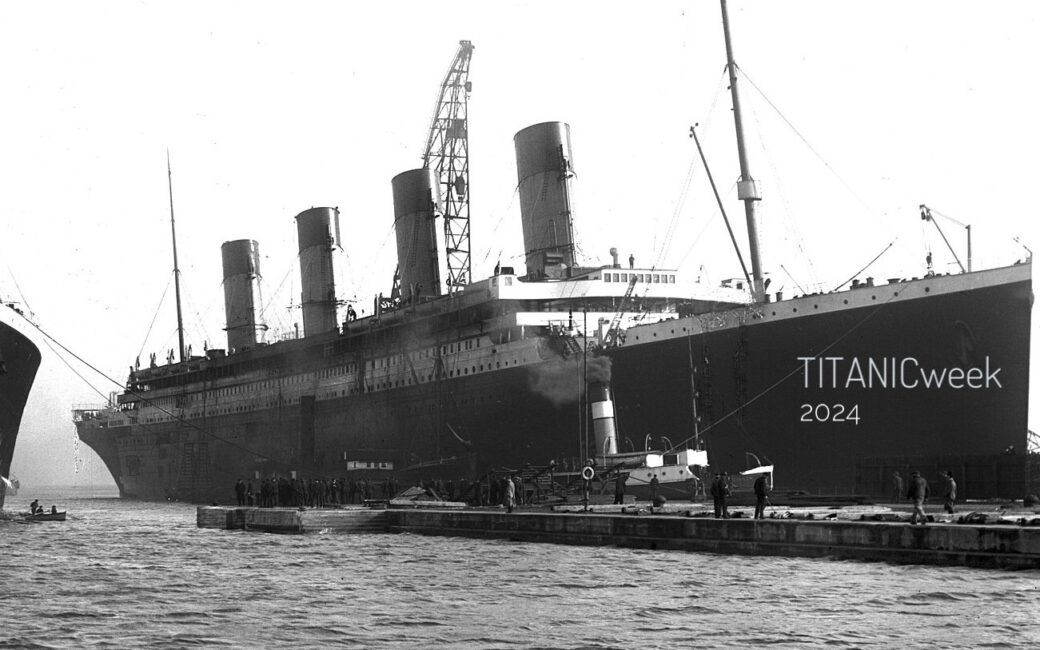
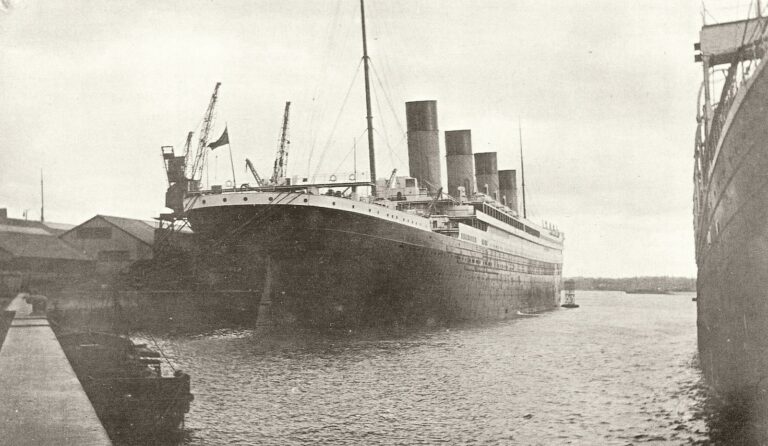
The Titanic arrived in Queenstown, Ireland, in the morning on 11 April. It was overcast and cool; against the grey clouds, Titanic’s black hull appeared painted onto the horizon.
[Titanic] dropped anchor at 11.55 a.m. about a mile outside Roche’s Point and as one saw her steaming slowly into view, a majestic monster, floating it seemed, irresistibly into the harbour, a strange sense of might and power pervaded the scene. She embodies the latest triumphs in the world of mercantile marine...
As reported in the Cork Examiner, April 12, 1912. Citation courtesy of the Cork Libraries.
Titanic’s stopover in Queenstown, which reclaimed its Irish name of Cobh in 1922, was hardly novel. Queenstown had been a major embarkation point for immigrants seeking passage from Ireland for decades. So common was the scene of families parting, that the dock at Queenstown had been nicknamed “Heartbreak Pier.”
Outside the shipping agency of James Scott & Company, over 100 Titanic passengers awaited. The majority held steerage tickets; less than 10 were Second-class passengers.
Two smaller ships, called tenders, met them at Heartbreak Pier that day. They were named the PS America and PS Ireland.
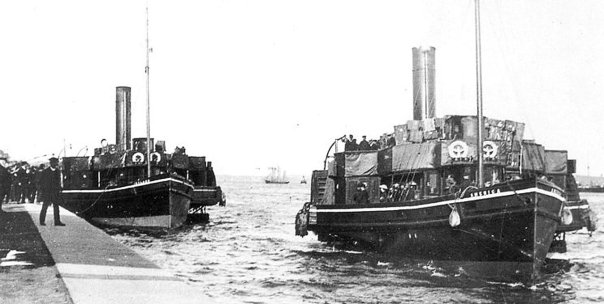
The Ireland ushered on board some local journalists, who were there to document the brand-new Titanic at her final port of call before undertaking her maiden voyage. About ten Titanic ticketholders followed the press on board.
Then the Ireland surprised its few passengers by slipping away from the PS America, which was still loading up.
But the Ireland cruised to a stop nearby in the Deepwater Quay alongside the railway station. It turned out she needed to pick up over 1300 bags of mail that Titanic was to deliver stateside.
A passenger reshuffle between the Ireland and the America occurred shortly thereafter, when tardy ticketholders arrived at the dock last-minute. They had been held up by a late train.
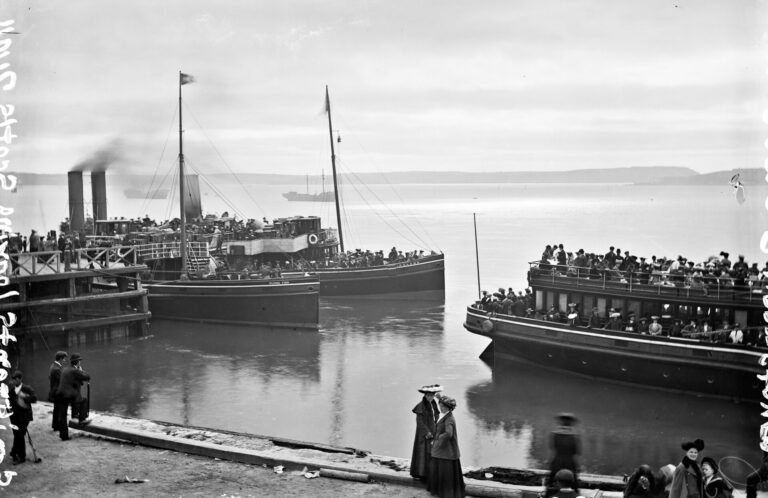
A photographer named Thomas Barker, sent by the Cork Examiner, decided at this moment to hop from the Ireland over to the adjacent America, to snap a picture of the heaps of the Ireland’s mailbags.
In the foreground, some of Titanic’s steerage passengers can be seen, caught in media res. The photo is an involuntary candid in monochrome: a scene in motion, comprised of blurred arms, side profiles, and ladies’ hats.
Titanic was anchored about two miles offshore, near the Roche’s Point Lighthouse.
As the America and the Ireland scurried to meet her, a 29-year-old mill weaver named Eugene Daly “played many native airs” on his pipes to the delight and wistfulness of his peers on board.
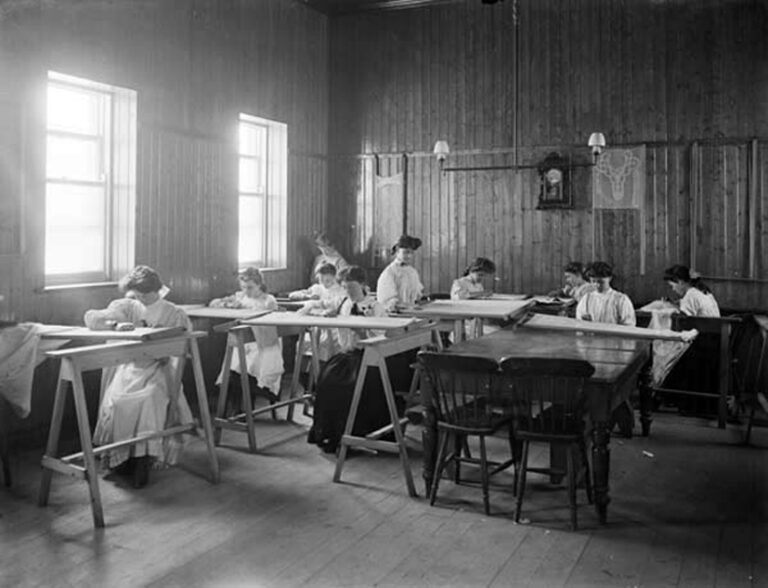
It is commonly reported that, along with mail and passengers, local vendors also boarded the Titanic during her stopover in Queenstown. Typical wares would have included local specialties, such as Irish lace. It was a go-to commodity made and sold to wealthy passengers on liners that called upon Queenstown.
After some time, whistles blew to alert the tenders and guests that Titanic was soon to depart.
The tenders Ireland and America would have been at her towering side, being loaded up once again with mailbags from Titanic, to be delivered on-shore. These sacks contained, of course, the precious last letters written by Titanic’s passengers and crew.
And when the tender ships pulled away from Titanic, they unwittingly did so with a stowaway.
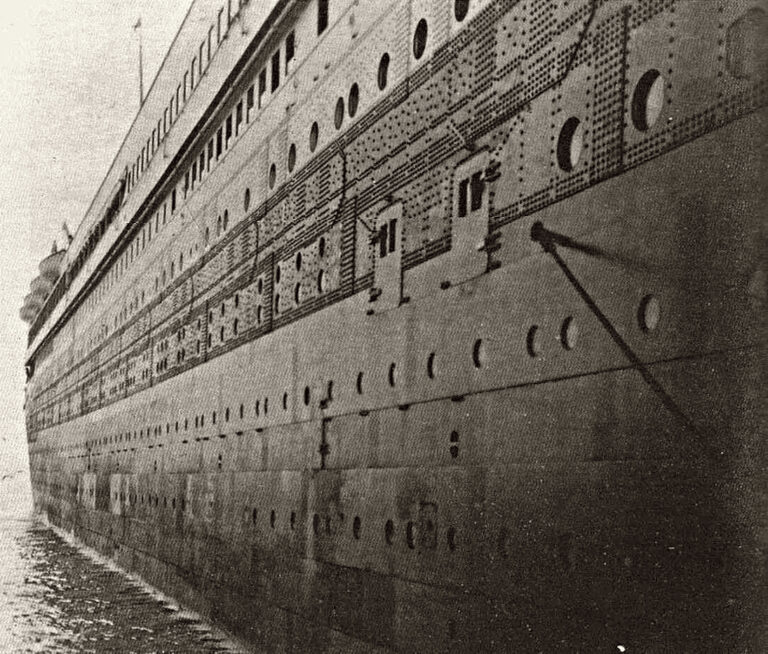
The aforementioned John Coffey was a 23-year-old stoker on Titanic. He had already been under the employ for the White Star Line, most recently serving on Titanic’s elder sister Olympic.
But when his tenure on Olympic was done, John found himself deposited back on the docks in Southampton, England.
John had a registered address there in Southampton for when he was in between jobs, but his hometown was Queenstown, Ireland. And having quit the Olympic, he was left a fair distance from home, and with presumably little money to get back there.
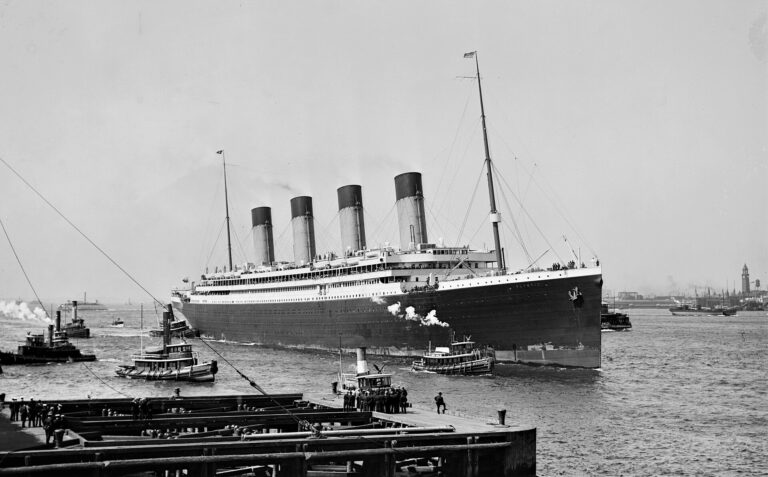
The Olympic, having successfully arrived in Southampton, turned westward again toward New York City on 3 April 1912. It was her usual transatlantic run.
For whatever reason, John Coffey stayed behind.
Work was scarce in Southampton in the ongoing turmoil of the coal strike, but it would become available shortly. The Titanic would get to town just one day later, on 4 April 1912, in preparation for her maiden voyage to New York.
And she was scheduled to go ahead, regardless of the strike.

PUBLIC DOMAIN
Once Titanic was settled in Southampton, John would have been well aware that she would seek crew for that voyage.
And he likewise would have known that, before Titanic would chase her sister’s shadow across the Atlantic, she would make two stops: one in Cherbourg, France, on 10 April, and the other—most conveniently for John Coffey—in Queenstown on the 11th.
And so, on 6 April, John Coffey signed onto Titanic as a fireman.
But he didn’t intend to stick around.
The Southampton Evening Echo reported the following from John’s fellow fireman John Podesta.
All the White Star boats and Cunard liners outward bound here to pick up mails and passengers by tender and it was custom for we firemen and trimmers to go up on deck and carry the mail from the tender to the mail room.
A fireman whom I knew very well, John Coffee [sic]… said to me, ‘Jack, I’m going down to this tender to see my mother.’
He asked me if anyone was looking and I said ‘No’ and bid him good luck. A few seconds later he was gone!
As reported in the Southampton Evening Echo. As cited in "The Irish Aboard Titanic" by Senan Maloney.
John successfully hid himself underneath or amid the many departing mailbags.
And from the docks, he made his way to his widowed mother’s home on Thomas Street.
John Coffey disembarked both Titanic—and then the tender—undetected, and without apparent consequence.
Because three days later, on 14 April, John Coffey successfully signed onto the crew of the Mauretania. And he did so without the necessary stamp in his professional Book of Continuous Discharge.
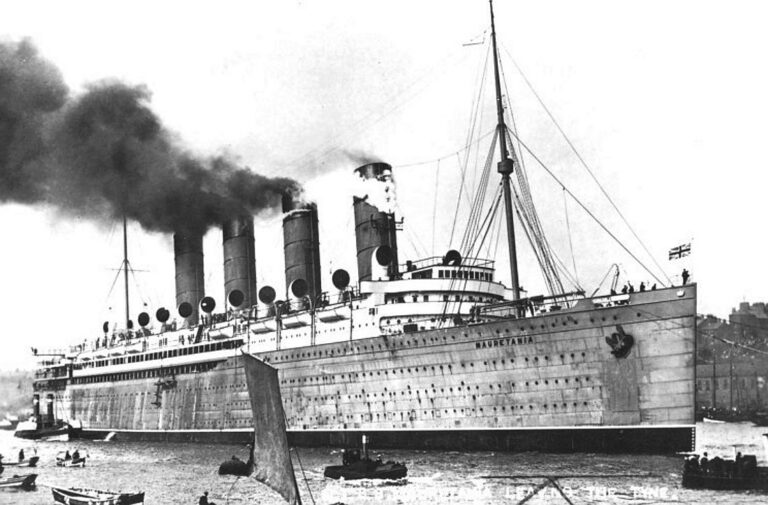
The RMS Mauretania in Tyne, Ireland, circa 1907.
PUBLIC DOMAIN
John was reportedly still present in Queenstown the next day, when the news broke that Titanic had foundered.
Immediately dubbed “The Lucky Stoker,” John’s abscondence was transformed from desertion into fateful escape.
In the aftermath of the sinking, John’s near-miss with tragedy became a widespread and popular tale. In each retelling, however, his motive varied.
The Cork Examiner reported that John Coffey “did not relish his job.”
Alternately, Jack Podesta had reported outright that John deserted Titanic that day in order to visit his mother.
And then, of course, John himself reportedly gave interviews in which he stated he was compelled by unshakeable foreboding, or ill omen.
As soon as two days after the sinking, on 17 April, it was reported that “one fireman, who felt that something was sure to happen, deserted at Queenstown.”
Regardless of the reason, John Coffey spared himself that day.
And Titanic, steaming steadily away from her final port of call, would never be seen again.
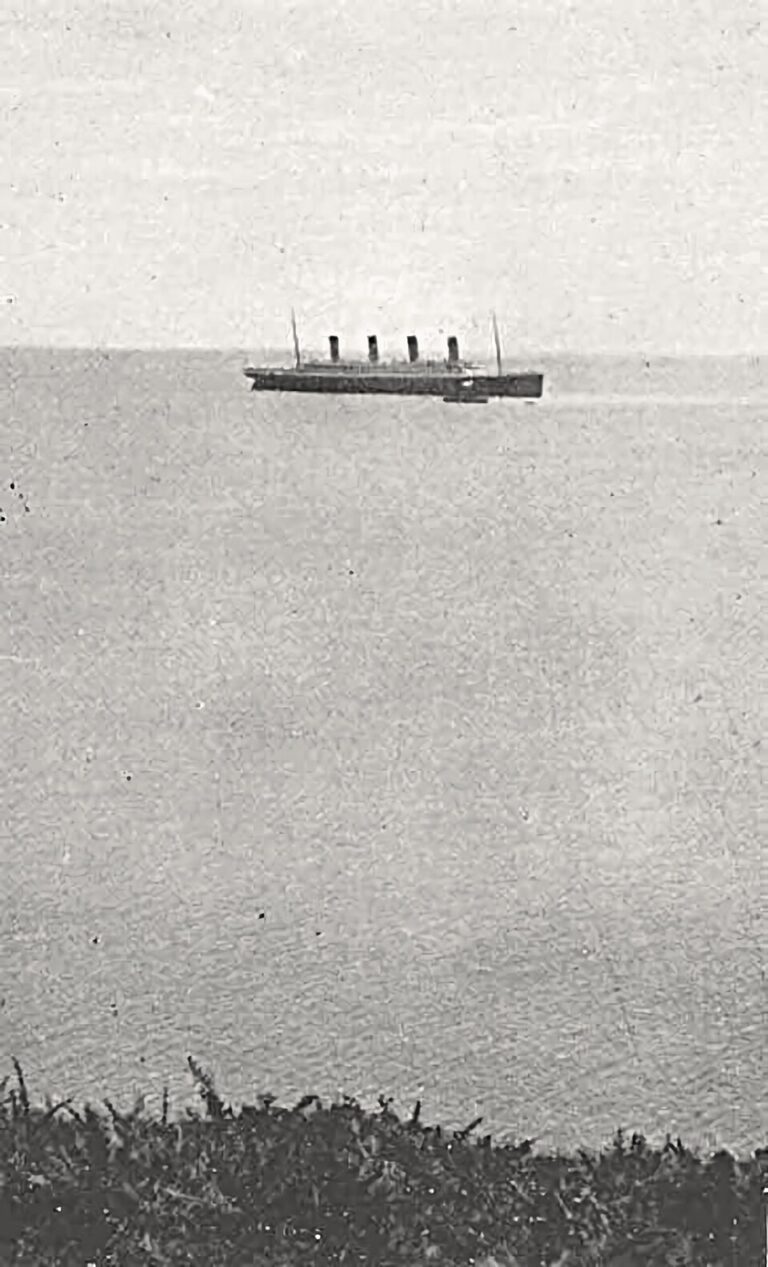
John Coffey continued in his maritime service, although the full extent of his career movements are uncertain.
In 1941, John Coffey reappeared in the press, having been saved from drowning in the treacherous winter waters of the River Hull the previous November. He had been rescued his friend and shipmate, James Bielby.
John Coffey reportedly died in 1957.
SOURCE MATERIAL
https://irishweatheronline.wordpress.com/climate-of-ireland/historic-weather-events/weather-conditons-during-rms-titanics-voyage/
https://m.independent.ie/life/the-lucky-man-who-jumped-ship-at-queenstown/26737941.html
https://www.encyclopedia-titanica.org/titanic-biography/john-coffey.html
https://www.encyclopedia-titanica.org/hull-dock-rescue-royal-human-society-award-to-fireman.html
https://www.encyclopedia-titanica.org/titanic-tender-america.html
https://www.encyclopedia-titanica.org/community/threads/shopping-from-tenders.4834/