Open post

“Enormous Icebergs Surrounding Us, White as Swans”: Mary Conover Lines

"Enormous Icebergs Surrounding Us, White as Swans": Mary Conover Lines

As an expatriate family, Mary Conover Lines and her mother Elizabeth were already familiar with transatlantic travel, although they did not do so very often.

But in April 1912, they were intent to travel to Dartmouth College in New Hampshire, to attend the graduation of Mary’s older brother Howard.

American by birth, Mary had lived abroad with her parents for several years while her father, Ernest, represented his employer, New York Life Insurance Company, as its medical director in Europe. The family resided in Paris, which is where Mary received her education.
Mary and her mother traveled on their own, ahead of Mr. Lines who was kept back by work. "My mother and I came on ahead," she said, "as my father could not take too long a time away from his work. Just for fun and excitement, my father got a state room for my mother and myself on the new Titanic."

So Mrs. Lines and Mary boarded Titanic on April 10, 1912, as First-class passengers in Southampton. Their accommodations were located on D-Deck.

Mary was 16 years old at the time; Elizabeth, 50.

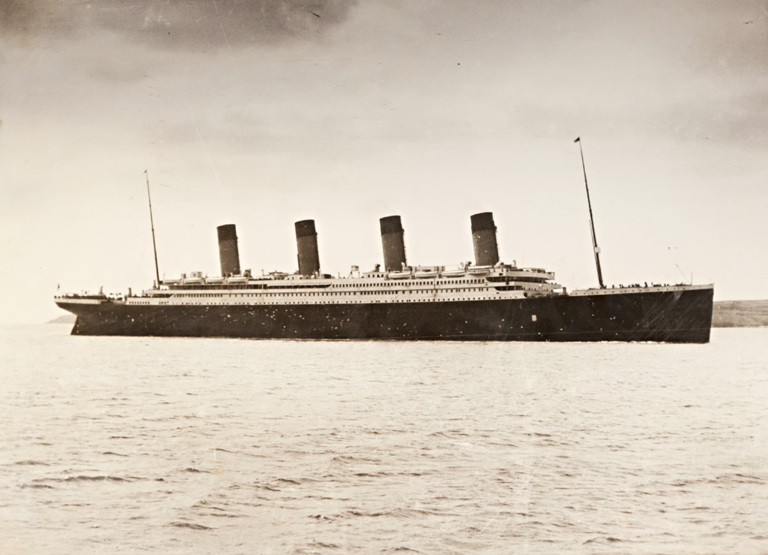
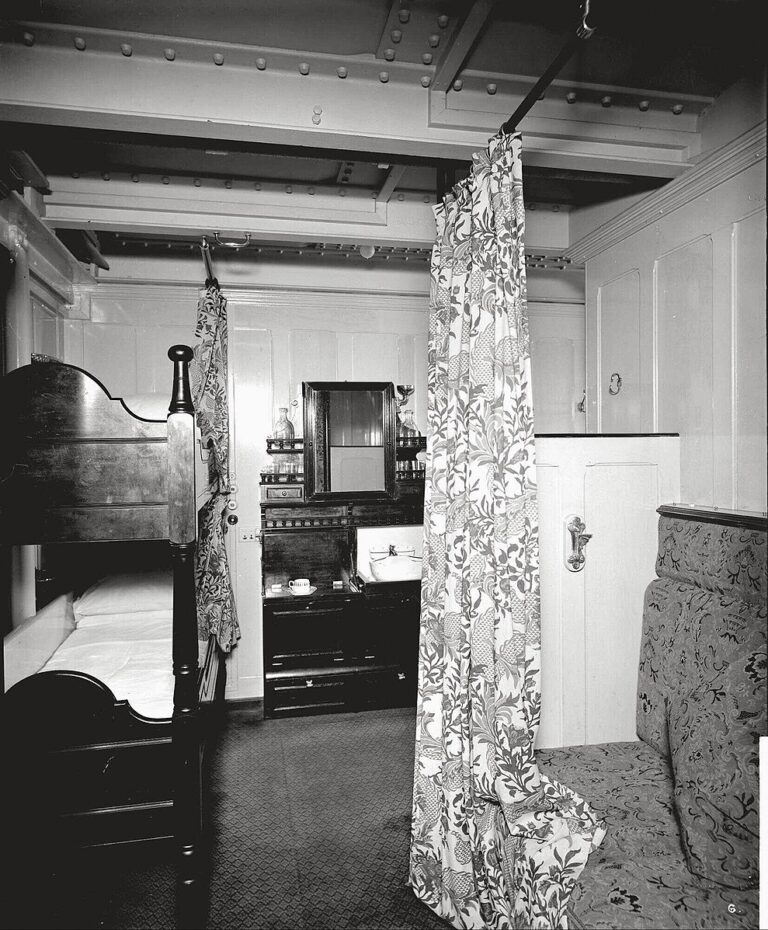
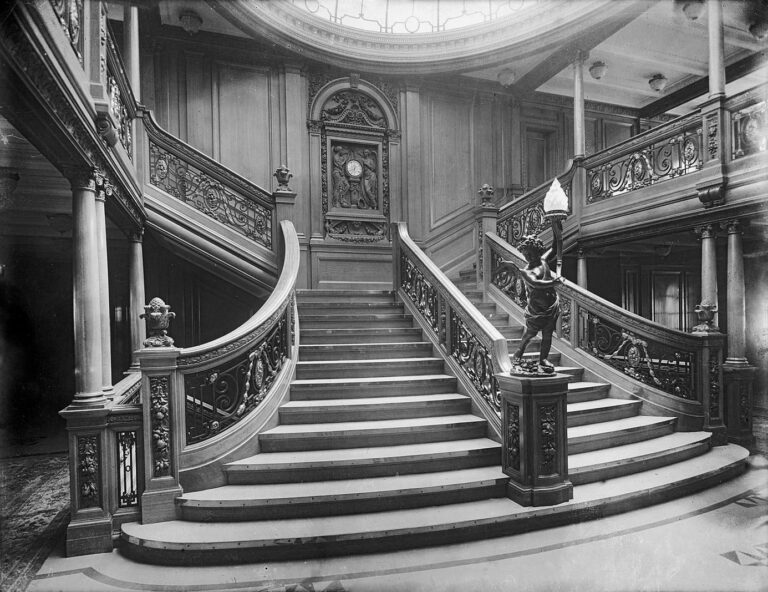
Titanic was, as Mary described it, "a delightful ship... in its furnishings [and] decorations."
On the evening of the iceberg strike, Mary and Elizabeth had retired early because it was so cold. Mary said they took great solace in the electric heater installed in the room.

Then they heard "a big blow on the ship" followed by "the escaping steam" from a funnel making what Mary called "a fiendish noise."

Shortly thereafter, Mary stated that their unnamed steward stopped by and instructed them to remain in their cabin, insisting there was no danger. Mary said, "I always thought that he should have come back and told us the truth, rather than say that we should stay in our cabin, but I think, probably, by that time he was too busy doing something else."

Mary and her mother only left their cabin once they overheard their neighbor, Percival White, "shout[ing] to his son to run for the lifeboats."

Mary elaborated on this moment in her own retelling.

Our next-door neighbor came running down to his cabin--he and his son were very delightful people from Hawaii and belonged to one of the families who had settled there as early missionaries and then become [sic] interested in many different things in Ireland. This father, I think, was talking to his son--they were rushing around finding their lifebelts. I opened the door to ask what was going on and he said, "My goodness, are you still here? Get up on deck as fast as you can. The ship is sinking."

After this exchange with Mr. White, Mary and her mother struggled to find and grab their lifevests because, according to Mary, they were out of reach on top of a cabinet.

The ladies then made their way up to the boat deck without getting properly dressed.

Mary and Elizabeth joined the other First-class passengers who were "congregating on the boat deck." The crew were distributing blankets from "two big barrels" as they stood, not moving much.

Eventually, Mary had the idea to go back down into their cabin and retrieve proper clothing for herself and her mother. She said that it was only on her way back down-deck, she said, that she realized there were quite so many flights of stairs.

On her descent, she encountered Second-class passengers on the stairs who were being directed "to the First-class boats" by an unidentified officer. "There was a slight moment of panic," she stated about the Second-class passengers, "wondering whether they were going to make it, but there was no real panic."

By the time Mary arrived on D Deck, she saw that most people had already fled the area. So she gave up the task of grabbing the clothing and headed back whence she had come.

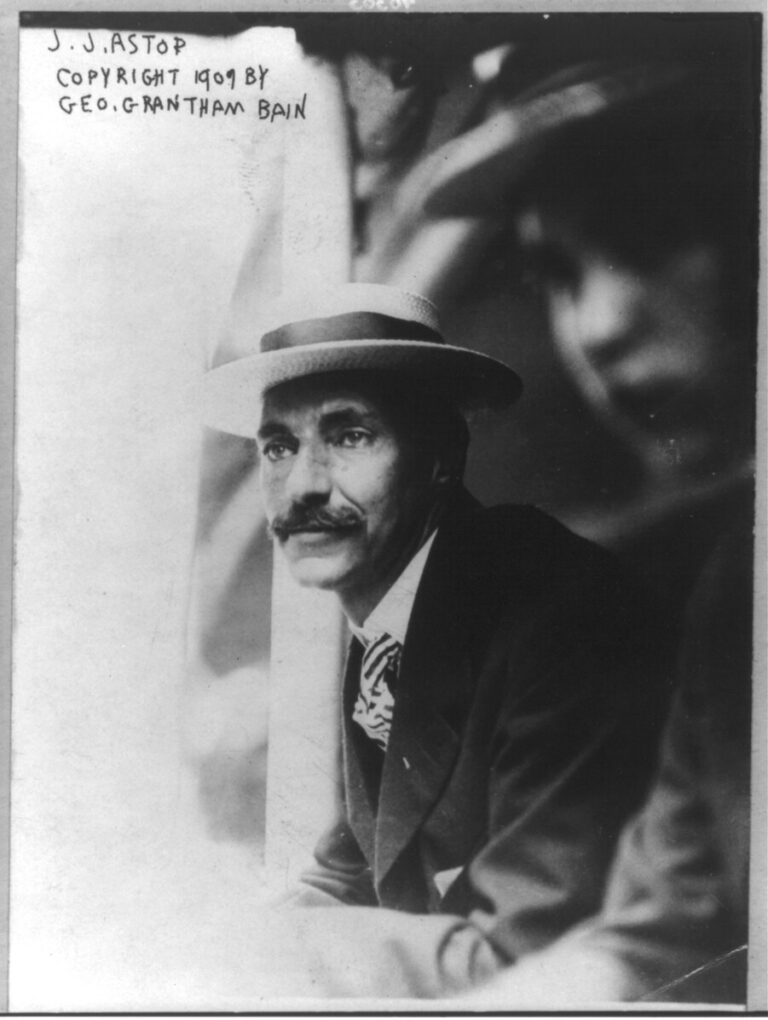
Mary recalled that on the return journey, she found herself walking in line up the stairs behind John Jacob Astor and his young bride Madeleine.
Upon Mary's return to her mother in line on boat deck, the ladies were handed the afore-mentioned blankets and were "pushed into a boat."

Elizabeth later testified that an unnamed officer assisted her and her daughter in securing their lifebelts, and told them, "We're sending you out as a matter of precaution; we hope you will be back for breakfast."

Elizabeth and Mary Lines thereafter boarded Lifeboat 9, which was launched from the starboard side of Titanic by First Officer William McMaster Murdoch and Chief Purser Hugh McElroy.

On board with the Mary and Elizabeth were approximately 31 other passengers, including Leontine Aubart, the known mistress of Benjamin Guggenheim.

Mary later recounted that "it was a very dark night... I mean, there were stars, but you couldn't see anything." Furthermore, she insisted that there was no light in the lifeboat.

Fortunately, Mary had kept a penlight in her pocket. "it was the only thing that we had on the boat to find the oars and find the oar locks and get ourselves organized to try and row." Mary insisted that the sailors in the lifeboat refused to return to Titanic in any attempt to save others.

"The men who were manning the ship... were very unwilling to approach any nearer," she said, "because they said there would be terrific suction."

We had no idea where we were. We saw the ship go down, of course, and there was a terrific roar which occurred when it did so. And after that... we just shouted around... several people in the boat were, naturally, quite hysterical

Dawn eventually broke.

I’ll never forget this sunrise; the sky clear as a glass of water, the sea calm as a mirror, and the enormous icebergs surrounding us, white as swans.

In an interview recorded in 1970, Mary revisited the spectacular site.

About 4 o’clock in was really a very wonderful sight. That was when we saw the iceberg and, if you’ve ever been in the far north, you get a very white light just inside dawn, it’s sort of a very pearly white effect. And right around us there were five enormous white icebergs and the whole sea was cover with floe [sic] ice.

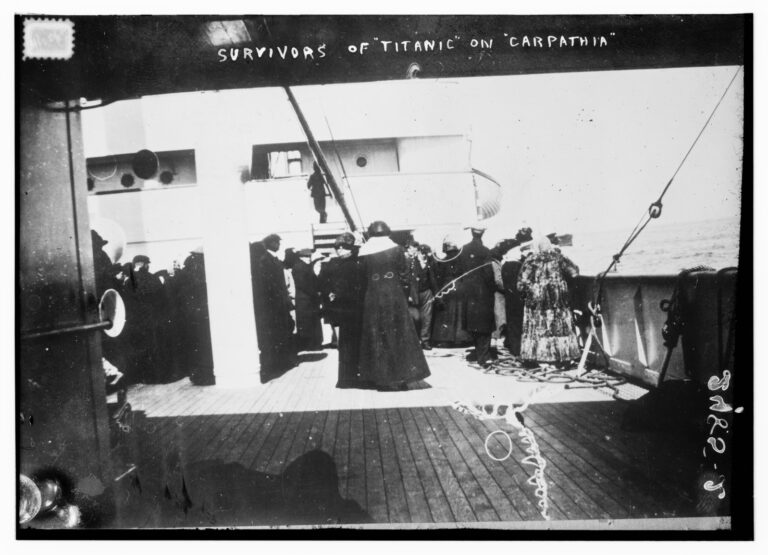
When Lifeboat 9 was rescued by the Carpathia that morning, Mary had to climb a rickety rope ladder--a frightening and near-impossible task, having been only half-dressed for hours in the severe cold.

On board Carpathia, she slept on the floor.
But their survival story is not typically what draws attention to Mary and Elizabeth Lines.

Instead, it is a conversation that the ladies happened to overhear, which was thereafter treated as one of catastrophic consequence.

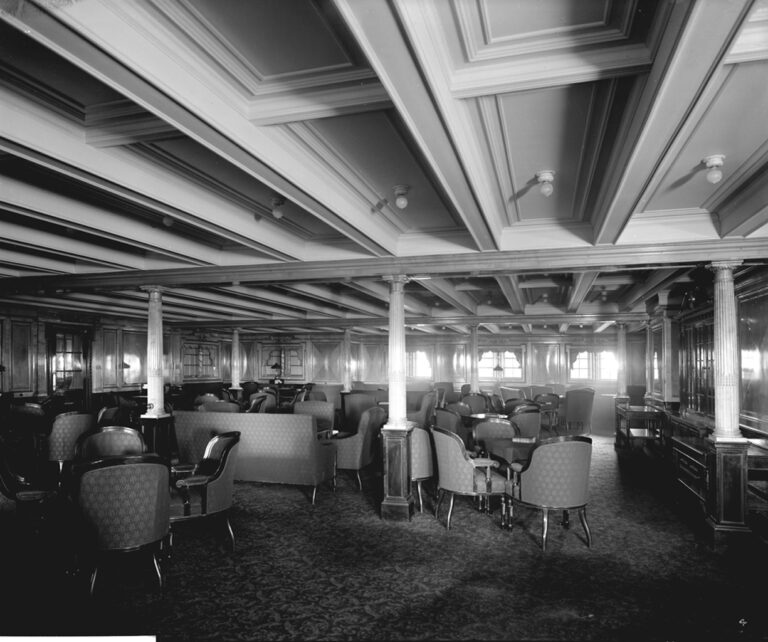
In the afternoon hours of April 13th, Mary sat down with her mother for coffee in the First-class Reception Room, as they had made a habit of doing after luncheon.

After the ladies were seated, J. Bruce Ismay, chairman of the White Star Line, entered the room with Captain Smith.

The men were then seated at their usual corner table, mere feet from where Mrs. And Miss Lines were already situated.

Captain Smith and Mr. Ismay commenced a two-hour-long, apparently one-sided conversation.

And Mary and her mother bore witness to it.

In a sworn deposition taken in 1913, Mary’s mother asserted that she had witnessed Mr. Ismay pressuring Captain Smith to accelerate the Titanic by lighting the last boilers, so the ship could have a glorious earlier arrival in New York City.

41. Are you able to state from your recollection the words that you heard spoken between Mr. Ismay and Captain Smith on that occasion?


- We had had a very good run. At first I did not pay any attention to what they were saying, they were simply talking and I was occupied, and then my attention was arrested by hearing the day's run discussed, which I already knew had been a very good one in the preceeding (sic) twenty-four hours, and I heard Mr. Ismay - it was Mr. Ismay who did the talking - I heard him give the length of the run, and I heard him say "Well, we did better to-day than we did yesterday, we made a better run to-day than we did yesterday, we will make a better run to-morrow. Things are working smoothly, the machinery is bearing the test, the boilers are working well". They went on discussing it, and then I heard him make the statement: "We will beat the Olympic and get in to New York on Tuesday." 

42. In your last statement, Mrs. Lines, were you giving the substance of the conversation or the exact words which were used?


- I heard "We will beat the Olympic and get in to New York on Tuesday" in those words. 

43. If there were any particular words spoken that you can remember, I should be glad to hear them.


- Those words fixed themselves in my mind: "We will beat the Olympic and get in to New York on Tuesday." 

44. Do I understand you to say that the other things that you stated were the general substance of what you heard and not the exact things or words used?


- No, I heard those statements.

Mrs. Lines continued by stating that she did not hear Captain Smith’s voice in this exchange, but only “saw him nod his head a few times.”

Mr. Ismay, however, was “very positive” and assertive tone. “One might almost say dictatorial,” Elizabeth testified. “He asked no questions… there was a great deal of repetition.... his voice sounded very emphatic."

Mrs. Lines went on to testify that the conversation ended unceremoniously.

"Come on, Captain," Ismay reportedly said as he rose from the table, "we will get somebody and go down to the squash courts."

Open post

“That Is Where They Die”: Paul Maugé

"That Is Where They Die": Paul Maugé

The Titanic was Paul Maugé's first-ever ship.

Having joined up on April 6, 1912, he was to act as the so-called "Secretary to the Chef" in the First-class restaurant a la carte. 

He had just turned 25 years old.

Paul, whose full name was Paul Achille Maurice Germain Maugé, was Parisian by birth, and an illegitimate child by contemporary mores.

As a member of the restaurant staff on Titanic, Paul would have been bunked on E-Deck; the only exception to this standard appears to have been Luigi Gatti, who was the restaurant's manager and overseer.

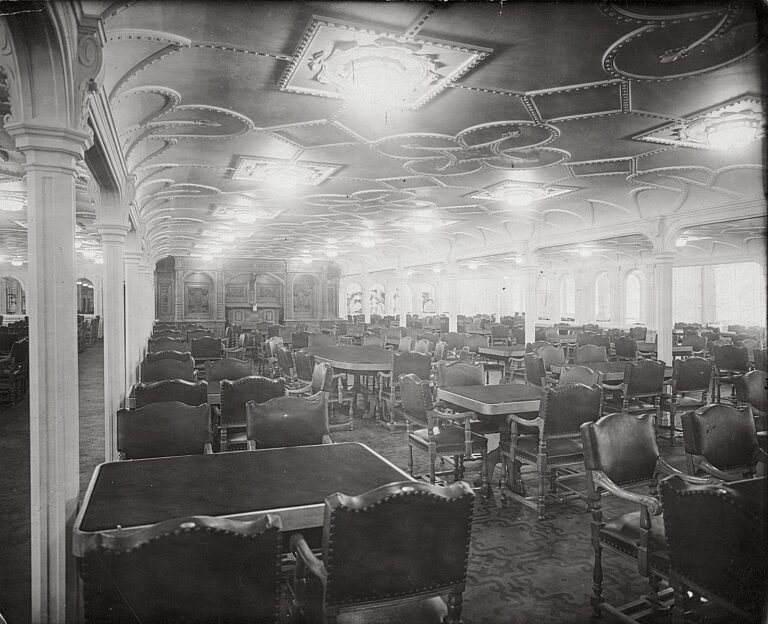
The a la carte restaurant, otherwise referred to as the Ritz, was an independent dining establishment available exclusively to First-class clientele.

The Ritz catered to those who felt compelled to further distinguish, or perhaps remove themselves, from their perceived lessers.

Mr. Gatti, the owner of two popular restaurants in London, also ran the a la carte restaurant on Titanic's elder sister, Olympic.

And with that success, Mr. Gatti unveiled its counterpart on Titanic; the latter, however, could seat more patrons--and therefore, mandated additional staff.

Paul Maugé's position as the Secretary to the Chef was a novel addition to the structuring of the Ritz. It is rumored, though not confirmed to date, that his pay exceeded that of even Second Officer Lightoller.

Essentially a kitchen clerk, Paul may have acted as a  bookkeeper, dealing in fiscal matters; it has also been suggested that Paul functioned as the maitre d'hotel, a front-facing representative, or even heir apparent, to Luigi Gatti.

Paul himself, however, consistently described himself as a Secretary to the Chef, and he attested to being in said chef's company for the duration of the sinking.

The chef was named Pierre Rousseau.

Paul Maugé's movements throughout the voyage are undocumented, but it reasonable to assume he was simply carrying out his duties.

On the night of April 14, 1912, Paul stated that he was roused from sleep by his cabin-mate, an unnamed pastry chef, getting up from bed in response to the iceberg strike.

He claimed to have then heard an "alarm signal"--a ringing bell--that is believed to have been sounded in the watertight compartments. Paul, however, testified that the alarm existed to alert Third-class passengers.

Paul then went to "the front of the ship" on the "First-class passenger deck" to ascertain what was happening, where he insisted he saw the first lifeboat being lowered. On the way back down toward his cabin, he claimed to have witnessed Captain Smith on his return from the boiler rooms.

Paul, with his accommodations situated on E-Deck, also encountered flummoxed steerage passengers. "A lot of persons came from the front and went to the back," he said. "Some of them with luggage, some with children. Some showed us a piece of ice."

Sufficiently alert to danger now, Paul thusly determined to make his way to Chef Rousseau.

20125. What became of all the other persons who were employed in the restaurant; did they remain on the deck or did they go up with you?
- Well, I go down again, and I said to the chef, "There is some danger happening; we must get up." He lost his temper - he lost himself.

20126. He lost his presence of mind?
- Yes.

20127. Do you mean that he was agitated at what you told him?
- Yes.

20128. And lost his head - is that what you mean?
- Yes. I said to the other cooks to wait for us. After that we had been by the third class deck just at the back, and we have been trying to go on the second class passenger deck. Two or three stewards were there, and would not let us go. I was dressed and the chef was too. He was not in his working dress; he was just like me. I asked the stewards to pass. I said I was the secretary to the chef, and the stewards said, "Pass along, get away." So the other cooks were obliged to stay on the deck there; they could not go up. That is where they die.

Paul suspected that he and Chef Rousseau were permitted to pass by the stewards because they were not uniformed, but dressed in plainclothes.

"[The stewards] let me pass, Me and the chef, because I was dressed like a passenger," Paul said. "I think that was why they let me pass."

Once the pair of men reached the upper decks, they waited and watched for the other restaurant staff to appear up top.

But they never did.

Paul insisted that a small number of unidentified stewards kept them back. "I cannot say after that how they managed to try to pass," he said. "Anyway they could not pass because I stood on the second class passenger deck for half-an-hour."

After this half-hour has passed, Paul and Chef Rousseau ascended the boat deck.

Finding themselves on the starboard side, Paul and Pierre Rousseau looked on as some of the last boats were lowered, though the order of said boats is uncertain.

It was then that Paul realized an opportunity for salvation. "About six or ten persons were jumping in" a lifeboat from the top deck, and Paul spontaneously made his move to do the same.

"The second or third lifeboat was between two decks and I jumped directly from the top deck to this lifeboat," he explained. "It was going to the water, but it was between two decks when I jumped."

But Chef Rousseau would not follow.

20165. (The Commissioner.) How big a jump did you take? Just show us along this curtain?
- About half this, perhaps. (Pointing.)

20166. Down to where you are standing?
- Yes, to the lifeboat.

20167. (The Attorney-General.) He said about 10 feet. (To the witness.) You got into the boat, and eventually were saved?
- Yes, but before that I did ask the chef to jump many times, but the chef was too fat I must say - too big, you know. He could not jump.

20168. He was too stout, and, at any rate, he would not jump?
- No.

20169. You jumped. I suppose you saw it was very serious?
- Yes, and when I was in the lifeboat I shouted to him again in French. "Sautez."

20170. To jump down to you?
- Yes; he said something, but I could not hear because at the same moment a man said to me, "Shut up," or something like that.

Paul later claimed that, at that exact moment, a man on Titanic tried to remove him from his seat by catching him by the back of his coat as the lifeboat was lowered past--or perhaps was level with--a lower deck.

He did not see the chef again.

Pierre Rousseau perished in the sinking. His remains, if ever recovered, went unidentified.

Paul, having rescued himself in what is now presumed to have been Lifeboat 13, went on to testify at the British Inquiry on Day 19--although his testimony was apparently a bit befuddling due to a language barrier.

Of 69 restaurant employees on Titanic, Paul Maugé was one of only three who survived the disaster.

He went on to marry twice. He eventually moved with his second wife to Montreal, Canada, where he died in 1971 at the age of 83.

Open post

“For Presentation to Passengers, Executed on the Shortest Notice”: Food Storage on Titanic

"For Presentation to Passengers, Executed on the Shortest Notice": Food Storage on Titanic

Down on E-Deck, alongside a 3rd-Class corridor, there was a Potato Room.

It was larger than some First-Class suites. Next door, across a slim hallway which was blocked off by a Bostwick gate, was the Wash Room assigned exclusively to the care of potatoes.

A plain necessity, seeing as the Potato Room housed an approximate 40 tons of potatoes for Titanic’s maiden voyage. It was the most plentiful foodstuff on board.

Food storage on Titanic was vast, and necessary.

Foodstuffs were supplied to Titanic in veritable tonnage.

In regard to produce: an established fruiterer of Southampton, called Oakley & Watling, was a regular supplier for the White Star Line. A contemporary advertisement boasts: "Every Description of Decorative Floral Work for Ships. --- Fancy Baskets & Bouquets of Choicest Flowers --- Also --- Ornamental Baskets of Assorted Fruit For Presentation to Passengers, Executed on the Shortest Notice."

Another supplier was Grey's, a Liverpudlian firm who had more recently opened a local branch.

These stocks were brought on board in logical but no less staggering numbers.

Potatoes                              40 tons

Onions                                3,500 lbs.

Tomatoes                           3,500 lbs.

Fresh asparagus               800 bundles

Fresh green peas              2,500 lbs.

Lettuce                               7,000 heads

Apples                                36,000

Orange is                           36,000

Lemons                              16,000

Grapes                                1,000 lbs.

Grapefruit                          13,000

As cited in "Titanic Voices: Memories from the Fateful Voyage" by Donald Hyslop, Alastair Forsyth, & Sheila Jemima, 1997.

The varietals of a portion of this produce, such as the apples, is subject to speculation.

For instance, a preserved menu card from First-Class breakfast on April 11, 1912, offers a baked-apple dish. Baked apples were commonly made with russett apples; this may very well have been the case on Titanic.

Otherwise, it is reasonable to assume that, in the absence of global fruit trade and year-long cultivation methods of today, that the varietals on board would have been subject to the season in the United Kingdom. That produce, in turn, might have been swapped out for what was readily available in America for the return trip.

The extensive refrigeration network that housed this gargantuan horde of produce occupied lower decks, as well as orlop. It boasted individuated cold chambers for all varieties of the foodstuffs onboard.

Separate cold chambers, whose temperatures could be independently regulated, maintained the likes of mineral water; dairy products such as butter, milk, and cheese; beef; poultry, fish,  game, and bacon; champagne stores; and assorted vegetables and fruit. Cold chambers were also assigned exclusively to fresh-cut flowers.

Additionally, cold larders were installed throughout Titanic in various bars and pantries, to permit for ice-making.

The engineering of this refrigeration system--while a complex matter, the mechanics of which are better left to a more capable writer--essentially made use of a brine circulation system to keep contents evenly cool.

Along with the afore-stated produce, Titanic also brought with it 2,200 lbs. of coffee.

So there was, naturally, also a "Coffee Man": a 35-year-old named Johannes Vogelin-Dubach, who worked as waitstaff in the Ritz, which was the a la carte restaurant available exclusively to First-Class passengers.

The Assistant Coffee Man was a 24-year-old friend of Johannes's named Gerald Grosclaude, with whom he shared a home address in Southampton.

There is little evidence as to how coffee was served on board, though it was presumably drip-style. Fancier options may have been available to the First-Class.

In the Ritz Restaurant, it would not have been atypical for coffee to have been served in tandem with liqueurs. This practice was common enough that coffee was often served only three-quarters full, in order to accommodate the so-called "cordials" that would be poured directly into the cup.

Then there was the Ice Cream Room. This insulated and refrigerated space contained 1,750 quarts of fine ice cream, possibly contained in metal canisters.

The Ice Cream Room, found down on G Deck, would have been visited primarily by the Titanic's sole "Ice Man," who oversaw frozen confections for the clientele of the Ritz Restaurant.

This singular role belonged Adolf Mattmann, a 20-year-old from Switzerland who had previously apprenticed as a pastry chef and worked in confection at an illustrious hotel in Lucerne. He had only moved to England in the autumn of 1911, when he worked as a patissier on Titanic's elder sister, the R.M.S. Olympic.

When Adolf signed onto Titanic, he did so with marked intention.

Adolf wrote to his parents, "I want to make at least two crossings working in pastry aboard the Titanic because after that I will be able to get almost any pastry chef job in any of the best hotels in London."

Neither Adolf, nor the Coffee Men Johannes and Gerard, survived the sinking.

Because the refrigerated holds were aft and deep within the vessel, the whole of the complex is assumed to have been obliterated by the stern's implosion as Titanic sank.

Open post

“There Will Be a Tragedy, But You Will Be Saved”: Delia McDermott

"There Will Be a Tragedy, But You Will Be Saved": Delia McDermott

Delia McDermott was a farmer's daughter.

One of four living children, Delia (whose first name was actually Bridget) was born in Addergoole, Co. Mayo, Ireland, in March of 1881.

Delia had planned to visit her cousin, Maria, who had emigrated to St. Louis, Missouri. Emigration via passenger ships had incentivized a thriving network of local businesses who purveyed in tickets for such trips. According to the BBC, "Ticket agents went door to door, shops of every kind sold tickets and even schoolteachers supplemented their income selling passage on the White Star Line" around Ireland.

Delia McDermott turned to Thomas Durcan, one of the ticket brokers (then called a "shipping agent"), and purchased a steerage ticket for the maiden voyage of Titanic.

At age 31, Delia McDermott was at last emigrating to America.

Some days prior to her scheduled departure, Delia made her way into the town of Crossmina to buy herself some proper garments for her journey.

Somewhere along the way, she had been assured that all the fancy ladies in America wore fine hats.

It was certainly a splurge. Whether with her own funds or, as some retellings have it, with the help of her mother, Delia left Crawley's shop in Crossmina with a very fancy hat.

It was her pride and joy. Reflecting on the matter, Delia's daughter is reported to have said, "Hats being what they were in those days, it was no doubt a huge expenditure for her family and it was a going-away gift."

But according to family lore, Delia's joy was snuffed out that very evening before she departed for Queenstown, when a stranger greeted her with foreboding.

Delia McDermott’s niece… tells the story of a strange and chilling encounter between her aunt and a mysterious man in black in Lahardane village the evening before she left for Cobh [Queenstown]. 

"She was in Lahardane with friends when suddenly a hand tapped her on the shoulder," [her niece] explained.

"She turned around and there was a little man there whom she thought was a traveler. My aunt went to give the man a few pennies and he told her he knew she was going on a long journey."

"There will be a tragedy, but you will be saved,” the little man said before disappearing. 

When Delia mentioned the little man to her friends, they said they hadn’t seen anybody…

Citation courtesy of "The Irish Aboard Titanic" by Senan Molony, 2000.

However unnerved she may have been, the next day Delia McDermott set out for the port of Queenstown in spite of the stranger's augury.

At Queenstown, Delia met up with the others in her party who had also purchased tickets via ticket agent Thomas Durcan; there were fourteen of them in all, including herself.

The group would thereafter be called The Addergoole Fourteen.

There is no record of how the Addergoole Fourteen might have spent that final night ashore before embarking on Titanic on April 11th.

On the night of the iceberg strike, Delia and her cabin-mates were already in their beds. They reportedly felt nothing of the crash.

A steward then came to their cabin and insisted that the ladies rise, get dressed, and get up topside to the boat deck; he also reassured them that there was no danger. Delia reportedly remembered that unidentified officers and/or crew had kept passengers at bay, informing them that preparations were not yet ready.

Yet--somehow--Delia was an early arrival to the lifeboats. She readily took her seat.

And then promptly forfeited it.

Because, once seated in the lifeboat, Delia realized in a panic that she had left what might have been her most precious possession--her prized hat--behind in her cabin.

So she jumped from the lifeboat back onto boat deck, and made her way down into steerage, where cabins had begun flooding. All in order to salvage the hat.

Having done so, Delia then had to find her way back up top.

And quite miraculously, she did.

With the aid of two men named John Rourke and Pat Canavan, both of the Addergoole Fourteen, Delia and other steerage girls were saved. The group was shepherded to the upper decks via a ladder that Pat and John had discovered while exploring the ship in the days prior.

Back on the boat deck, Delia McDermott somehow found her way to another lifeboat. According to Delia's niece, "[Saving her hat] was perhaps a foolish thing to do, but luckily she managed to get a place in another boat. She had to jump 15 feet from a rope ladder onto the lifeboat. At this stage the Titanic was sideways. It was going down."

The lifeboat that saved Delia McDermott, while not conclusively identified, is often speculated to have been Lifeboat 13.

Delia went on to successfully settle in the United States. She married a man from Co. Galway, Ireland, who had emigrated around 1915, and the new family made their home in New Jersey.

Of the Addergoole Fourteen, Delia McDermott was one of only three to survive the sinking of the Titanic.

Back home in Ireland, Thomas Durcan contacted the White Star Line and confirmed the devastating losses to their distressed families.

In such a small community, mostly everyone was intertwined with one another via family or dear friendship.

Grief decimated the village.

One of the saddest sights ever witnessed in the West of Ireland was the waking of the five young girls and one young man from a village near Lahardane, who went down with the ill-fated Titanic. They were all from the same village, and when the first news of the appalling catastrophe reached their friends the whole community was plunged into unutterable grief. They cherished for a time the remote hope that they were saved, but when the dread news of their terrible fate arrived, a feeling of excruciating anguish took place.

For two days and two nights wakes were held. The photograph of each victim was placed on the bed on which they had slept before leaving home and kindred. The beds were covered with snow white quilts and numbers of candles were lighted around.

The wailing and moaning of people was very distressing and would almost draw a tear from a stone…

The loss was profound, even financially.

Most Addergoole families had no means to reimburse the funds they might have borrowed to facilitate the emigration on Titanic, where they had invested all their hopes. Many could not afford to spend further money to attempt another family member's emigration.

"The delicate chain of emigration," writes BBC News, "was broken."

There was little, if any, financial reprieve. Thomas Durcan and a Mrs. Walsh worked desperately for remediation to help the bereft families, lobbying the White Star Line and even the Lord Mayor of London. There appears to be no record of their success in these matters.

As for Delia McDermott, she reportedly rarely spoke of Titanic other than to admit she had gone back for her hat. Her children were forbidden from asking her anything about it.

And, refusing to ever cross the ocean again, she never returned to Ireland.

She died in 1959.

Open post

“Genial, Polished, and With a Courtly Air”: Thomas Francis Myles

"Genial, Polished, and With a Courtly Air": Thomas Francis Myles

Thomas Myles was 63 years old when he embarked on the Titanic at Queenstown on April 11, 1912.

Thomas was Irish-born and an adventurer from the start. He reportedly began working for the White Star Line after his exit from St. Colman’s College in Cork.

His employment took him afar to India via a freighter--conveniently skippered by a cousin--where he experienced both Bombay and Calcutta. Sometime later, Thomas also sailed up the length of the Mississippi River.

Eventually, Thomas arrived in the city of Boston, Massachusetts, supposedly with nothing but a single pound to his name. He settled there, marrying a few years later to a woman named Mary, the American daughter of Irish parents.

Thomas became a naturalized American citizen in 1878.

Ever since, Thomas been a resident of Massachusetts, and a rather prosperous one at that.

Via the gradual acquisition of land and at least ten properties, Thomas had built his fortune. By 1890, he had constructed a proud and splendid mansion called “Idlewild” in Cambridge, Massachusetts, and he was reported to have been planning to build another.

According to the Hudson Observer, the Myles family became "regarded as one of the most influential and respected in Cambridge."

Time passed. And then, in late 1911, Thomas was summoned back to Ireland by a death in the family.

So Thomas returned to his home country, to sell off a portion of the family estate. He is reported to have been accompanied by his daughter Gertrude.

Thomas also went home to oversee the custody and safekeeping of his younger brother James, who was now Thomas's last surviving relative in Ireland. James, noted as a tailor by trade, was reported to have struggled with learning disabilities, and was unable to write or read.

In packing for the journey home, Thomas made sure to stock up on comforts from his homeland: 50 lbs of Irish creamery butter, to be specific, as well as ten lbs of tea.

Thomas was initially America-bound on another White Star liner, but the coal strike had interfered.

He therefore transferred his passage to the Carpathia. Unfortunately, it was at capacity and could not accommodate additional passengers.

And so, Thomas booked Second-class passage on Titanic.

There is only a glimpse of Thomas’s movements while on board, courtesy of fellow Second-class passenger Lawrence Beesley.

Lawrence wrote in great detail about his time spent in the library as he observed fellow passengers--and Thomas made a positive impression.

Thomas is not referred to by name in this account, but Lawrence later identified him via a photograph. Moreover, evidence suggests that Thomas Myles was the sole Second-class passenger with a Cambridge address, leaving little room for doubt as to the unnamed gentleman's identity.

Close beside me – so near that I cannot avoid hearing scraps of their conversation – are two American ladies, both dressed in white, young, probably friends only: one has been to India and is returning by way of England, the other is a school-teacher in America, a graceful girl with a distinguished air heightened by a pair of pince-nez. Engaged in conversation with them is a gentleman whom I subsequently identified from a photograph as a well-known resident of Cambridge, Massachusetts, genial, polished, and with a courtly air towards the two young ladies, whom he has known but a few hours; from time to time as they talk, a child acquaintance breaks in on their conversation and insists on their taking notice of a large doll clasp in her arms...

Excerpt from "The Loss of the S.S. Titanic" by Lawrence Beesley, published in 1912.

Thomas Francis Myles died when Titanic sank.

His body, if ever recovered, was not identified.

In the immediate aftermath of the sinking, Thomas's family was vocal in their hopes that he had survived. But they were swiftly proven wrong.

In Jersey City, New Jersey, Thomas's son, Frederick, suffered a violent and public mental breakdown in the days following the disaster. Contemporary reporting describe him as "crazed with grief from brooding over the untimely death of his father" leading him to "a tear along Grove Street" resulting in arrest.

Frederick was thereafter found by police to be exhibiting symptoms of "delirium tremens," or alcohol withdrawal, and was detained. His brother, Leo, came down from Cambridge to collect him.

Dr. Leo Myles, of 55 Harmon Street, Cambridge, Mass., who came to New
York with his sister Gertrude to endeavor to find his father on board
the Carpathia, came to the police station this morning to take charge of
his brother. An affecting scene took place between the two brothers. Dr. Myles told
Frederick that their father was not on board the Carpathia and that they
must count him among the lost.

Three weeks after the disaster, an unnamed survivor reportedly visited the bereft Myles family to inform them that they had witnessed Thomas sit in--and then abruptly exit--a lifeboat, insisting on 'women and children first.'

He was also supposedly seen on deck, leading a group of passengers in a recitation of the Rosary. This particular report has led some to believe that the witness was mistaken, and had actually witnessed Fr. Thomas Byles in his heroic final moments.

Another survivor also elected to visit the Myles, this time with a more concrete account: Lawrence Beesley, who had previously noted Thomas Myles during their shared time in the Second-class library.

There is another side to this record of how the news came through, and a sad one, indeed… The name of an American gentleman – the same who sat near me in the library on Sunday afternoon, and whom I identified later from my photograph – was consistently reported in the list as saved and aboard the Carpathia: his son journey to New York to meet him, rejoicing at his deliverance, and never found him there. When I met his family some days later and was able to give them some details of his life aboard ship, it seemed almost cruel to tell them…

Excerpt from "The Loss of the S.S. Titanic" by Lawrence Beesley, published in 1912.

Open post

“Oh, Let the Train Go By”: The Fortunately Unfortunate Slade Brothers

"Oh, Let the Train Go By": The Fortunately Unfortunate Slade Brothers

The Slade brothers—Alfred, Thomas, and Bertram—were brothers, all in their mid-twenties at the time Titanic was berthed in Southampton.

And they were all of them seasoned seagoers.

Alfred had just wrapped up a gig on a ship called Highland Glen, while Bertram and Thomas had both transferred off of Titanic’s elder sister Olympic before she departed Southampton for New York City on March 30th. 

On April 6th, the Slade trio successfully signed onto Titanic’s maiden voyage as firemen. All three brothers listed their address as 21 Chantry Road in Southampton, where they lived with their mother.

The Titanic was scheduled to depart Southampton at noon on April 10th.

The Slade boys were expected to muster alongside their fellow sign-ons at 8:00 a.m. And they did so.

Names were taken down, and orders were issued. The crew were instructed to stand by until the ship departed. Most of the men, including the Slades, elected to return to shore to while away the time.

A fellow fireman named John Podesta, who according to his sign-on record was a neighbor of the Slade family on Chantry Road, also chose to go ashore. 

I got up on the morning of April 10th and made off down to the ship for eight o'clock muster, as is the case on all sailing days, which takes about an hour. As the ship is about to sail at about twelve o'clock noon most of us firemen and trimmers go ashore again until sailing time. So off we went [with] several others I knew on my watch, which was 4 to 8. My watch-mate, whose name was William Nutbean and I went off to our local public-house for a drink in the Newcastle Hotel. 

John continued, stating that he and his “watch-mate” William left the Newcastle around 11:15 a.m., bound for the docks.

But they shortly thereafter decided they had more than enough time to sneak in one more round at The Grapes, a public house on Oxford Street.

There, John and William ran into the Slade brothers, perhaps alongside three or four other wayward firemen—among them a boy with the surname Penney, who reportedly boarded with the Slade family and for whom Titanic was his first-ever ship.

According to John Podesta, the group of six or so finally exited The Grapes at only ten minutes to noon to make their harried way to the Titanic.

But then fate rode in.

We were at the top of the main road and a passenger train was approaching us from another part of the docks. I heard the Slades say, "Oh, let the train go by". But me and Nutbean crossed over and managed to board the liner. Being a long train, by the time it passed, the Slades were too late...

So, while John Podesta and William Nutbean risked crossing the tracks as the train approached, the Slade trio decided to hang back.

The brothers have been described as "relaxed" in that moment--perhaps euphemistically.

Alfred, Tom, and Bertram Slade, along with their housemate Penney, finally reached the Titanic at 11:59 a.m.

Her final gangway connecting the ship to the dock had just been pulled away.

Thanks to their daring, John Podesta and William Nutbean had managed to make it just in time.

But the Slade brothers and the others with them were simply out of luck.

Sixth Officer James Moody oversaw that particular gangway.

After Podesta and Nutbean had presumably barreled their way on board, Officer Moody had withdrawn the gangway, only to briefly drop it back into place to allow a delivery boy to disembark the Titanic.

And as Officer Moody ordered the gangway pulled back for the second time, the disordered Slades ran up.

Still on the dock with bags hung ready from their shoulders, the boys shouted their appeals up the ship's side. They demanded to be let on board.

But Officer Moody would not give in.

The errant Slades had been already substituted by other able firemen who had been standing by on the dock, who no doubt had been waiting for just such an opportunity to arise.

[Sixth Officer] Moody was stationed at the aft gangway as the Titanic prepared for her noon departure. A late group of several stokers and trimmers who had been drinking at a public house arrived to find that the last gangway had already been detached. They argued with a White Star official on the dock side of the gangway, but Moody did not order the gangway reattached. Six standbys had been selected to replace the latecomers.

Second-class passenger Lawrence Beesley likewise observed the confrontation from afar, and he chronicled it in his memoir.

Soon after noon the whistles blew for friends to go ashore, the gangways were withdrawn, and the Titanic moved slowly down the dock, to the accompaniment of last messages and shouted, farewell of those on the quay… Two unexpected dramatic incidents supplied to thrill of excitement and interest to the departure from dock. The first of these occurred just before the last gangway was withdrawn:– a knot of stokers ran along the quay, with their kit, slung over their shoulders in bundles, and made for the gangway with the evident intention of joining the ship...

Lawrence's retelling--so characteristically detailed--buoys the report that Officer Moody was not of a permissive temperament that day, and the Slade boys were hardly calm as they pled their case.

But a petty officer guarding the shore end of the gangway firmly refused to allow them on board; they argued, gesticulated, apparently attempting to explain the reasons why they were late, but he remained obdurate and waved them back with a determined hand, the gangway was dragged back amid their protests, putting a summary ending to their determined efforts to join the Titanic. Those stokers must be thankful men to-day that some circumstance, whether their own lack of punctuality or some unforeseen delay over which they had no control, prevented their being in time to run up that last gangway!

Tom, Bertram, Alfred, and their friend Penney were unceremoniously left behind by the Titanic.

Because the Slade boys had successfully mustered on Titanic that morning only to no-show at zero hour, they were marked as "deserted". So was Penney.

And so were other firemen and trimmers by the names of B. Brewer, Frank Holden, and J. Shaw, who perhaps due to their shared status as deserters, are sometimes claimed to have also been part of the fated group at The Grapes that day.

John Podesta and William Nutbean were lucky to have beaten the clock on April 10th, and luckier still only days later: they both survived the sinking of the Titanic.

The firemen brought on the replace the Slade trio, however, did not.

Mrs. Slade is reported to have been interviewed by the Southampton Times & Hampshire Express about her sons' most fortunate mishap in an article published on April 20, 1912.

"What a good job they missed their ship!" she supposedly exclaimed. "I have thanked God ever since."

SOURCE MATERIAL

Beesley, Lawrence. "The Loss of the S.S. Titanic." Houghton Mifflin Company, 1912. Rpt. by Mariner Books, 2000.

Babler, Gunter. "Guide to the Crew of the Titanic: The Structure of Working Aboard the Legendary Liner." The History Press, Gloucestershire, UK. 2017.

https://www.thegrapessouthampton.co.uk/history

https://www.encyclopedia-titanica.org/slade-brothers-the-real-story.html

https://www.encyclopedia-titanica.org/titanic-survivor/john-alexander-podesta.html

https://www.titanicofficers.com/titanic_08_moody_03.html

https://amp.cnn.com/cnn/travel/southampton-gateway-to-the-world-titanic-legacy

Open post

“Knots of Sailors Who Stand Idly About”: Recruitment Day

"Knots of Sailors Who Stand Idly About": Recruitment Day

April 6, 1912, was a day of great relief in port city of Southampton, England.

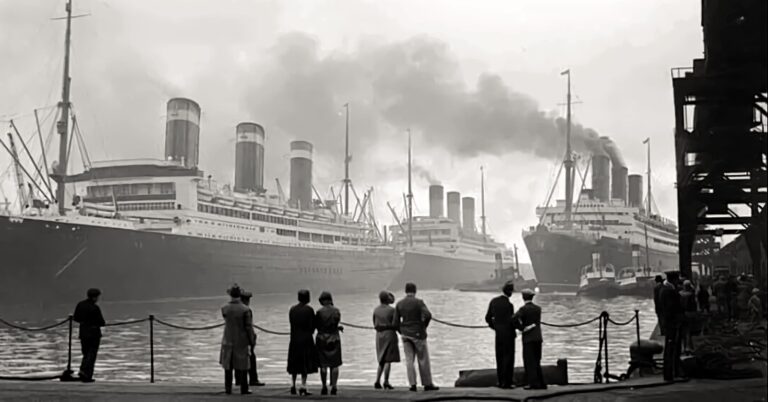
Sister ships Berengaria, Leviathan, and Majestic docked in Southampton. Taken prior to 1931 by an unknown party.

PUBLIC DOMAIN

By April 6th, the United Kingdom national coal strike had already been ongoing for 37 days. It had summarily devastated Southampton’s maritime workforce, forcing hundreds of ship workers into unemployment.

"Daily the ranks of unemployed are swelled," reported the Southern Daily Echo, "to join the knots of sailors who stand idly about."

Smoke no longer climbed from chimneys as households, in spite of the wet English chill, rationed what little coal they had left. Families were led into destitution, causing many to apply for aid and relief funds.

A contemporary newspaper report described one waiting line on Bargate Street as a "mournful queue of the workless" that had sadly become a "daily spectacle... many of the women had little tiny tots in their arms, and if some were too tired, worn and helpless to talk to each other, they hugged the sunny  side of the road... [because] warm petticoats had been pawned days ago to provide food."

The periodical Southern Daily Echo reported on March 21, 1912, that

"That distress in the industrial parts of Southampton is becoming more acutely felt is shown by the abnormal number of applicants for admission to the Workhouse, and a steady increase in the number of applicants for shelter at the vagrants’ ward. Without fuel, and almost without bread, the lot of many unskilled workers and their families is a parlous one.”

It reiterated on April 4, 1912, the following as reports of the strike’s resolution loomed. 

“There are many innocent sufferers from the present industrial upheaval, who have no direct interest in the strike, and will derive no benefit whatever happens. The casual dock labourer at the best of times lives more or less from ‘hand to mouth’... Every day that passes enlarges the zone of distress.”

And so, on the morning on April 6, 1912, the Miners Federation came together to vote on a “return to work” measure. After a reportedly spirited debate that carried on for two or three hours, they voted in favor. With that, the coal strike was at last done.

Southampton’s population was desperate to get back to work.

And thus, Recruitment Day began.

It must be emphasized that the Titanic and her peers did not come prepackaged with staff.

All manners of crew were employed on a contract-by-voyage basis, and they were recruited or otherwise picked up at various ports prior to departure--and even on the day of, according to some reports.

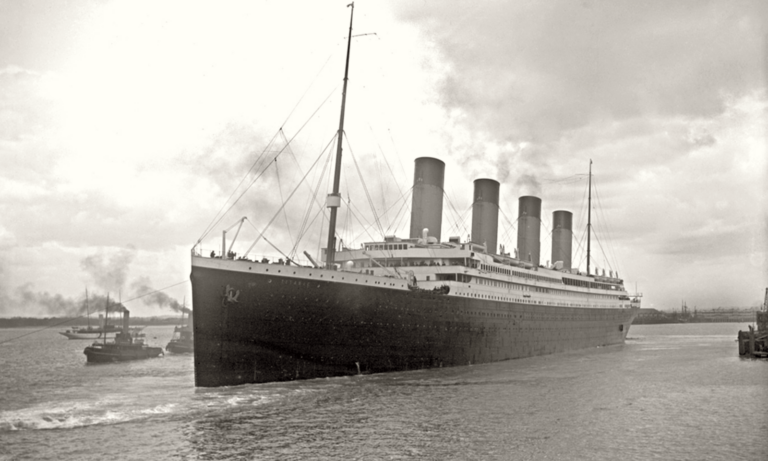
On the morning of April 6, 1912, Titanic had been berthed in Southampton for less than three days, having arrived on Wednesday, April 3rd, just shy of midnight. She had since been docked in Berth 44.

The coal strike had not prevented any and all persons in Southampton from obtaining work. But of those who had been restricted and without work for the duration of the strike, many were some of the poorest in the community.

Never the less, because the White Star Line had insisted on keeping its vessels on schedule regardless of the strike, some more fortunate men had been able to “sign on” to Titanic in the previous days: some, able seamen who left for Belfast back in late March, in order to board Titanic for her delivery voyage to Southampton; some, the likes of stewards and shopkeepers with prior experience.

By April 6th, cargo had begun to arrive at the White Star dock. And with the strike having ended that very morning, masses of heretofore unemployed men also gathered. 

The White Star Dock, accessible via Dock Gate 4, was reportedly mobbed.

The White Star Line’s office on Canute Road, only a brief walk away, was likewise managing an enormous crowd.

Union halls, particularly those belonging go the British Seafarers Union and the National Sailors and Firemens Union, were thronged with hundreds more workers hoping to land a gig on Titanic.

The process to sign on to a vessel was a chaotic one.

For those with prior seagoing experience, this mandated certificates of discharge and satisfactory performance on previous vessels. Regulars from similar vessels, or even a sister ship such as Olympic, of course orbited and were favored. It was a further attestation of one's competency and character to have previously served.

Violet Jessop, a stewardess on Titanic, wrote vividly of her memories of the process as she observed it years before Titanic, when she entered into seafaring life via another shipping company.

"The clerks seemed to sense my discomfiture and courteously gave me instructions where to go in order to obtain a health certificate from the company’s doctor, a necessity before I would be allowed to sign… as I came out, I found the escort thoughtfully sent by the clerk in charge of our "Articles" to conduct me back to the Board of Trade… When the shipping master appeared, there was a surge of anxious faces, each group of men clustering around the representative of the company they hoped to get taken on by. Then, employers could choose their men… Each discharge book – a seaman’s passport – was examined, and many questions asked. When the final sorting was done, and the rejected one stood aside to make room for their more fortunate, brethren, the shipping master called for silence, in order to read aloud the "Articles of Agreement."

Jessop, Violet. "Titanic Survivor: Memoirs of Violet Jessop Stewardess." The History Press, 2007.

The jobseekers signed the Articles without paying much heed to the details therein. According to Violet, it was routinely assumed that the employer would have, and dearly keep, the upper hand regardless.

Violet went on to describe the bedlam of the scene.

"The deafening babble of tongues died down and attention, not un mixed with all, was according to him… In that seething mass there was an impulse to stick together, although loyalty played no part in it. This was the herding instinct of creatures up against things; some found themselves befriending people they would not associate with on better acquaintance."

Jessop, Violet. "Titanic Survivor: Memoirs of Violet Jessop Stewardess." The History Press, 2007.

By the time Titanic departed on April 10th, she had necessitated the employ of literal hundreds in Southampton.

Per the British Board of Trade, 908 crewmembers were aboard Titanic in total.

And of that number, a staggering 724 crewmembers signed onto Titanic's maiden voyage with a Southampton address.

Open post

“For Those Few Minutes, the Ship Was Alive Again”: Adolphe Saalfeld

"For Those Few Minutes, the Ship was Alive Again": Adolphe Saalfeld

Adolphe Saalfeld called himself a chemical merchant.

More specifically, he was a self-made man of business who dealt in perfumes. 

His wholesale firm, called Sparks-White & Co., Ltd., was a distillery of fragrance, created by chemists and marketed for global distribution. Adolphe was its head chairman.

Adolphe, who was 47 years old, was bound for America on a pleasure trip: he planned to see Niagara Falls, and visit both Montreal and Chicago.

He also traveled with the intention to promote his perfumes as a wholesale distributor to potential clientele, or perhaps establish a brand-new stateside outlet for his perfumes.

He boarded the Titanic in Southampton on April 10, 1912, as a First-class passenger. Adolphe would occupy a cabin on C Deck.

With him, he carried leather satchels, which altogether contained over 60 small vials of perfume oils.

Before officially embarking, Adolphe had taken a tour of the ship with his nephew and fellow chemist, Paul Danby. Paul wrote back to his wife in awe of Titanic’s luxuries, describing it as “wonderfully appointed.”

Adolphe wrote a letter to his own wife, Gertrude, on the same day. In this and subsequent letters, he calls her “Wifey.”

Both Adolphe and Paul took pride in believing that they had written the very first letters on board Titanic.

Adolphe would write a second letter to his beloved Gertrude later in the evening. 

"Dear Wifey,

...It is not nice to travel alone and leave you behind. I think you will have to come next time... I have a small table for two to myself. I had a very good dinner and to finish had two cigars in the smoke room and shall now go to bed as I am tired... 

So far, apart from occasional remarks I have not spoken to anyone. I want to keep quiet and have a thorough rest. As I do not know whether I will be up in time for the mail at Queenstown, I am posting this letter tonight. A kiss for you and love to all from your loving husband."

Citation from "On Board R.M.S. Titanic" by George Behe, 2012.

Adolphe was very clear in his intention to preserve his solitude on the journey. And so--outside of his own correspondence to Gertrude--his movements throughout the voyage are not well-documented.

At the time of the collision with iceberg on April 14th, Adolphe reported that he was in the First-class Smoking Lounge.

He also wrote that the iceberg was more than visible to the passengers as Titanic scraped by.

In smoking room on Sunday night 11.45 -- slight jar felt which for a moment made us think some breakage machinery, but soon engines stopped and stepping from verandah cafe iceberg plainly seen and felt.

Citation from "On Board R.M.S. Titanic" by George Behe, 2012.

To date, it has not been proven which lifeboat saved Adolphe Saalfeld on the night Titanic sank. But it is often reported to have been Lifeboat No. 3. 

This boat, along with all the other odd-numbered vessels, was launched from the starboard side by First Officer William Murdoch—who, in spite of the Captain’s decree—permitted men to board lifeboats once women and children were scant about.

Adolphe seems to have taken to a lifeboat early in the sinking. He left all of his belongings behind--including the satchels that carried his perfume samples.

"...saw boats being lowered and noticed general reluctance people going into them. Then I saw a few men and women go into a boat and I followed and when lowered pushed off, and rowed some distance fearing suction in case Titanic sinking -- All expected to go back after damage patched up, but as we drifted away gradually, saw Titanic sink lower and lower and finally lights on her went out, and others in my boat said that they saw her disappear. Our boat was then nearly 2 miles away but pitiful cries could be plainly heard."

Citation from "On Board R.M.S. Titanic" by George Behe, 2012.

After the sinking, Adolphe’s plans for his new American parfumerie do not appear to have been fruitful; it is likely that they were entirely undermined. As an affluent male survivor of the Titanic disaster, Adolphe was reported ostracized from society.

He returned to England and his beloved Wifey, Gertrude.

Family members later claimed that Adolphe’s experiences on Titanic robbed him of sound sleep for the rest of his life.

He reportedly took the calling upon his chauffeur, a man known as Patch, to drive him about the emptied streets into the wee hours of the morning, until he could at last doze off.

Adolphe Saalfeld passed away in 1926 at the age of 61.

But his was a story unfinished, even with his death.

In 2000, a leather satchel was recovered from the Titanic's wreck site. Crumbling but whole after nearly nine decades on the seafloor, the bag still bore Adolphe's name.

His perfume samples were still contained within. A few vials had broken open, but most were found to be intact.

Historian, artifact curator, and Titanic expert Bill Sauder described the moment that Adolphe Saalfeld's satchel was opened to the world above, for the first time since 1912.

"The one thing I'll remember about Titanic artifacts until the day I die is when the Saalfeld perfume vials came up.

When you recover things from the Titanic: it's wet; it's rusty, and it's rotten. And the smell that comes off of it is perfectly alien, perfectly fetid; you know it's a kind of death you have never experienced.

And so the lab is kind of unpleasant. And then all of a sudden somebody opens up this satchel--this leather satchel--and out comes the fragrance of heaven... It's all these flowers and fruity flavors, and it's delicious. It's the most wonderful thing you've ever had.

It was just a complete overwhelming experience. It was like, all of a sudden the fragrance of heaven, you know, kind of moves through the room. So instead of being surrounded by all of these dead things, um... for those few minutes, the ship was alive again."

The memory of this extraordinary, ethereal moment moved Mr. Sauder to tears.

Open post

“All Quite Calm and Collected”: Frederick Dent Ray

Frederick Dent Ray was 32 years old when he signed onto Titanic’s crew on April 4, 1912.

He had set out for sea at just 17 years old, and appears to have travailed ports around the globe.

When the Second Boer War came, he enlisted in the Prince of Wales’s Light Horse Infantry. A bout of enteric fever—more commonly known as typhoid—eventually got Frederick booted from service, and he was returned back to England.

But Frederick did not settle in at home quite yet.

He soon took himself to South Africa, and he joined the Cape Mounted Police. He there engaged in Lord Methuen’s final wartime campaign.

Frederick returned again to England after that, entirely unscathed.

By 1908, he was a married man. He and his wife Annie initially settled in Southampton, but census records find them in Reading by 1912.

Frederick put himself back out to sea, undertaking employment with the White Star Line as a First-class saloon steward. Per his own description, Frederick’s duties were “to wait at the tables and set the saloon generally. That is all.”

Most notably, Frederick served on the R.M.S. Olympic for an extended period. He was even on board in September of 1911, when the Olympic collided with the H.M.S. Hawke.

On board Titanic, Frederick was assigned the attendance of particular First-class passengers for the duration of the trip.

His passengers included celebrated artist Frank Davis Millet, Mr. Clarence Moore, the Clarks, and Major Archibald Butt, a close and coveted aide to American President Howard Taft.

On the evening of April 14th, Frederick was waiting starboard-side tables in the dining room. 

That particular night, he waited upon Mr. Millet and Mr. Moore as they dined together—but not Major Butt, as he had been extended an invitation to the Wideners’s dinnner-time gala for Captain Smith. This was taking place on the opposite side of the very large saloon. 

Frederick’s shift was to end at 9:00 p.m.

After work, Frederick retired to his cabin at about 10:30 p.m.

Frederick’s cabin was located aft on E-Deck, and was designated as Room 3. He shared this “saloon waiters’ quarters” with 27 other stewards.

Frederick was asleep when Titanic collided with the iceberg, and the impact aroused him from sleep. He later described it as “a shock. Similar to a train being pulled up in the station.”

He thought only that something had gone awry with the engines and laud awake for a few minutes. 

Another steward, who was Frederick’s superior, then instructed him to get out of bed right away, because the ship had struck an iceberg. It was serious, he said, and they needed to get to their stationed lifeboats.

Frederick thought he was kidding. And so he laid in bed a bit longer before falling back to sleep.

When Frederick next awoke, a colleague was standing in the doorway, shouting, “All hands to the boats!” 

And so Frederick finally got up, dressed and donned a life vest, and made his way to the boat deck. 

On C Deck, he met with a colleague, Second Steward George Dodd, who instructed Frederick to go find another lifebelt. Frederick searched through five staterooms before locating the item and returning it to George. 

Then Frederick continued up to the boat deck and his assigned boat, Lifeboat No. 9. This was located on the starboard side, which was overseen by First Officer William Murdoch.

Once Frederick arrived, he saw that things were “dragging” and felt very cold.

Senator SMITH.
When you got to lifeboat No. 9 and saw those 8 or 10 men standing around it and one or two passengers and no women, what took place?

Mr. RAY.
I went to the rail and looked over and saw the first boat leaving the ship on the starboard side. By that time I was feeling rather cold, so I went down below again, to my bedroom, the same way that I came up.

And so Frederick went back down to the stewards’ quarters on E-Deck to grab an overcoat. 

While there with his open suitcase, Frederick took a moment to grab some handkerchiefs, which he said he “had a good supply of” thanks to his wife. He also had the presence of mind to grab toiletries like his toothbrush and shaving gear. 

“I thought wherever I was next...” he later recalled, “I should require them.”

Frederick began making his way back up to the boat deck.

En route, he saw the alleyway called Scotland Road was deserted, and E-Deck was flooding. 

Frederick then ran into First-class passenger Martin Rothschild on the stairwell, whom Frederick knew from his prior stint on Olympic. The two men spoke briefly about the accident.

"I spoke to him and asked him where his wife was. He said she had gone off in a boat. I said, 'This is rather serious.' He said, 'I don't think there's any occasion for it.'" So we walked leisurely up the stairs until I got to A deck and went through the door."

Martin Rothschild would not survive.

That conversation was not all that Frederick Dent Ray attested to, regarding his second trek to the boat deck.

On the way up, I saw the purser with five of the staff of the pursor's office with the safes open, and they had mailbags there. They were putting the jewels and jewel boxes into the mailbags… and talking, chatting one to the other. I continued… on my way up to the boat deck, and on the way up, I heard a fiddle. I wondered whoever was playing a fiddle at that time? ... and [it] transpired afterwards that it was a band. I thought it might be a passenger playing a fiddle…

they weren't playing any tune… they were tuning on the fiddle.

Frederick thereafter reported to Lifeboat 9 and assisted passengers in boarding, then moved to Lifeboat 11 to do the same. Some were reticent; some were recalcitrant.

Frederick then proceeded down to the next lifeboat—No. 13–which he stated was about half-full with women and children. The sailors then instructed men to board, in order to help in rowing the boat. 

It was then he spotted First-Class passenger Washington Dodge, with whom Frederick had already become acquainted.

"I met him on the Olympic in on the previous occasion and I persuaded him to come on the... come back on the Titanic. And of course, when we sailed from Southampton, I recognised him, and we had a chinwag and talked to one another, and he had a wife and a little boy about four years old, about [?] of that. And... I said, Where's your little... where's your wife and little boy? He said, well, he said, they've gone in another boat. And I said, well, I said come on. I said you get in this boat. We want somebody to row."

Frederick then followed Mr. Dodge into Lifeboat 13.

There, as Frederick recalled, a woman was in the midst of a panic attack. And Frederick in turn seems to have lost his patience.

"She was crying all the time and saying, 'Don't put me in the boat; I don't want to go in the boat; I have never been in an open boat in my life. Don't let me stay in.' I said, 'You have got to go, and you may as well keep quiet.'"

One of the sailors then dropped a bundled baby down into Frederick’s arms, with its mother climbing down into the lifeboat shortly thereafter.

Lifeboat 13 had a harrowing descent. It was “jumpy” and uneven according to Frederick, but it also nearly killed its passengers.

Nearing the water, Frederick and others foresaw danger.

…we got nearly to the water, when two or three of us noticed a very large discharge of water coming from the ship's side, which I thought was the pumps working. The hole was about 2 feet wide and about a foot deep, a solid mass of water coming out from the hole. I realized that if the boat was lowered down straight away the boat would be swamped and we should all be thrown into the water. We shouted for the boat to be stopped from being lowered, and they responded promptly and stopped lowering the boat.

The men used the lifeboat’s oars to push away from the boat, but their escape was hardly over.

Because there were no sailors in the boat, none of the occupants seemed to know how to cut the lifeboat loose from the ropes. 

And the discharging water had pushed Lifeboat 13 aft.

Directly under Lifeboat 15, which was descending with rapidity.

People screamed for knives to cut the falls, and the men—most notably Lead Stoker Fred Barrett—frantically severed the ropes. 

Lifeboat 15 came within two feet of crushing to death the 60-plus people in Lifeboat 13.

Once away from the ship—a decision that Frederick Dent Ray claimed he had objected to—Fred Barrett was elected in charge of the tiller.

And so Frederick Dent Ray, along with other able-bodied men, rowed throughout the night.

We pushed out from the side of the ship. Nobody seemed to take command of the boat, so we elected a fireman to take charge. He ordered us to put out the oars and pull straight away from the ship. We pulled all night with short intervals for rest. I inquired if the ladies were all warm, and they said they were quite warm and they had a blanket to spare. There seemed to be very little excitement in the boat. They were all quite calm and collected.

Later, in a letter to Titanic historian Walter Lord, Frederick explained how the handkerchiefs he had pocketed from his suitcase, came in handy to help the men on board stay warm.

"...of course you know that after going up to my lifeboat, I went back for my overcoat & looking in my (bunk?) I saw 6 handkerchiefs which were to become very useful as the people in the boat were complaining of the cold to their heads, so I told them to tie a knot in each corner & they had a very good improvised cap, Mrs W.Dodge had one, & in the morning, six heads were crowned."

Frederick also recalled in an earlier letter to Mr. Lord that he had accidentally absconded from Titanic with two salt spoons in his pocket. A mistake, he swore it was, and not petty larceny.

My wife has just reminded me that I have not told you how I came to have 2 salt spoons in my pocket on that night. She is afraid you might think that I was going to pinch them, how it happened was in cleaning the table it meant going the length of the saloon to put them in the side board drawer...

Frederick Dent Ray was called to testify on Day 9 of the American Senate Inquiry. He was not summoned to appear at its British counterpart.

Frederick Dent Ray would turn out to be one of the Titanic’s longest-lived survivors overall, as well as the longest-lived surviving crewmember.

He died in 1977, aged 97.

Open post

“Curses and Prayers Filled the Air”: Robert Williams Daniel & Eloise Hughes Smith

"Curses and Prayers Filled the Air": Robert Williams Daniel

Robert Williams Daniel stood dazed and determined on the Carpathia, knocking on a stranger's door and wearing an oversized suit that wasn't even his.

At 27 years old, Robert had survived the sinking of the Titanic--although no one, including himself, seemed to know exactly how.

But however he was saved from the ocean, the third-hand account from the Carpathia's medical officer attests to Robert having been saved in a red "woolen sleeping garment" or nightshirt, and shoes. Robert also reportedly wore his late father's pocket watch tied around his neck.

Carpathia's physician, Dr. Arpad Lengyel, had been assigned to attend to Titanic's steerage survivors. And since this is where he first treated Robert, who he found to be "delirious"--insisting he was a doctor himself--and underclothed.

So Dr. Lengyel, believing Robert was a colleague in the medical field in a pitiful state, gave him his own suit to wear. Robert reportedly had no recollection of this interaction when Dr. Lengyel tended to him the next day.

When it was discovered that Robert was, in fact, a First-class passenger of the sunken ship, he was transferred to an alternate area of the Carpathia.

And then, on a ship full of widows, Robert eventually set out to befriend the bereaved newlywed from West Virginia: Eloise Hughes Smith.

Standing before the doorway of her cabin--lacerations on his bruised face, wearing "a pair of trousers large enough for a giant [and] a blue shirt he had bought from the Carpathia's barber"--the still-reeling Robert offered his companionship to 18-year-old Eloise, so that she might feel protected while the survivors awaited the Carpathia's arrival in New York City.

She was newly pregnant, suddenly widowed, and absolutely inconsolable. Barely three months earlier, she had been another man's bride.

When Robert disembarked Carpathia with Eloise in his arms, she was reportedly "in a fainting condition." They were some of the first to appear on the ship's gangway.

After Robert had parted ways with Eloise and her father on the quay, his mother found him despite the fact she barely recognized him. The New York Sun reported that he was  "total wreck" and almost too weak to stand. Reporters swarmed him immediately, and his confused--and confusing--narrative unfolded.

Robert reportedly "reeled" at least once, and removed himself to lean on a railing to steady and compose himself.

"Let me smoke a cigarette before we go on," he is reported as having said at last.

The reporters pressed Robert about the bruises and cuts on his face.

"[On Titanic's stern, there] seemed to be thousands fighting and shouting in the dark... Everybody seemed to have gone insane. Men and women fought, bit and scratched... [there were] men praying as I struggled to get to the rail. Curses and prayers filled the air... I grabbed something and uttered one prayer. Then I went over the side of the boat. I tried to wait but suddenly found myself leaping from the rail, away up in the air and it felt an eternity before I hit the water. "

Robert had boarded Titanic in Southampton, having been in London on business, and occupied "an inside cabin" on A-Deck, although the exact cabin has never been conclusively determined.

And he had boarded alone--save for his new puppy, a cherished French bulldog named Gamin de Pycombe.

While his time spent during the voyage is not well-known, Robert's movements during the sinking are documented thanks to his friend, Edith Russell--who had a cabin around the bend from his.

Titanic trimmer Paddy Dillon, who himself swam in the water before being pulled aboard a lifeboat, also recalled seeing Robert within five minutes of the ship's submersion.

"Then [Titanic] plunged and then seemed to right herself. There was about 15 of us when she took the first plunge. After the second, there was only five of us left. One of these was a Mr. Daniels [sic], a First Class passenger. He only had a pair of knickers, a singlet and a blanket thrown over his shoulders. I think he jumped for it."

Robert would proceed to regale the press with so many stories about fellow passengers as the Titanic went under--including Jack ThayerRichard Norris Williams and his father, the Carter family, and Ida and Isidor Straus--as well as First Officer William Murdoch and Fifth Officer Harold Lowe.

Robert was also sought out by the bereaved family members of victims who were anxious to learn the details of their last moments.

Later in 1912, Robert had plans to meet up with fellow survivor Colonel Archibald Gracie, with whom Robert had formed a fast and profoud friendship while on board Carpathia. The Colonel was writing a comprehensive book of the disaster based upon passenger recollections and testimonies, and the men wrote to each other regularly.

Robert, having been abroad once again in England, was asked by reporters in December of 1912 about Colonel Gracie. He did not know that his friend had died the week earlier.

When Robert was informed, he was "overcome with grief" and declined to speak any further.

By 1914, Robert began calling upon another Titanic survivor with whom he shared traumatic memories: the widowed Eloise Hughes Smith.

Her father was not a little displeased, given that his daughter was, at the time, involved in ongoing litigation with her late husband's family on behalf of hers and Lucian's infant son.

In spite of Congressman Hughes's misgivings, Robert and Eloise grew to be closer and closer friends, and that friendship evolved into romance.

And so, in a remarkable turn of events, Robert Williams Daniel married Eloise Hughes Smith in a quiet ceremony in New York City in August of 1914.

The next day, Robert departed for London yet again.

There, he became stranded for over two months due to the outbreak of the Great War, which delayed Eloise and Robert in announcing their marriage to society.

Once Robert was permitted to return to the United States, he and Eloise settled in Philadelphia with Eloise's son, Lucian Smith, Jr., and Robert's new English bulldog. Among their neighbors were the Carter family, who had also survived Titanic.

In February of 1919, Robert was sent overseas to France at the behest of the United States War Department to handle money that would be used to convert French currency in the possession of American soldiers returning from the war front. He was subsequently awarded a medal for his distinguished service.

But by the time Robert returned, his marriage to Eloise was sadly deteriorating.

They separated in 1920, in the wake of rumors of his marital infidelity. And in 1923, Eloise filed for divorce after learning, according to her legal claim, that Robert was residing with "an unknown blonde woman" in New York.

The divorce was granted without contest. According to the divorce decree, Robert was to remained unmarried for five years.

By December of that same year, he remarried in New Jersey. And in 1929, he would marry a third and final time.

Eloise would likewise remarry a third time, when she was widowed yet again. Her fourth and final marriage would end in a swift divorce.

After all of that emotional tumult, Eloise reverted her surname to Smith--that of her first husband, Lucian P. Smith, and the love of her life.

Eloise Smith died in 1940 from a heart attack at only 46 years old.

Her ex-husband, Robert Williams Daniel, died later that same year from cirrhosis of the liver. He was 56 years old.

Regardless of its outcome, Eloise and Robert are noted as the sole survivors to marry after meeting in the wake of the disaster.

Posts navigation

1 2 3 4 5 9 10 11
Scroll to top