Open post

“Wishing You All Good Things Until We Meet”: Daniel Coxon

"Wishing You All Good Things Until We Meet": Daniel Coxon

In Merrill, Wisconsin, there once lived an Englishman, and they called him Popcorn Dan.

Daniel Coxon was beloved. He was genial and bright and the precise definition of “a character.”

In a small, dirt-road town such as Merrill, Dan was a delightful sight to behold. Because—as you may have deduced from his nickname—Dan Coxon was a popcorn vendor.

Every day, he walked the dusty streets of Merrill, with his pretty red-and-yellow popcorn cart, pulled along by his white horse. It was a noticeable spectacle, for sure. Add to that the steam ever whistling from the boiler and Dan’s renowned conviviality, and he never seemed to want for patrons.

Popcorn Dan most often set up shop on the corner of Poplar Street and East Main Street. Along with popcorn, he also sold freshly roasted peanuts.

But Dan did more than popcorn.

He took a lot of odd jobs around town, primarily manual labor and painting. He offered hauling services thanks to his horse and wagon. He even worked for a time as the live-in caretaker of a haunted house: a Queen Anne mansion, perched eerily on the banks of the Wisconsin River.

One might think that odd jobs and a popcorn cart wouldn’t pay out much in dividends. But one would be wrong.

On his varied income, Dan was the proud owner of a rare and pricey phonograph. His horse and popcorn cart, of course. And he was even able to purchase TWO houses. One, he paid $400.00 for; the other, $1,000.00. And being a savvy gentleman, he resided in the former, while leasing out the grander.

His tenant was Harry Krom, who had emigrated from Russia and opened the fanciest men’s dress shop in Merrill, called Krom Clothing & Co.

And industrious individuals are always impressive, sure. But Dan Coxon was particularly so. And this was because he worked all his many labor-intensive jobs with a physical handicap.  Specifically, Dan’s left arm was shriveled from birth.

Dan Coxon had emigrated from London to Canada sometime in the 1870s, and then Wisconsin sometime in the 1880s. He wasn’t married and was in no rush to do so; his brother said he “made a laugh out of it.”

By 1911, Dan was in his early 50s. He was well-established in Merrill and successful—and he wanted to open the first movie theater in northern Wisconsin.

And so, Popcorn Dan traveled back to the UK to learn more about the movie-theater business, and to visit with his family for the holidays.

But before he did, he had to get snazzy.

Just a few days before Thanksgiving, Dan went to Krom Clothing and dropped $15 on a new suit—as well as $115 on a proper fur coat. Today, that coat would cost approximately $3,000.00.

Dan arrived in London on December 23, stayed through Christmas, and then through the winter months into the springtime with his sights on Easter. He wrote the following to his friend on April 1, 1912.

I am now writing to let you know that I am coming back. I have already booked my passage back by the “Titanic,” which will leave Southampton on the Wednesday after Easter… I have had a pretty good time on the whole but am getting rather tired now of holiday making and shall be very glad to get back again and settle down once more.

As cited in "The Last Night on the Titanic," by Veronica Hinke, 2019.

Dan also ribbed his friend for some lazy and imprecise addressing.

I was very delighted to receive your letter. It was quite a wonder though that I did get it as the envelope was only addressed “Mr. Daniel Coxon London, England” which of course is not sufficient for a place like London. Anyway, I was glad to get it (thanks to the post office people here).

As cited in "The Last Night on the Titanic," by Veronica Hinke, 2019.

Popcorn Dan delayed his departure past Easter in order to sail on Titanic. He could easily have afforded a Second-Class ticket, but elected instead to only purchase steerage accommodation.

Dan left his brother Alfred’s house to reach Waterloo station at 7am and headed out from there to Southampton, which was over an hour away. Alfred accompanied them, as well as their nephew John, who was the son of their sister Elizabeth.

According to Alfred Coxon, Dan had a particularly difficult time trying to board Titanic because of his withered arm. The overseeing officers, Alfred said, subjected Dan to an inordinate amount of scrutiny and were extraordinarily suspicious of him. Dan even had to produce paperwork to prove that he was, in fact, a naturalized US citizen.

Once he was finally permitted to board, Dan, Alfred, and John spent about an hour and fifteen minutes exploring the ship. Once Alfred and John disembarked, they stayed on the dock and “waved [their] hands to him as far as [they] could see him.”
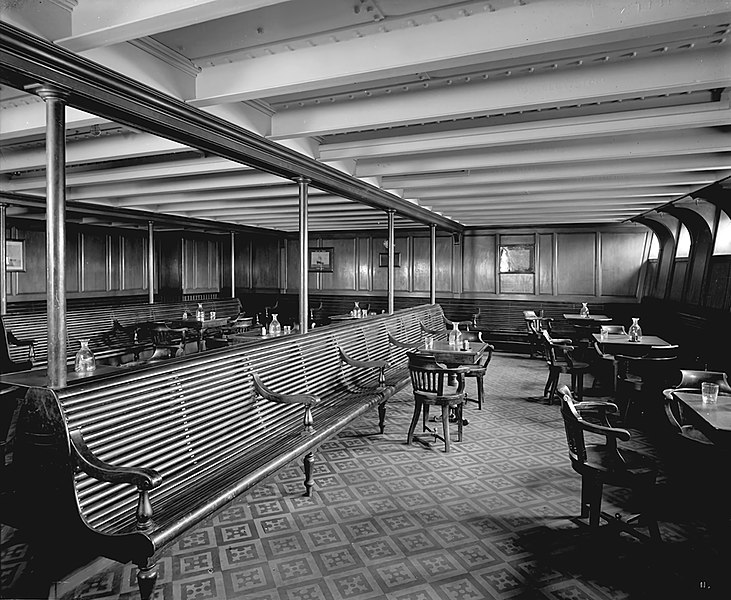
Like so many steerage passengers, we know comparatively little to absolutely nothing about Dan's time on board Titanic.

On the morning of April 15—the very same morning of Titanic's sinking—a letter written by Dan was delivered to Hans van Kaltenborn, a friend and newspaper editor in Brooklyn, NY.

If you happen to have the time I should, of course, be only too pleased if you could manage to come and meet me on the arrival of the boat. I have had a very good time, but now feel that I should be glad to get back and return to work, for I am getting a little tired of fooling around. I should think that by the time I get back the weather will be settling for the better, and the rougher kind will, I hope, be all over. It is growing pleasant over here now, and spring here, as you may know, is very delightful. Wishing you all good things until we meet.

Popcorn Dan died in the sinking. His body was never found.

His wallet, however, has been recovered from the wreck. It has been determined that the wallet was Dan's because the $10 and $15 bills within bore stamps from Merrill, Wisconsin.

SOURCE MATERIAL

Hinke, Veronica. "The Last Night on the Titanic: Unsinkable Drinking, Dining, & Style." Regnery History, 2019.

https://www.encyclopedia-titanica.org/titanic-victim/daniel-coxon.html

https://www.encyclopedia-titanica.org/mr-coxon-may-be-lost.html

Open post

“For the Rest of My Prophecy to Come True”: Helen Bishop

"For the Rest of My Prophecy to Come True": Helen Bishop

Helen Walton was 19 years old when she married 23-year-old Dickinson Bishop. She was his second wife. When they met, he still wore a mourning band for the first wife he had just lost to childbirth.

After their wedding in November 1911, Dick and Helen took off on a lavish extended honeymoon spanning Europe and North Africa. In four months, they had visited France, Algiers, Italy, and Egypt. 

Dick was besotted. And somewhere along the way, Helen fell pregnant.

Helen was overwhelmed with beautiful gifts from her new husband—he even bought her a pretty little lapdog in Florence to celebrate the pregnancy. Helen named the puppy Frou-Frou and doted on her endlessly, and Dick continued to dote on Helen.

The Bishops had read about the opulence and glittering amenities on the brand new Titanic, and Dick, beside himself with elation, suggested that they join Titanic’s maiden voyage.

The Bishops (and Frou-Frou) boarded at Cherbourg.

Helen and Dick were a particularly sociable couple; they even befriended Colonel John Jacob Astor and his very young new wife Madeleine. The Astors, affluent though they were, were having a romantic scandal and had been thusly ostracized by some of the haughtier First-Class passengers.

In fact, Helen made fast friends with Mrs. Astor, as they were of similar age and newly pregnant on their honeymoons, and all too happy to play with Frou-Frou, who Helen had been permitted to keep in her stateroom.

On the night of the sinking, Helen and Dick were alerted immediately.

“My husband awakened me at about a quarter of 12 and told me that the boat had struck something. We both dressed and went up on the deck, looked around, and could find nothing… We looked all over the deck; walked up and down a couple of times, and one of the stewards met us and laughed at us. He said, :You go back downstairs. There is nothing to be afraid of. We have only struck a little piece of ice.”

Helen testified that after this, she and her husband returned to their suite, only to be interrupted 15 minutes later by fellow passenger Albert Stewart. 

“He knocked at our door some time after the disaster. This was after we had dressed, gone up deck, and gone to our beds again. Mr. Stewart said ‘Dickey-bird, you’d better come up on deck and amuse yourself,’ in a tone that warned us.”

The Bishops encountered the Astors during this second round, and Colonel Astor chased down Captain Smith, who “told him something in an undertone.” Astor returned and advised everyone to put on their lifebelts.

As the Bishops left their stateroom for the final time, Helen asked if it would be prudent to bring Frou-Frou with her. Dick assured her that this was a necessary precaution and nothing more, and that Frou-Frou would be safe to await Helen’s return. But Frou-Frou was desperate to stay with Helen.

Dick locked the stateroom as they left; Helen never saw Frou-Frou again. 

“It broke my heart to leave my little dog ‘Freu-Freu’ [sic] in my stateroom… I made a little den for her in our room behind two of my suitcases, but when I started to leave her she tore my dress to bits, tugging at it. I realized, however, that there would be little sympathy for a woman carrying a dog in her arms when there were lives of women and children to be saved.”

On deck, Helen and Dick found themselves at Lifeboat 7 on the starboard side, nearby Fifth Officer Harold Lowe.

“We had no idea that it was time to get off [Titanic], but the officer took my arm and told me to be very quiet and get in immediately.”

Helen went on to assert that Dick had been pushed in after her, a story that he corroborated.  Dick took his seat beside his wife and reassured her as they descended. He would  be forced to grapple with this for the rest of his life.

Although she did not testify to it during the Senate Inquiry, Helen also asserted that she had heard the instruction that “all brides and grooms may board” the lifeboat, and that she and Dick were one of four couples in their boat.

Lifeboat 7 was the first to leave Titanic, and Helen Bishop is regarded as the first passenger to have boarded a lifeboat following the collision. Shortly thereafter, she was joined in the boat by movie actress Dorothy Gibson.

The lifeboat was noticeably under-populated, and once some distance had been gained between it and Titanic, a headcount was taken; Helen testified to a total of 28 people in Lifeboat 7.

There were no officers in the lifeboat, and only a trio of crewmen. The passengers therefore took turns in rowing the boat, including Helen, pregnant though she was. An exception was made for a fraudulent German baron who elected to sit rowing out and have a smoke instead.

Helen’s account of the sinking itself was brief, but heartbreaking.

“For a moment, the ship seemed to be pointing straight down, looking like a gigantic whale submerging itself headfirst… a veritable wave of humanity surged up out of the steerage and shut the lights from our view. we were too far away to see the passengers individually, but we could see the black masses of human forms and hear their death cries and groans.”

Helen also removed her wool stockings to give to a small girl who hadn’t had sufficient time to dress for the cold. 

Because Lifeboat 7 was the first to launch, its passengers also spent the most time adrift in the dark with nothing but “ghastly… green lights, the kind you burn on the Fourth of July” that a steward had brought on the boat. 

According to Helen, “Whenever we would light one of these diminutive torches, we would hear the cries from the people perishing aboard. They thought it was help coming.” And so, the occupants of Lifeboat 7 became increasingly concerned about being swarmed and overturned by desperate survivors.

As her fellow passengers became more paranoid, Helen attempted to placate them with a fun anecdote.

Helen said that while she and Dick were in Egypt, she visited a fortune teller who informed her that she would survive a shipwreck and an earthquake, but a motor vehicle accident would take her life. Therefore, she assured everyone, they would absolutely survive the night. 

“We have to be rescued,” she said, “in order for the rest of my prophecy to come true.”

Helen and Dick did survive, of course. Although Dick's reputation did not. Like other male survivors, he was harangued for his cowardice, and was also accused of dressing like a woman in order to board a lifeboat.

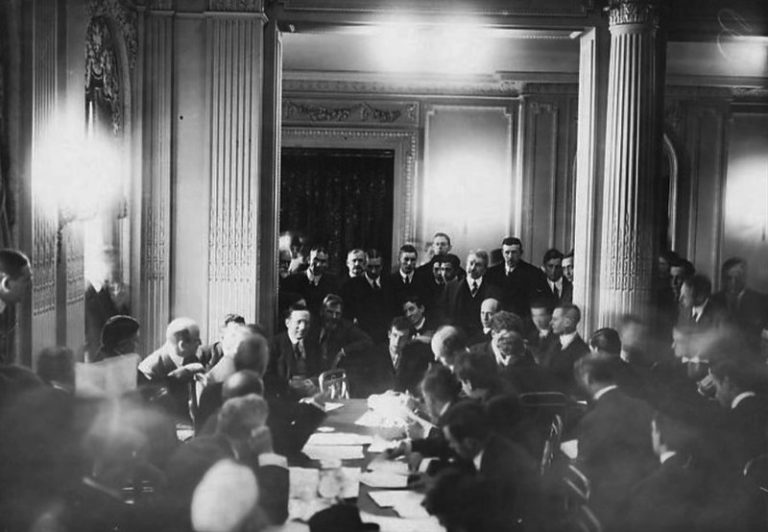
Both Mr. and Mrs. Bishop were also called before the Senate Inquiry. 

Helen gave birth to their son in December of 1912, but the infant died only two days later.

Helen and Dick took a holiday to California in the springtime of 1913 in an effort to distract themselves from their bereavement.

But an earthquake disrupted their holiday.

Helen was newly distraught. Two-thirds of the prophecy had now happened; despite Dick’s reassurance, she was terrified of the third and final act: a fatal car crash.

In November of 1914, Helen was on her way home from a country club dance with a group a friends. The car spun out while taking a curve and crashed into a tree. Helen was thrown 25 feet from the vehicle and fractured her skull.

She survived, despite expectations. But she did have a metal plate installed in her skull.

Her personality subsequently changed, and her marriage to Dick deteriorated because of it. They divorced less than two years later, in January of 1916.

Only two months later, Helen fell on a rug and struck her head near the location of the metal plate. Unconscious, she suffered a cerebral hemorrhage and died within days, on March 16, 1916.

Helen’s obituary appeared on the front page of her hometown’s daily newspaper, right alongside the wedding announcement of Dick and his third wife.

Helen Walton Bishop was 23 years old.

Open post

“Here, There, and Everywhere”: Chief Designer Thomas Andrews

"Here, There, and Everywhere": Chief Designer Thomas Andrews

As a child, Thomas Andrews, Jr., was fond of horses and beekeeping. He was a competitive cricket player.

And of course, he really enjoyed boats.

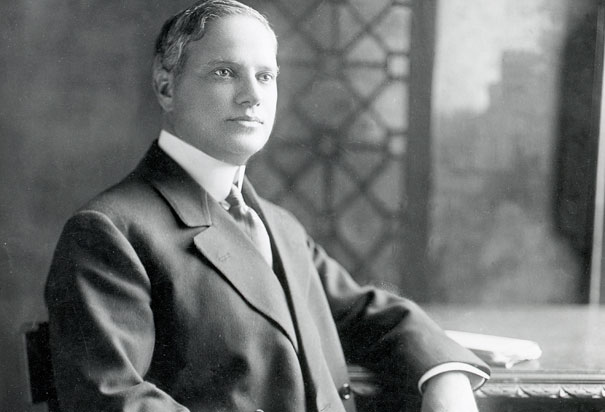
Thomas Andrews. Taken on July 7, 1911.

PUBLIC DOMAIN

Thomas, who often was called “Tommie”, was 16 years old when he was granted a privileged apprenticeship at Harland & Wolff in 1889. This was convenient, since his uncle was none other than Lord William Pirrie, partner of the firm.

Though Thomas's parents were still, of course, required to pay for the opportunity.

Lord William Pirrie's office at Harland & Wolff, where Thomas Andrews undoubtedly spent time. Taken by Robert John Welch for Harland & Wolff.

PUBLIC DOMAIN

During this five-year apprenticeship, Thomas’s daytime hours were spent working in various departments, including the cabinetmakers and draughting office, throughout the firm. And at night, he attended technical college.

In late 1894, he took a proper job at the shipyard; in 1907, he became the managing director of the Draughting Office. Good news, that, as he was engaged to be married.

At the time, Thomas was engaged to Helen Reilly Barbour, who he called Nellie. Apparently, he had proposed to her rather abruptly back in 1906, according to a remorseful letter he sent to her on March 25 of that year. "My dear Nellie," he wrote, "I cannot tell you how much it grieves me to feel that I frightened or gave you any annoyance last night."

Nellie clearly forgave him for his impulsivity, though, and they married in 1908. They had a daughter, nicknamed Elba because of her initials, in 1910.

Thomas with his wife Nellie and daughter Elba. Taken November 29, 1910.

PUBLIC DOMAIN

So it was in 1907, after having been promoted, that Thomas began a new project: a line of triplet luxury liners for the White Star Line, beginning with the R.M.S. Olympic.

The draughting office. Taken by Robert John Welch for Harland & Wolff.

PUBLIC DOMAIN

Now by the time of this well-earned promotion, "Tommie" was an extremely popular guy in the yard.

Vera Morrison, who is Nellie's daughter from her second marriage, recounted a story her mother had told her of Thomas’s popularity at Harland & Wolff.

He told Nellie when they were driving out of the shipyard one day together that all the workers who were coming out were his mates. He was so very popular and dearly loved, I think, by so many people.

This anecdote goes hand-in-hand with a biography of Thomas Andrews by Shan Bullock, which was published in 1912.

He would share his lunch with a mate, toil half the night in relief of a fellow-apprentice who had been overcome by sickness, or would plunge gallantly into a flooded hold to stop a leakage. “It seemed his delight,” writes a foreman, “to make those around him happy. His was ever the friendly greeting and the warm handshake and kind disposition.” Such testimony is worth pages of outside eulogy, and testimony of its kind, from all sorts and conditions, exists in abundance.

Despite his esteem, tenure, and status at the shipyard, some of Thomas’s suggestions for the White Star superliners—including a minimum of 46 lifeboats and watertight bulkheads reaching up to B Deck—went unheeded.

Deck plans of the R.M.S. Titanic, as used for reference in the Senate Inquiry.

PUBLIC DOMAIN

Thomas had been on the maiden voyages of the Adriatic, Oceanic, and Olympic, so the choice to sail on Titanic was routine--so much so that Chief Baker Charles Joughin had a customary loaf of bread made especially for him at the start of each journey.

None of this is to say that Thomas wasn’t enthused about his newest ship. He wrote the following to Nellie while in Southampton.

The Titanic is now about complete and will I think do the old Firm credit tomorrow when we sail.

Henry Etches, a steward who had also worked on Olympic, attended to Thomas’s needs on board, taking him “some fruit and tea” and helping him to dress in his evening wear every night.

“That would be about a quarter or 20 minutes to 7, as a rule,” Etches said. “He was rather late in dressing.”

By all accounts, Thomas spent his time roaming all about the gargantuan ship looking for improvements to be made. He always took down the minutest of details in his notebook, such as an excess of screws in the stateroom hat hooks and the color of the red tiling on the promenade deck being just a touch too dark.

Etches testified to as much at the American inquiry. When asked by Senator Smith if Mr. Andrews had been busy and worked nights, Etches replied as follows.

He was busy the whole time… He had charts rolled up by the side of his bed, and he had papers of all descriptions on his table during the day… He was working all the time, sir. He was making notes of improvements; any improvements that could be made… during the day I met him in all parts, with workmen, going about. I mentioned several things to him, and he was with workmen having them attended to. The whole of the day he was working from one part of the ship to the other… I happened to meet him at different parts of Deck E more often than anywhere else.

According to Etches, he also knew that Thomas visited the boiler rooms, as he saw the suit that he wore when visiting the boilers discarded on Thomas’s bed.

Thomas’s perfectionism and meticulous attention to detail, however, should not be taken as an implication that he was not pleased with Titanic on the whole. He is reported to have said to first-class survivor Albert Dick, whom Thomas had befriended on board, “I believe her to be nearly as perfect as human brains can make her.”

Thomas routinely worked into the late hours, and is reported to have been awake and working at the time of the collision with the iceberg. Immediately thereafter, he was witnessed taking emergency tours of the ship. Per survivor Albert Dick, as reported in Shan Bullock’s biography of Thomas Andrews:

He was on hand at once and said that he was going below to investigate. We begged him not to go, but he insisted, saying that he knew the ship as no one else did and that he might be able to allay the fears of the passengers. He went.

Steward James Johnstone reported that while he was in the dining saloon, he saw Mr. Andrews run down toward the Boiler Room, followed by Captain Smith.

Johnstone said that while he was stuffing four oranges in his pockets, Thomas resurfaced. Johnstone followed him down to E-Deck, where he watched him descend further still to the mail rooms.

When he peered after Thomas running down the stairwell, he saw water flooding in.

Thomas, who was without a hat and had an insufficient coat for the ocean night-chill, was also witnessed personally seeing to getting passengers to wear their lifebelts and enter lifeboats throughout the entire sinking.

Jack Thayer wrote in his account that he and his parents were directly approached by Thomas.

We saw, as they passed, Mr. Ismay, Mr. Andrews and some of the ship’s officers. Mr. Andrews told us he did not give the ship much over an hour to live. We could hardly believe it, and yet if he said so, it must be true. No one was better qualified to know.

Excerpt from "The Sinking of the S.S. Titanic" by Jack Thayer.

Jack's encounter is hardly unique. Given Thomas’s famed congeniality and his apparent omnipresence on the ship, he was highly esteemed by many passengers and was often stopped for a comforting word or further information about what was really going on. He makes appearances in many survivor accounts.

The testimony of Mr. Etches at the Senate Inquiry sheds light on Thomas’s calm but urgent direction to the stewards, as well as attests to his overwhelming concern for the passengers.

[I saw Mr. Andrews at] 20 minutes past 12. He stopped me. I was going along B Deck, and he asked had I waked all my passengers… Mr. Andrews then told me to come down on C Deck with him, and we went down the pantry staircase together. Going down he told me to be sure and make the passengers open their doors, and to tell them the lifebelts were on top of the wardrobes and on top of the racks, and to assist them in every way I could to get them on, which I endeavored to do.

We walked along C Deck together. The purser was standing outside of his office, in a large group of ladies. The purser was asking them to do as he asked them, and to go back in their rooms and not to frighten themselves, but, as a preliminary caution, to put the lifebelts on, and the stewards would give them every attention. Mr. Andrews said: "That is exactly what I have been trying to get them to do," and, with that, he walked down the staircase to go on lower D Deck. That is the last I saw of Mr. Andrews.

Stewardess Mary Sloan likewise was awed by Thomas’s calm and determined selflessness, despite the fact that his face “had a look as though he were heart-broken”.

She said, “He was here, there, and everywhere, looking after everybody… thinking of everybody but himself.”

Stwardess Annie Robinson’s report likewise speaks to Thomas’s drive to protect those on board. After asking her to open up all the unoccupied rooms and distribute their lifebelts and blankets, as well as to make sure all the ladies had left their rooms, he gently chided her for not wearing her own lifebelt. Per the biography of Thomas Andrews written by Shan Bullock, their exchange went like this.

“Did I not tell you to put on your life-belt. Surely you have one?”

She answered, “Yes, but I thought it mean to wear it.”

“Never mind that,” said he. “Now, if you value your life, put on your coat and belt, then walk round the deck and let the passengers see you.”

“He left me then,” writes the stewardess, “and that was the last I saw of what I consider a true hero and one of whom his country has cause to be proud.”

All of his bravery and pro-activity is belied by perhaps the most famous of all Titanic’s oft-called Last Sightings: that of Thomas Andrews, standing mute, dazed, and lifebelt-less at the fireplace of the First-Class Smoking Room.

Starboard view of the First-Class Smoking Room on Olympic. Thomas Andrews was encountered by the fireplace in Titanic's identical room.

PUBLIC DOMAIN

This comes from First-Class Steward John Stewart, who was one of two stewards charged with the Verandah Café. Per the Bullock biography, Stewart’s encounter went thusly.

[Stewart] saw him standing along in the smoking room, his arms folded over his breast and the belt lying on a table near him, "Aren't you going to have a try for it, Mr. Andrews?"

He never answered or moved. "Just looked like one stunned."

Thing is, this wasn’t the last sighting of Thomas Andrews.

And it was never purported to be.

While Thomas was indeed seen in the Smoking Room, the timeline for this particular Last Sighting is just plain off. Stewart stated that he saw Mr. Andrews only minutes before he took to Lifeboat 15, which left the ship at 1:40a.m. The ship did not sink until 2:20a.m.

It’s a heartbreaking moment for sure, but it was never set forth as Thomas’s last moments alive.

In truth, Bullock states directly thereafter that Thomas was seen on deck during Titanic' final few minutes; he was throwing deck chairs and anything else to hand overboard before being washed off the deck. And as per Mess Steward William Fitzpatrick and disclosed by the authors of “On a Sea of Glass,” he was last witnessed being washed off the bridge alongside or nearby Captain Smith.

Thomas's body was never recovered.

On April 19, 1912, the Andrews family in Belfast received the telegram they’d dreaded.

Interview Titanic’s officers. All unanimous Andrews heroic until death, thinking only safety others. Extend heartfelt sympathy to all.

He was 39 years old.

Open post

“A Trip to See the Stars”: The Spedden Family

"A Trip to See the Stars": The Spedden Family

Frederic Oakley Spedden and his wife Daisy boarded Titanic as First-Class passengers with their six-year-old son Robert Douglas, who was called by his middle name. Along with them was their maid, Miss Helen Wilson, and Douglas’s private nurse, Elizabeth Burns.

Douglas was precious to his very doting parents, as he was an only child. And he loved Elizabeth dearly, and called her “Muddie Boons” because he couldn’t pronounce her name properly. They were practically inseparable.

Mr. and Mrs. Spedden were from New York, and both of them were the heirs of extremely affluent families. The family had been traveling abroad since 1911, beginning in Algiers, and going on to Monte Carlo, then Paris. They had also spent some time in northern Africa, including Egypt.

They elected to sail on Titanic for the return home.

Young Douglas Spedden is one of Titanic’s most recognizable characters. If you’ve seen enough Titanic-related photos—or recall the moment in the 1997 film, when that Jack Dawson casually steals a First-Class passenger’s coat—then you’ll recall Douglas.

He’s the little boy playing with a spinning top on deck.

He stands on his toes in the bright sun, as his father, who has a camera strapped to his shoulder, coaches him. Two unnamed men, standing still in their greatcoats, watch with their back to the camera; one smokes a cigar, the other holds a cigarette behind his back.

The photo was taken on April 11, 1912, by Fr. Francis Browne, who labeled it thusly in his personal photo album.

“The children’s playground” Taken about midday on the Saloon deck.

As reproduced in "Father Browne's Titanic Album: A Passenger's Photographs & Personal Memoir" by E.E. O'Donnell. Messenger Publications, 2011.

We know a bit about how the Speddens spent their time thanks to Daisy’s diary. For instance, Daisy, along with Douglas's nurse, took to the Turkish baths on Saturday, April 13, 1912. Turkish baths were a very popular luxury in the Edwardian period, so Daisy had every reason to believe that it would be delightful.

It was not.

She wrote in her diary, “It was my first and will be my last, I hope, as I’ve never disliked anything so much in my life.”

Daisy did, however, enjoy the dip in the heated swimming pool that followed. She also wrote that she spent Saturday afternoon playing cards.

The Speddens responded very quickly once they learned of the collision with the iceberg. Frederic and Daisy had woken up by the sound of the iceberg scraping the ship, and went up on deck in their nightclothes. When they noticed the listing deck, they dashed downstairs to wake their servants. Muddie Boons immediately roused Douglas.

When he asked why, she told him they were going to take “a trip to see the stars.”

Luckily for the entire family--but especially Frederic Spedden--they found their way to the starboard side of the ship and Lifeboat 3. With no other women in plain view, First Officer William Murdoch permitted Mr. Spedden to join his wife and son in the lifeboat.

Helen Wilson's recounting dated April 22, 1912, described it in detail.

Mr. Spedden was saved by what might be really called a leap for life. He had put his family into the boat which was lowered at once, and there were no more women in the immediate vicinity, so one of the officers seeing room for one more said to Mr. Spedden. 'You may as well jump and save yourself.' He did so and landed in the boat, thus joining his family.

And in all of this, Douglas had a stowaway.

He'd taken with him was his favorite stuffed toy: a Steiff polar bear that his Auntie Nan had purchased from F.A.O. Schwartz, perhaps as a Christmas gift, in 1911.

Fittingly, its name was Polar.

Douglas slept through the night in the arms of Elizabeth Burns, and awoke at dawn. When he looked around him, he was in awe. “Oh, Muddie," he said. "Look at the beautiful North Pole with no Santa Claus on it.”

Douglas was still sleepy when he was brought on board Carpathia. Like all the children rescued from Titanic, he was hoisted aboard in a burlap bag or net, because crewmen feared they would fall from the ladder climbing up the side of the ship.

And Douglas, quite accidentally, left Polar behind. When he realized his beloved toy had gone missing, he was nearly inconsolable. Daisy and Frederic may have sought a replacement in Carpathia's souvenir shop. But for Douglas, only Polar would do.

It was procedural, for rescue ships to haul in a lost vessel’s lifeboats—typically, by hoisting it up via a hook on one end. And when they drew up lifeboat 3, a waterlogged white toy rolled onto the deck.

The crewman who found him wrung him of his water and kept him, hoping to bring it home as a gift for his child. But when he encountered the Speddens and a still-upset Douglas, he connected the dots and presented the little boy with his stuffed bear.

By the grace of fate, all five of the Spedden party were saved—six, actually, if one includes Polar.

In 1913, Daisy wrote and illustrated a little book, which she titled “My Story.” It was, she hoped, a way to explain to young Douglas what they’d all been through, and gave it to her son as a gift for Christmas.

The story was written from the perspective of Polar, from his "birth" in Germany and his life in the toy store, to his happy adoption by Douglas and all his extraordinary adventures since, including the sinking of Titanic.

Sadly, though, the Spedden family's miraculous escape from Titanic did not inoculate them against heartbreak.

In the summer of 1915, while at his family summer home in Maine, Douglas ran out from within some shrubbery to catch a tennis ball and was hit by a car.

The frantic driver, a 27-year-old man named Foster Harrington, carried Douglas back to his home. Douglas briefly regained consciousness in the day following the accident, but declined rapidly and died from “concussion of the brain.” He was one of the first deaths by automobile in the state.

He was only 9 years old.

Bereft, Frederic and Daisy left their son’s room entirely untouched. So there Polar lived, at the bottom of a basket of toys, alone for decades without his boy. And as Douglas's parents died, poor Polar was lost to time.

Until Daisy Spedden’s diaries, along with Polar's original storybook, was discovered in a steamer trunk  in an attic.

Open post

“Dressed Up in Our Best”: Benjamin Guggenheim & Victor Giglio

"Dressed Up in Our Best": Benjamin Guggenheim & Victor Giglio

Benjamin Guggenheim was scheduled to set sail on the Lusitania, until she was put out of commission for repairs.

So he elected to sail on Titanic.

Ben was the fifth son of the Guggenheim dynasty; his father, Meyer Guggenheim, was a mining magnate. It’s rumored that Ben, born in 1865 in Philadelphia, was the stereotype of a playboy; unlike his four older brothers, he had never known a life without luxury. He’d also reportedly been spoiled by his overly doting mother.

Benjamin Guggenheim.

PUBLIC DOMAIN

Ben married a woman named Florette in 1884; they had three daughters. It was apparently a tense and nearly miserable union; per a 1978 biography by John Davis, Ben’s was hardly more than “a marriage of family fortunes."

Eventually, Ben found himself spending more and more time in Paris while Florette lived her life in New York.

Ben boarded Titanic in Cherbourg with his trusted valet Victor Giglio, as well as his chauffeur. Along with them was Ben’s mistress, Leontine Aubart, who was a performer in Paris, as well as her maid Emma Sagesser.

Ben was 46; Leontine, who went by “Ninette,” was 24.

There doesn’t appear to be much information about how Ben met Ninette, although it’s presumed it was while she was performing in Paris.

Nor do we know much about Ninette herself during the Titanic era. She was blonde and petite, and was a singer. That’s about all.

There has been speculation, however, that Ninette was actually a courtesan, but this has in no way been proven.

Whatever she was, she is rumored to have performed across Paris, particularly at a famed Montmartre bar called Cabaret du Lapin Agile.

Cabaret du Lapin Agile in Montmartre, Paris, circa 1905.

PUBLIC DOMAIN

Ninette and Emma occupied cabin B-35; Ben and Victor, B-84. We don’t know how they behaved on the ship, but it can be assumed that they at least attempted to be discreet, given how scandalous they were.

Ninette and Emma were awoken by the collision with the iceberg. They went to alert Ben and Victor of the danger, and apparently woke them up in doing so.

Emma stated in an interview in 1937 that Victor chided her for making a fuss. Since the interview was conducted in German, interpretations vary, but essentially, Victor teased, “Oh, come on, icebergs? What even is an ‘iceberg’?”

Alongside Victor, Steward Henry Etches testified to attending to Ben in the moments after the collision.

They were in their room. I took the lifebelts out. The lifebelts in this cabin were in the wardrobe, in a small rack, and the cabin was only occupied by two. There were three lifebelts there, and I took the three out and put one on Mr. Guggenheim. He apparently had only gone to his room, for he answered the first knock. He said: "This will hurt." I said, "You have plenty of time, put on some clothes and I will be back in a few minutes."

Etches ended up pulling a large sweater over Ben’s lifebelt. On the boat deck, he saw the group moving from one lifeboat to another; Ben, he said, was trying to assist in loading the lifeboats and echoing the order of “Women first.”

Ben and Victor put Ninette and Emma in Lifeboat 9, despite their protests. Emma reported that Ben took a moment to speak to her in German. "We will soon each other again! It's just a repair. Tomorrow the Titanic will go on again."

The girls wore nothing but their nightclothes and light coats, and suffered from painful exposure as a result. Despite, this Ninette later waxed poetic in her account to the Daily Mirror dated May 13, 1912.

I had in my cabin jewels worth 4,000 (GPB) as well as many trunks of dresses and hats. One does not come from Paris and buy one's clothes in America. That is understood, is it not?

Nothing could I take with me; nothing at all. Just as we were, in our night clothes, [Emma] and I went on deck where the lifebelts were put around us. One the deck there was no commotion; none at all. Oh these English! How brave, how calm, how beautiful! I, who am patriotic french woman say that never can I forget that group of Englishmen- every one of them a perfect gentleman- calmly puffing cigarettes and cigars and watching the women and children being placed in the boats…

My last night of the upper decks was still a group of those Englishmen, still with cigarettes in mouth, facing the death so bravely that it was all the more terrible.


Ben and Victor were, in many opinions, the shining example of this valiant stoicism that Ninette so admired.

And so, the two men are often remembered for the final moments of their friendship, when they would not be persuaded to be parted.

After seeing off Ninette and Emma, it is reported that both Ben and Victor disappeared below decks.

When Etches saw them again, their lifebelts were gone, and they were dressed in fine evening attire. They looked as though the hadn't a care between them.

Things weren't so bad at first, but when I saw Mr. Guggenheim about three-quarters of an hour after the crash there was great excitement. What surprised me was that both Mr. Guggenheim and his secretary were dressed in their evening clothes. They had deliberately taken off their sweaters, and as nearly as I can remember they wore no lifebelts at all.

“’What's that for?’ I asked.

“We’ve dressed up in our best,’ replied Mr. Guggenheim, ‘and are prepared to go down like gentlemen.’

Ben then asked Etches to communicate a message to Florette back in New York City.

The steward produced a piece of paper. He had written the message on it, he said, to be certain that it would be correct. This was the brief message:

"If anything should happen to me, tell my wife in New York that I've done my best in doing my duty."

Apparently, this was not Ben’s only attempt to communicate a last message back to Florette. According to the Washington Times dated April 20, 1912, Steward John Johnson reported that he had also been given a task.

[Benjamin Guggenheim] sent for Johnson, who he knew was an expert swimmer, and for his secretary and asked them, if they should be saved, to get word to Mrs. Guggenheim.

"Tell her, Johnson," the steward related, "that I played the game straight to the end and that no woman was left on board this ship because Ben Guggenheim was a coward. Tell her that my last thoughts will be of her and our girls."

Guggenheim then, according to Johnson, lit a cigar and sauntered up to the boat deck and was engulfed with the ship.

The enduring mystery is why Ben Guggenheim never entered a lifeboat.

Lifeboat 9 was the fifth boat to be launched on the starboard side by First Officer William Murdoch, who let men aboard  when there were no more women in his line of sight.

One could argue for chivalry, of course, but a recent discovery has led historians to believe that maybe Ben simply refused to abandon Victor.

A photo of Victor Giglio has come to light. Taken in 1901, it’s an image of Victor when he was only 13 and boarding at Ampleforth College in Yorkshire.

Victor’s father was Italian; his mother, Egyptian. This confirmed photo of Victor not only gives us an idea of what he would have looked like when he went down with the Titanic at all of 24 years old, but also demonstrates that he had dark eyes and a dark complexion—which almost guaranteed that he would have been refused a seat in a lifeboat.

This has led some to believe that Ben would not board a lifeboat while leaving his dear friend and confidante behind to die.

What happened to Benjamin Guggenheim and Victor Giglio as Titanic sank will never be known. Neither were ever recovered.

On board Carpathia, Ninette sent out a single telegram.

Moi sauvee mais Ben perdu

“I’m saved, but Ben lost”

Open post

“Everything & Everybody Spellbound”: Dorothy Gibson

"Everything & Everybody Spellbound": Dorothy Gibson

Dorothy Gibson was 22 years old and a "leading photoplayer" in motion pictures by April of 1912.

She’d been signed on as a leading lady by a French motion picture company called Éclair after a stint as an actress and dancer on Broadway. Even more famously, she had been the muse for artist Harrison Fisher, modeling for many of his illustrations. Over the years, she graced postcards, magazine covers, and other merchandise.

Dorothy Gibson was the model for this illustration by Harrison Fisher, circa 1911.

PUBLIC DOMAIN

Dorothy and her mother departed for Egypt on St. Patrick's Day of 1912, and evidently took the opportunity to go for a lark to Europe as well. Dorothy had only just completed a series of films, and needed some time for self-restoration.

They were enjoying Italy when Dorothy received word from her producer and secret lover Jules Brulatour that she was needed back to complete a new series, and she and her mother bought their First-Class tickets while in Paris.

A publicity shot of Dorothy Gibson, circa 1911.

PUBLIC DOMAIN

Dorothy was enjoying a late-night game of bridge with her mother and two new gentleman friends when Titanic struck the iceberg. One of the men, banker William Sloper, clearly took a shine to Dorothy, as evidenced by his  account of the sinking.

I returned to the library of the ship and sat down at one of the desks to write thank you letters to some of my London friends with whom I had visited during the two weeks I was there. A very pretty young woman approached my desk and introduced herself as Miss Dorothy Gibson. She explained that she and her mother were seated across the room hoping that they would be able to find another card player to make a fourth at bridge. Although I was not then and never have been a good bridge player I accepted to join her as soon as I finished my letter.

Dorothy recounted the circumstances of the card game herself, as well as her recollection of the moment of collision, to the New York Dramatic Mirror, which was published in the May 1, 1912 issue.

Four of us had been breaking the rules of the boat by playing bridge on Sunday evening. After the steward had told us that he must put out the lights, we begged to finish the rubber and have some Poland water. These ceremonies over, I walked down to my room, at just 11.40. No sooner had I stepped into my apartment than there suddenly came this long drawn, sickening crunch.


Mr. Sloper, who had agreed to take a stroll on the promenade with Dorothy, continues in his retelling.

Suddenly the ship gave a lurch and seemed to slightly keel over to the left. At the same moment Dorothy came hastily up the stairs and we ran together onto the promenade deck on the starboard side. Peering off into the starlit night, we could both of us see something white looming up out of the water and rapidly disappearing off the stern.

As soon as the ladies returned, the four of us passed out onto the forward promenade deck. As we came amidship I asked the others if they didn't think we were walking down hill?

According to Mr. Sloper, the group continued to walk, all the while growing increasingly concerned about the deck tilt. It was then that they nearly collided with Thomas Andrews.

At this moment the designer of the ship at whose table in the dining saloon Mrs. Gibson and Dorothy had been sitting at mealtime during the voyage came bouncing up the stairs three steps at a time. Dorothy rushed over to him, putting her hands on his arm demanded to know what had happened.

Andrews apparently did not answer Dorothy with anything other than a “worried look on his face” as he continued running up the stairs.

The group of four—Dorothy, her mother, William Sloper, and the other bridge-player Frederick Steward—dispersed to grab their coats and lifebelts, then reunited up on deck; they found themselves near Lifeboat 7, which was on the starboard side, and therefore presided over by First Officer William Murdoch and Third Officer Herbert Pitman.

They could barely hear one another over the roar of the steam escaping the funnel that stretched above them.

A publicity shot of Dorothy Gibson.

PUBLIC DOMAIN

Dorothy only stated that she and her mother were soon ordered into the lifeboat, and that she had to quite literally jump in as it swung to and fro on the davits.

William Sloper went into more detail, stating that an unspecified officer used a megaphone, inviting passengers to enter the boat if they’d like. A few stepped on before it was the group's turn to decide whether to stay or go, at which point Mrs. Gibson and Dorothy were placed into the boat.

For the rest of his life, Mr. Sloper credited Dorothy as his savior that night, because she refused to let go of his hand and insisted that he and Mr. Steward get in the boat, or she would not leave without them. No one else stepped forward, and the men relented to Dorothy’s pleas, even though the many still on deck around the boat continued to stand indecisive and still.

According to Mr. Sloper, Dorothy seemed to be the only one who comprehended the gravity of the situation at hand, and so was adamant about boarding the lifeboat.

Every passenger seemed to have taken a firm grip on his nerves. Dorothy Gibson was the only one who seemed to realize the desperate situation we were in because she had become quite hysterical and kept repeating over and over so that people standing near us could hear, ' I'll never ride in my little grey car again '. There was no doubt in Dorothy's mind in what she wanted to do.

It took some more minutes, but 19 more people eventually took seats in the lifeboat; when no one else stepped forward to board, the unnamed officer had the boat lowered away.

Dorothy recounted that there was no plug in the lifeboat and that water was flooding in through the floor, but that everyone in the boat worked to stuff it with, as she put it, “lingerie of the women and the garments of men.”

Dorothy’s description of the sinking itself is particularly haunting.

It seemed like a nightmare. The lights flickered out, deck by deck, until the bow was quite submerged. Then with a lurch, the Titanic slid forward under the waves. Instantly there sounded a rumble like Niagara, with two dull explosions.

A pause of silence held everything and everybody spellbound, until the stern shot back into sight and immediately sank again. Then, there burst out the most ghastly cries, shrieks, yells and moans that a mortal could ever imagine. No one can describe the frightful sounds, that gradually died away to nothing.

At the boarish insistence of her producer-slash-lover Jules Brulatour, Dorothy was IMMEDIATELY set up to star in the world's first film about the disaster: "Saved from the Titanic." It was a 10-minute long silent film, which premiered all of 29 days after Titanic sank on May 14, 1912.

Just like today, the sinking created a ravenous market, so needless to say, "Saved from the Titanic" drew a large crowd. The film was generally well-received for its technically aspects, and Dorothy was praised for her acting and bravery in reliving the raw trauma for its benefit.

There were also, of course, objections to the brazen commercialization of such a violent tragedy mere weeks after it had occurred.

Advertisement from "Saved from the Titanic," which debuted on May 14, 1912. Courtesy of Eclair Films.

PUBLIC DOMAIN

"Saved from the Titanic" happened with such haste that Dorothy, who essentially played herself, wore the exact clothes that she had actually worn during the sinking.

She is rumored to have often undergone debilitating mental anguish, often breaking down in tears, during production. But she completed it regardless, because it was an “opportunity to pay tribute to those who gave their lives on that awful night”.

The original and only confirmed prints of “Saved from the Titanic” were destroyed in 1914, in a fire at the Éclair studios in New Jersey. It is considered one of the most significant "lost films" in cinematic history.

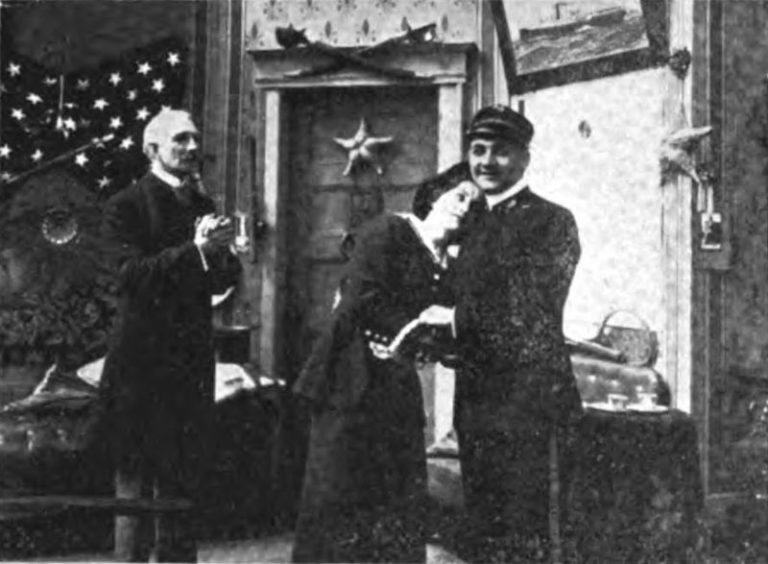
A still of Dorothy Gibson in "Saved from the Titanic" in 1912.

PUBLIC DOMAIN

Shortly thereafter, Dorothy ended her film career.

In 1913, Dorothy was driving Jules Brulatour's sports car in New York when she ran over and killed a pedestrian; in the resulting trial, it came to light that Dorothy was, in fact, Brulatour's mistress.

Within a few years, Dorothy withdrew from public life entirely after her scandalous marriage to and swift divorce from Jules Brulatour.

Following that, there is very little in the way of information about her to be had.

But we know that three decades after Titanic sank, Dorothy found herself living in Paris and visiting her mother in Italy at the onset of Hitler’s rise to power.

But owing to the trauma she experienced on Titanic, refused to travel via sea to America.

So there, in Italy, Dorothy Gibson, the Titanic survivor and former starlet, was eventually arrested for being an anti-Fascist agitator and jailed in the San Vittore prison in Milan.

She was eventually aided in her escape from the prison she called “a living death” by Italian official(s) who insisted that she was not anti-Fascist, but in fact was willing to become a double agent to spy for the German cause.

So in 1944, she appeared quite suddenly in Switzerland for interrogation by the American consulate. Her allegiances--whatever they actually were--were never determined.

In 1945, Dorothy returned to Paris.

In 1956, she died alone in her suite at Hotel Ritz.

Open post

“Our Babe”: The Mystery of Titanic’s ‘Unknown Child’

"Our Babe": The Mystery of Titanic's 'Unknown Child'

Clifford Crease was 24 years old when he and his crewmates embarked on the grimmest journey of their lives: collecting the dead from Titanic.

The crew of the Mackay-Bennett recovers a Titanic victim.

PUBLIC DOMAIN

The Mackay-Bennett arrived to the site on the night of April 19, and saw that there were far more bodies than anyone could have anticipated.

At 6:00 a.m. on April 20, their work began.

All crew on the Mackay-Bennett were required to keep a log or diary of their gruesome task in the wake of Titanic. Only Clifford's, which has been donated, and one other are known to remain in existence.

One by one, small skiff boats were dispatched from the Mackay-Bennett, where they began manually pulling corpses from the water, to describe their faces and rifle through their pockets.

It had already been almost a week that they'd been bobbing in the water, exposed to the elements and ships passing through the massive debris field. Most of the bodies were mangled from the sinking--lacerated, bruised, many with broken bones.

(Please take a moment to reflect on how traumatic this reaping truly was. The men on board the Mackay-Bennett never get the credit they deserve.)

After the third body, a female third-class passenger, had been pulled aboard and catalogued, Clifford Crease's work turned from solemn to sorrowful.

Over the side of the boat, he scooped up a fourth body. Tiny. Blond, ocean-pale, and eerily still. Unlike the corpses all around them, this body was pristine--more doll than person, we might imagine. Clifford cradled the dead baby boy in what seemed like interminable silence.

After searching for identification and finding none, they reverently noted the baby as follows.

NO. 4 - MALE - ESTIMATED AGE, 2 - HAIR, FAIR
CLOTHING - Grey coat with fur on collar and cuffs; brown serge frock; petticoat; flannel garment; pink woolen singlet - brown shoes and stockings.
NO MARKS WHATEVER
PROBABLY THIRD CLASS

Clifford and his mates were in shock.

Back on board the Mackay-Bennett, the decision had been made to bury steerage passengers at sea, owing to a lack of space and shortage of embalming fluid. So only the First and Second Classes were embalmed or put on ice and returned to Halifax.

An exception was made for the nameless baby that was "probably third class." No one could bring themselves to commit him to the sea, all alone forever.

After recovering a total of 306 bodies from the site, the Mackay-Bennett returned to Halifax. Bodies were distributed to funeral homes, morgues, and grieving families. Photos were taken. Days passed.

But no one claimed the baby.

Hearses queued at Halifax Wharf, waiting to transport the corpses of Titanic victims to local funeral parlors. Courtesy of Nova Scotia Archives & Records Management (NSARM).

PUBLIC DOMAIN

The sailors who had been on board the Mackay-Bennett that nightmarish day then took matters into their own hands and adopted the child in death. Spearheaded by Clifford Crease, they arranged a funeral and pooled their wages for a small coffin and headstone.

In the coffin, they placed a brass plate engraved with two words: "Our babe."

Clifford acted as one of the baby's pallbearers.

The Unknown Child now rested in the Halifax's Fairview Cemetery. Suspecting that his identity might be that of 2-year-old Gosta Palsson, youngest son of Third-Class passenger Alma Palsson, he was interred in close proximity to her grave.

Years went by, and Clifford could never bring himself to forget The Unknown Child. Every year on the anniversary of the sinking, he laid a wreath on the grave.

And when Clifford Crease died in 1961, he was interred mere meters away from the child who had haunted him all of his life.

According to his family, Clifford didn't speak about his grim time on the Mackay-Bennett until the end of his life, prompted by a program he was watching on television about Walter Lord's "A Night to Remember." According to Clifford's granddaughter, "He never fully recovered... He told our father it was the worst thing that ever happened to him."

In 2001, two Canadian scientists named Ryan Parr and Alan Ruffman collaborated in order to find the identity of Titanic's Unknown Child.

They exhumed the remains, but there was nothing left other than a fragment of an arm bone, and three little teeth. Mercifully, the plate laid in the coffin by the crew of the Mackay-Bennett had protected these scarce remains. And miraculously, that was enough.

The remains were not a match to the Palsson family, who had originally given permission for the remains to be disinterred. They expanded the scope of their candidates from among 5 boys under the age of 3 who had died on Titanic.

In addition to Gosta Palsson, there were:

Gilbert Danbom 5 months old, from Sweden

Alfred Peacock 7 months old, from England

Eino Panula 13 months old, from Finland

Sidney Goodwin 19 months old, from England

Eugene Rice 2 years old, from Ireland

With the long-term assistance of geneaologists and historians, as well as willing descendants, Ruffman and Parr tracked down genetic samples from all 5 families of the little boys.

From the candidates remaining after Gosta Palsson was ruled out, 3 were evident non-matches; this left only Sidney Goodwin and Eino Panula as the possible Unknown Child, due to a shared mutation in their mitochondrial DNA.

Looking at the teeth that had been recovered from the grave, the scientists determined that they'd belonged to a child in the 9-15 month range. By process of elimination, Ruffman and Parr published their results: The Unknown Child was 13-month-old Eino, whose family was traveling from Finland.

It was accepted by the majority that the Unknown Child finally had a name.

But some, including Parr and Ruffman, suspected it was the incorrect one.

All because of a pair of shoes.

In 2007, Dr. Parr admitted that they may have made a mistake.

Back in 2002, a man named Earle Northover had donated a pair of brown-leather baby shoes to the Maritime Museum of the Atlantic. They had belonged, he said, to the Unknown Child.

According to Earle, the wee shoes had been removed from the baby, and saved from destruction by his grandfather Clarence Northover, a sargeant for the Halifax Police Department. Earle wrote the following in his letter to the Museum.

Clothing was burned to stop souvenir hunters but he was too emotional when he saw the little pair of brown, leather shoes about fourteen centimeters long, and didn’t have the heart to burn them. When no relatives came to claim the shoes, he placed them in his desk drawer at the police station and there they remained for the next six years, until he retired in 1918.

The shoes, Dr. Parr thought, were too big for a 13-month-old to wear. So they retested the DNA samples with the U.S. Armed Forces Identification Laboratory, where the team isolated a single, but significant and rare, genetic distinction.

With around a 98% certainty, Parr's team amended their previous results.

Thanks to the little shoes hidden in Sargeant Northover's desk drawer, the Uknown Child was identified as Sidney Goodwin.

Sidney Goodwin, Titanic's Unknown Child.

PUBLIC DOMAIN (taken in 1911)

At 19 months old, Sidney was the youngest of six children. His entire family was traveling from England to America where their father, Frederick, was set to have a new job at the new power station in Niagara Falls.

The Goodwins had planned to set to sail on the S.S. New York, but were transferred to Titanic as a result of the coal miners' strike.

All eight members of the Goodwin family--both parents, and all of their children--died when Titanic sank.

Aside from Sidney, who would spend almost a century unidentified, no member of the Goodwin family was recovered.

Sidney Goodwin's parents and five older siblings circa 1910. The entire family died in the sinking.

PUBLIC DOMAIN (published in UK periodical(s) in 1912)

The Goodwin descendants held a memorial service at the grave of The Unknown Child on August 6, 2008. One by one, they read the name of each child lost on Titanic out loud, ringing a bell for each.

The family elected to leave the headstone installed by the crew of the Mackay-Bennett.

As a Goodwin cousin said in an interview, "The tombstone of the unknown child represents all of the children who perished on the Titanic, and we left it that way."

Open post

“Our Boats Waited in Deadly Silence”: Karl Behr & Helen Monypeny Newsom

“Our Boats Waited in Deadly Silence”: Karl Behr & Helen Monypeny Newsom

Determination, thy name may well be Karl Behr.

Karl was born in Brooklyn to German parents. He graduated from Yale in 1906. Moreover, he was admitted to the Bar Association in 1910, and was by all accounts an extremely successful lawyer. He also mined for silver in Mexico.

In the meanwhile, Karl was one hell of a lawn tennis player. He played on the U.S. Davis Cup team in 1907; in that same year, he was ranked number 3 in the sport. He was also runner-up at Wimbledon in 1907.

All in all, it seemed to have been a hell of an excellent year for Karl, though he enjoyed similar successes in tennis for many years thereafter.

Karl Behr in the Men's Doubles at Wimbledon in 1907.

PUBLIC DOMAIN

At some point, Karl fell in love with Helen Monypeny Newsom, the gorgeous friend of his little sister, Gertrude.

And, as in many grand love stories, Helen's mother and stepfather, Sallie and Richard Beckwith, did not approve of their romance. Karl was 27, and Helen was just 19.

Helen’s parents disliked Karl so ardently that, in an effort to deter his courtship of their daughter, they took Helen on a trip to Europe in February 1912.

As though that would stop Karl.

Karl furtively booked a trip on the same outbound vessel, and slipped away with Helen in Morocco.

And Madeira.

And the South of France.

The star-crossed lovers at some point agreed to meet back in NY upon their individual returns.

Karl Behr playing tennis. Published in "Methods & Players of Modern Lawn Tennis" in 1915.

PUBLIC DOMAIN

But Helen was a delightfully headstrong girl in her own right. So while Karl was in Berlin, Helen sent him a telegram.

"SAILING HOME FROM ENGLAND ON TITANIC'S MAIDEN VOYAGE."

With this alert, Karl concocted a business trip and booked passage on Titanic in order to continue their courtship. And so, with an engagement ring in his pocket, Karl Behr set out to surprise his love. He booked passage on a train down to Cherbourg alongside a number of other First-Class passengers, including his future tennis rival, Richard Norris Williams.

After a pleasant train ride through the French countryside, Karl joined Helen and the Beckwiths at the stopover at Cherbourg.

He supposedly spent most of his time ingratiating himself to Helen's disapproving parents. And there just might have been—according to their granddaughter—also a lot of covert kisses and clandestine handholding during the voyage.

Titanic departing Southampton for Cherbourg, France, where Karl joined Helen and her family.

PUBLIC DOMAIN

According to family lore, Karl was the one who alerted Helen and her parents when he saw people donning lifevests and a noticed a "list to starboard"--which contradicts the usual report of a list to port. Although, since the damage did occur on the starboard side, a negligible list could have occurred before the water sought its own level, resulting in the famous list to port.

The party approached and were permitted to enter the second lifeboat launched starboard, by Third Officer Herbert Pitman and First Officer William Murdoch. According to Karl, he went up to boat deck with Mr. Beckwith only to say goodbye to Helen, but both men were asked to jump in to row by White Star Chairman Bruce Ismay.

Karl was interviewed by his alma mater's periodical the Yale Daily News on April 18, 1912, while standing on the pier in New York after having disembarked the rescue ship Carpathia.

Karl's was the first survivor interview to be published.

Our boats waited in deadly silence until, at 2:30 a.m., the Titanic settled at the bow and took her final plunge. The sight was too horrible for description as the men on board rushed toward the stern only to be engulfed and sucked down by the suction.

Per contemporary newspaper reports, it was in the lifeboat that Karl proposed to Helen. But their granddaughter, Lynn Sanford, dissents. When interviewed, she said, "The idea that my grandfather proposed to my grandmother on a lifeboat while people around them were dying? No, that wasn't him."

However Helen and Karl finally managed to become engaged, Titanic seemed to have softened the Beckwiths' hearts.

Helen Moneypeny Newsom on her wedding day, as published by the Boston Sunday Post dated November 8, 1914. Courtesy of Encyclopedia Titanica.

PUBLIC DOMAIN (published prior to 1923)

Helen and Karl were married on March 1, 1913. The New York Times article of the wedding published on March 2 described Helen's dress in great detail.

The bride, who walked up the nave with her stepfather, Mr. Beckwith, who gave her in marriage, wore a gown of white satin charmeuse with a long veil of duches point that was draped in with the gown in pannier effect, the lace being carried down into a train. The gown was also trimmed with duchess lace. She carried lilies of the valley and white orchids... Both Mr. Behr and his bride are survivors of the Titanic disaster.

By all accounts, despite winning his hard-fought love, as well as his wild professional and athletic successes, Karl seems to have suffered from debilitating survivor guilt, though Lynn Sanford states that though it was evident to her, her grandfather never admitted to as much outright.

Karl was part of the committee formed to honor Captain Arthur Rostron of the Carpathia, the ship which had rescued survivors at dawn on April 15, 1912. When the Carpathia docked at her pier in New York for the first time since returning with Titanic survivors in 1912, the committee boarded and requested the Captain Rostron issue an order for all hands to muster in the ship's First-Class dining saloon. There, Captain Rostron was presented with an engraved silver cup and a gold medal of honor.

The New York Times reported on the event in its May 30, 1912, issue.

It was a striking picture, that of the brawny, weatherbeaten old bo'sun and the quartermasters and sailors in their blue uniforms mingling with the soot-begrimed firemen and coal passers who had come direct from the stokehole. In addition to the gold-laced uniforms of the officers and engineers, the cooks, in their white caps and aprons, were there with a big array of stewards. At the head of the table, beside cases of medals, was the silver loving cup, standing fifteen inches high, on an ebony base and bearing the following inscription:

Presented to Capt. A. H. Rostron, R. N. R., commander of the R. M. S. Carpathia.

In grateful recognition and appreciation of his heroism and efficient service in the rescue of the survivors of the Titanic on April 15, 1912, and of the generous and sympathetic treatment he accorded us on his ship.

FROM SURVIVORS OF THE TITANIC


Karl also testified against White Star in a class-action civil suit brought by other passengers; per Karl's testimony, Chair J. Bruce Ismay was acting in the capacity of supervisor as the lifeboats were being filled, and was not simply a passive passenger as White Star claimed. The suit ended in 1916 in a settlement of $663,000.00, after which the judge signed a decree putting an end to all lawsuits pertaining to the sinking of the Titanic.

Karl Behr helped to organize the Preparedness Parade--to encourage American intervention in the Great War--in New York City in 1916. But when the United States did intervene the following year, Karl was not permitted to join owing to his German heritage. Apparently unable to assuage years of sadness and remorse, Karl took briefly to a sanitarium in western New York state in 1917.

President Wilson at the Preparedness Parade in New York City, 1916. Courtesy of the Library of Congress.

PUBLIC DOMAIN

Lynn Sanford has said that her grandfather "wished he had saved someone from the water so that at least an act of heroism could have resulted from his survival... He was crushed by inarticulate sadness beyond anyone's understanding."

Karl died in 1949; Helen, in 1965.

Open post

“Eternal Father, Strong to Save”: Fr. Thomas Byles

"Eternal Father, Strong to Save": Fr. Thomas Byles

Sunday, April 14, 1912, was known as "Low Sunday”—otherwise known as the Sunday following Easter.

In each of the classes, masses were held in common areas.

In the First Class Dining Saloon, Captain Smith presided over a worship service.

And in the Second and Third Classes, separate Protestant and Catholic services were conducted—some, by priests on board as passengers.

One of those men was a 42-year-old Roman Catholic priest from England, named Thomas Roussel Byles.

Father Thomas Roussel Davids Byles.

PUBLIC DOMAIN

Thomas was born with the name Roussel Davids Byles in 1870, the first of seven children to a Protestant minister.

Roussel had initially turned to Anglicanism while conducting his collegiate studies, but that did not quite suit.

So after his brother William had converted to Catholicism, and Roussel had reportedly had some formative encounters with the Jesuits, Roussel likewise elected to become a Catholic.

Roussel took the name of Thomas upon his conversion, which he chose in honor of his beloved saint: Thomas Aquinas.

Thomas Byles was ordained on June 15, 1902, in Rome, just above Piazza Navona. He was eventually assigned to St. Helen's Church in Essex, England.

There, he was beloved as a kind religious leader and learned man by his small and disadvantaged congregation.

Though slight of build and often in ill health, Thomas even taught some of the men of the town how to box when they admitted to him that they wanted learn the sport.

Two weeks before setting sail, Thomas had a visit from his friend Monsignor Edward Watson.

Over wine, they discussed St. Helen's, as well as the size of Thomas’s luggage.

During this visit, Watson recalled that it was iceberg season, and that he'd heard they were dangerous to sea travel. As they said goodbye, Watson worried that his friend might not return to England for the opportunities and family that Thomas would find in America.

Watson told Thomas, "I hope you'll come back again."

Second-Class entrance on R.M.S. Olympic, which was identical to Titanic's. Courtesy of Bedford Lemere & Co.

PUBLIC DOMAIN

Thomas boarded Titanic in Southampton as a Second-Class passenger.

He was destined for Brooklyn, New York, where he had been invited to officiate the wedding of his little brother, William—the same brother whose conversion had inspired Thomas’s own.

After electing to leave the religious life, William had moved to New York City to run a rubber business. There, he had fallen in love with a local girl named Katherine Russell, who was about to become his bride.

At some time on board Titanic, Thomas made arrangements with Captain Smith to say mass for the Second and Third Classes, using the portable altar stone and accessories Monsignor Watson had lent to him.

There were other priests on board with whom Thomas coordinated, namely a German cleric named Father Josef Peruschitz, as well as a Lithuanian priest named Father Juozas Montvila.

Thomas did not perform a morning service on April 11, 1912, as he wrote about it to his housekeeper back in Essex.

Comically, he also admitted to an absent-minded moment in that same missive.


Everything so far has gone very well, except that I have somehow managed to lose my umbrella. I first missed it getting out of the train at Southampton, but am inclined to think that I left it at Liverpool St. ...I shall not be able to say mass to-morrow morning, as we shall be just arriving at Queenstown... I will write as soon as I get to New York.

The umbrella fiasco aside, it seemed that Thomas was enjoying the voyage. And despite admitting that he found ship's vibrations unpleasant, all in all, he admired the ship a great deal.

"When you look down at the water from the top deck," he wrote, "it is like looking from the roof of a very high building."

Being the academic sort that Fr. Byles was, it is hardly surprising that fellow passenger Lawrence Beesley reportedly came across him in the Second-Class Library.

In the middle of the room are two Catholic priests, one quietly reading-either English or Irish, and probably the latter-the other, dark, bearded, with a broad-brimmed hat, talking earnestly to a friend in German and evidently explaining some verse in the open Bible before him.

Excerpt from "The Loss of the S.S. Titanic" by Lawrence Beesley, 1912 (Reprint: First Mariner Books 2000.)

In spite of being unable to perform Mass on April 11, Thomas reportedly heard confessions from his fellow passengers every day

On the morning of Sunday, April 14, Thomas conducted Catholic mass for Second-Class passengers in the Second-Class Library; he is reported to have recited the Propers of the Mass, as was custom for the Octave of Easter.

Simultaneously, a Protestant service was being conducted by Assistant Purser Reginald Barker.

Thomas thereafter made his way to the lower decks and performed a service for the passengers in steerage, in both English and French.

His new acquaintance, Father Josef Peruschitz, followed Thomas’s homily with his own sermon, spoken in German and Hungarian.

During this steerage Mass, Thomas and Josef reportedly spoke of the desolation of a life without faith, and about seeking salvation—and the chosen imagery therein would haunt survivors of the disaster to come.

Strangely enough each of the priests spoke of the necessity of man having a lifeboat in the shape of religious consolation at hand in case of spiritual shipwreck.

That same night, Reverend Ernest Courtenay Carter held an informal "evensong" in the Second Class Library, after lamenting the absence of options for evening worship.

It was a plan he had discussed earlier in the library with Lawrence Beesley, whom he had befriended during the voyage. Lawrence wrote that Reverend Carter enlisted his assistance in asking permission from the Purser to hold what he called  ‘a hymnal sing-song.’

The gathering was, in essence, a sing-along. Those who participated could choose each song, which was introduced with a brief history of it and its author.

It ended, Mr. Beesley thought, about 10:00 p.m.

It was here, during this Second-Class evensong, that passengers sang "Eternal Father, Strong to Save.” Thanks, no doubt, to the irony of its verse regarding salvation “for those in peril on the sea,” this hymn often misrepresented as having been sung during the First-Class service held that very morning by Captain Smith.

Sheet music of "Eternal Father, Strong to Save."

PUBLIC DOMAIN

There is no record of Thomas Byles being present for Reverend Carter's evensong on the night of April 14.

But Thomas was present for the iceberg itself.

He was reportedly pacing either the upper deck or the Second Class promenade, reciting the Breviarium Romanum in full priestly garb, at the moment that Titanic collided with the iceberg.

Thomas immediately headed down to Third Class.

According to survivor accounts, he spent his time there offering Blessings of Absolution, praying the Rosary with the passengers, and hearing confessions.

When the crash came we were thrown from our berths... Slightly dressed, we prepared to find out what had happened. We saw before us, coming down the passageway, with his hand uplifted, Father Byles. We knew him because he had visited us several times on board and celebrated mass for us that very morning.

'Be calm, my good people,' he said, and then he went about the steerage giving absolution and blessings... A few around us became very excited and then it was that the priest again raised his hand and instantly they were calm once more.

Thomas’s serene command in the chaos was impressive, and he gathered all people together in prayer.

The passengers were immediately impressed by the absolute self-control of the priest. He began the recitation of the rosary.

The prayers of all, regardless of creed, were mingled and the responses, "Holy Mary," were loud and strong.

Thomas proceeded to lead these Third-Class passengers through the confounding mazd of hallways up to the boat deck. He no doubt knowing full well the negligence they would encounter as steerage passengers, particularly if they could not speak English.

He prayed aloud as he guided his charges up top.

Once on the boat deck, Thomas was steadfast.  He ushered women and children into the lifeboats, offering prayer and consolation as they went.

And as the danger became more evident, Thomas went about giving absolutions.

I first saw Father Byles in the steerage. There were many Catholics there, and he eased their minds by praying for them, hearing confessions and giving them his blessing. I later saw him on the upper deck reading from his priest's book of hours... he gathered the men about him and, while they knelt, offered up prayer for their salvation.

It is consistently reported that Fr. Byles refused a spot in a lifeboat—twice.

[a seaman] warned the priest of his danger and begged him to board a boat. Father Byles refused. The same seaman spoke to him again and he seemed anxious to help him, but he refused again. Father Byles could have been saved, but he would not leave while one was left and the sailor's entreaties were not heeded.

After he had seen off the final lifeboat, Thomas moved aft.

There, a large group of passengers, reportedly regardless of their individual faiths, kneeled all around Father Byles as he recited the Rosary and administered Last Rites.

Ellen Mocklare attested to this devastating scene as her lifeboat cast away from Titanic.


After I got in the boat, which was the last one to leave, and we were slowly going further away from the ship, I could hear distinctly the voice of the priest and the responses to his prayers.

Then they became fainter and fainter, until I could only hear the strains of 'Nearer My God, to Thee' and the screams of the people left behind.

We were told by the man who rowed our boat that we were mistaken as to the screams and that it was the people singing, but we knew otherwise.

The last sighting of Father Byles was as the broken stern rose. He was, it is said, still leading over 100 people in the Act of Contrition and giving them general Absolution.

Father Patrick McKenna, a priest who had been acquainted with Thomas for years, wrote the following in his diary.

Heroic behavior of Fr. Byles… twiced warned of danger & offered place in boat by sailor. He refused saying his duty was to stay and to minister to others. He heard confessions & gave absolution & said Rosary & sank. Victim to duty & conscience!

Thomas died in the sinking. His body was never recovered.

Once it was determined that not among the saved, the bells of St. Helen's in Essex began tolling in unrelenting sorrow.

For weeks thereafter, it was reported that Masses were said almost continuously for the repose of the soul of Thomas Byles.

At St. Helen's Catholic Church, a window depicting St. Patrick, Christ the Good Shepherd, and St. Thomas Aquinas was installed to honor the memory of Thomas, his faith, and his bravery.

The inscription on the window reads as follows. "Pray for the Rev Thomas Byles for 8 years Rector of this mission whose heroic death in the disaster to S.S. Titanic April 15 1912 earnestly devoting his last moments to the religious consolation of his fellow passengers, this window commemorates."

In Brooklyn, the bereaved William Byles and his fiancee Katharine held their wedding ceremony on time. It was considered bad luck to postpone.

Having rescinded the invitations via phone and telegram, the ceremony was small and simple, and in a different chapel. It was solemnly performed by a lifelong family friend of the bride.

After they were wed, William and Katherine promptly left the church to return home to change their clothes.

Once outfitted in black mourning attire, the newlyweds returned to the same church to attend a requiem Mass for Thomas.

Later in 1912, William and Katherine Byles met with Pope Pius X.

The Pope declared Father Thomas Byles as a martyr of the Catholic Church.

In 2015, Father Graham Smith, the priest at Thomas’s former parish of St. Helen’s, launched a petition in honor of “an extraordinary man who gave his life for others.”

And so, Thomas Byles has been nominated for beatification, so that he might become a saint.

Open post

“For God’s Sake, Be Brave, and Go!”: Harvey & Charlotte Collyer

"For God's Sake, Be Brave, and Go!": Harvey & Charlotte Collyer

Harvey and Charlotte Collyer were an English couple boarded Titanic as Second Class with their young daughter Marjorie.

Harvey and Charlotte had met in Surrey while she was employed as a cook for Reverend Sidney Sedgwick, and Harvey was the church sexton. They married in 1905. In time, Harvey also became the church bellringer and a grocer in town, where the entire family was loved.

The Collyers had dreamt big. Charlotte suffered from tuberculosis, and so they elected to move to Idaho, where some other family had already settled and had consistently sent the Collyers letters in which they lauded the pleasant climate. Seeking to better Charlotte's health, they purchased a fruit farm. Before departing, Harvey withdrew the family's life savings from his bank and kept it on his person. What little possessions the family had were ALL in Titanic's cargo hold.

Before they departed, the church community organized a surprise farewell for Harvey. Charlotte wrote, "They led him to a seat under the old tree in the churchyard and then some went up into the belfry and, in his honour, they rang all the chimes that they knew." She said it was a kind gesture, but it made her uneasy.

Harvey wrote a letter to his parents that was sent off while Titanic was stopped in Queenstown on April 11, 1912.

My dear Mum and Dad
It don't seem possible we are out on the briny writing to you. Well dears so far we are having a delightful trip the weather is beautiful and the ship magnificent. We can't describe the tables it's like a floating town. I can tell you we do swank we shall miss it on the trains as we go third on them. You would not imagine you were on a ship. There is hardly any motion she is so large we have not felt sick yet we expect to get to Queenstown today so thought I would drop this with the mails...

Lots of love don't worry about us. Ever your loving children
Harvey, Lot & Madge

Charlotte, nauseous the night of April 14 from too rich a dinner, was in bed. She wrote of the collision, "The sensation, to me, was as if the ship had been seized by a giant hand and shaken once, twice; then stopped dead in its course."

Harvey went up on deck and Charlotte had begun to drift off to sleep by the time he returned. He said they'd hit an iceberg--"a big one"--but an officer had assured him there was no danger. But as a clamour began to resound above them, Charlotte asked Harvey if anyone had seemed frightened. Soon thereafter, Charlotte threw on a coat, tied her hair back with a ribbon, and wrapped her daughter in a White Star blanket over her pajamas, and the three went out on deck. Marjorie was crying, as she had left behind her "dollie" from two Christmases past, and no one would go back to rescue it.

Officers kept yelling that there was no danger. But then Charlotte saw a horrific sight.

Suddenly there was a commotion near one of the gangways, and we saw a stoker come climbing up from below. He stopped a few feet away from us. All the fingers of one hand had been cut off. Blood was running from the stumps, and blood was spattered over his face and over his clothes. The red marks showed very clearly against the coal dust with which he was covered.

Excerpt from 'How I was Saved from the Titanic" as printed in the May 1912 issue of "Semi-Monthly Magazine."

When she asked him if there was danger, he frantically presented his mangled hand. The unnamed stoker then laid his head down on a coil of rope and fainted.

The Collyers were on Second Officer Charles Lightoller's side of the ship, but Charlotte wrote with admiration mostly about First Officer William Murdoch, as well as Fifth Officer Harold Lowe. Like survivor Charles Joughin, Charlotte Collyer attested to a number of women being afraid to go in the lifeboats, or otherwise leave their husbands behind.

Charlotte held her husband tightly, and not taking seats in the first two boats before them.

When the third boat was half-full, she wrote that "a sailor caught Marjorie, my daughter, in his arms, tore her away from me and threw her into the boat." Then, "A man seized me by the arm. Then, another threw both his arms about my waist and dragged me away by main strength. I heard my husband say: 'Go, Lotty! For God’s sake, be brave, and go! I’ll get a seat in another boat.'"

The men who held me rushed me across the deck, and hurled me bodily into the lifeboat. I landed on one shoulder and bruised it badly. Other women were crowding behind me; but I stumbled to my feet and saw over their heads my husband’s back, as he walked steadily down the deck and disappeared among the men. His face was turned away, so that I never saw it again.

Excerpt from 'How I was Saved from the Titanic" as printed in the May 1912 issue of "Semi-Monthly Magazine."

As far as Charlotte claimed, Marjorie never got the chance to say goodbye to her father because she was flung into the boat so fast.

But according to Marjorie herself, she did. "My father raised me in his arms and kissed me, and then he kissed my mother. She followed me into the boat... The women in one of the other boats said they wanted somebody to row for them and father got in that boat."

There's fair reason for either of them to have rearranged the truth: trauma, wishful thinking, false memories.

Charlotte's account of the night is considered one of the more graphic survivor stories. It includes a young lad who pleaded, sobbing, for a spot on the lifeboat, and then for his life with an officer's pistol aimed at his forehead, as well as another man who ran across the deck and flung himself into the boat, supposedly injuring a girl by landing on her. He was forcibly removed.

Charlotte and Marjorie watched the sinking in horror from Lifeboat 14.

I shall never forget the terrible beauty of the Titanic at that moment. She was tilted forward, head down, with her first funnel partly under water. To me, she looked like an enormous glow-worm; for she was alight from the rising water line, clear to her stern — electric lights blazing in every cabin, lights on all the decks and lights at her mast heads.

Excerpt from 'How I was Saved from the Titanic" as printed in the May 1912 issue of "Semi-Monthly Magazine."

Charlotte was also of the minority of passengers who witnessed the break.

She heard the "deafening roar" of an explosion within the ship, then "millions of sparks shot up to the sky, like rockets in a park on the night of a summer holiday. This red spurt was fan-shaped as it went up; but the sparks descended in every direction, in the shape of a fountain of fire." According to Charlotte Collyer, the stern stood straight on end before lowering into the water. And like young survivor Jack Thayer, she described the passengers on board as akin to swarms of bees.

I saw hundreds of human bodies clinging to the wreck or leaping into the water. The Titanic was like a swarming bee-hive, but the bees were men, and they had broken their silence now.

There was water in the bottom of the lifeboat.

At one point, Charlotte half-fainted, and her long hair got caught in the oar and was ripped from her scalp. Someone gave her a blanket.

Little Marjorie continued to cry for her lost doll, desolate with the thought that it was going to the bottom of the sea with no one to take care of it. Her beloved dollie was gone, along with her father, her family's entire savings, and everything else the Collyers owned in the world.

Lifeboat 14 (with mast up) approaching the rescue ship Carpathia. Courtesy of the Library of Congress.

PUBLIC DOMAIN

Once on board Carpathia, Charlotte searched in desperation for her husband, but learned that he was not among the saved.

The scene on board Carpathia that morning, as the lifeboats crept in, was harrowing by all accounts. "We could only rush frantically from group to group, searching the haggard faces, crying out names and endless questions."

Harvey Collyer's body, if ever recovered, went unidentified.

Charlotte grieved in a letter to her mother written on April 21, 1912, from Brooklyn, New York.

Oh mother there are some good hearts in New York, some want me to go back to England but I can't, I could never at least not yet go over the ground where my all is sleeping.

Sometimes I feel we lived too much for each other that is why I've lost him. But mother we shall meet him in heaven. When that band played 'Nearer My God to Thee' I know he thought of you and me for we both loved that hymn and I feel that if I go to Payette I'm doing what he would wish me to, so I hope to do this at the end of next week where I shall have friends and work and I will work for his darling as long as she needs me. 

Oh she is a comfort but she don't realize yet that her daddy is in heaven. There are some dear children here who have loaded her with lovely toys but it's when I'm alone with her she will miss him. 

Oh mother I haven't a thing in the world that was his only his rings. Everything we had went down. Will you, dear mother, send me on a last photo of us, get it copied I will pay you later on. 


Mother and daughter did soldier on and get to Idaho, but not without significant monetary help raised in the wake of their total loss, as well as the $300 Charlotte was paid for her exclusive story.

Charlotte ended her exclusively (ghost)written story as follows.

I must take my little Marjorie to the place where her father would have taken us both. That is all I care about — to do what he would have had me do.


But they did not stay in the United States. The pair were photographed on a porch swing in Payette, Idaho, while making use a White Star Line blanket.

Charlotte and Marjorie shortly after the sinking. From the George Grantham Bain Collection, courtesy of the Library of Congress.

PUBLIC DOMAIN

They returned to England, and Charlotte Collyer remarried in 1914. Sadly, she died as a result of her tuberculosis in late 1916. Then Marjorie's stepfather died in March 1919.

Marjorie, now three times an orphan by the age of fifteen, was sent to live with her uncle Walter on his farm, where she lived until she was married on Christmas Day of 1927.

SOURCE MATERIAL

[ital]

Posts navigation

1 2 3 4 5 6
Scroll to top